
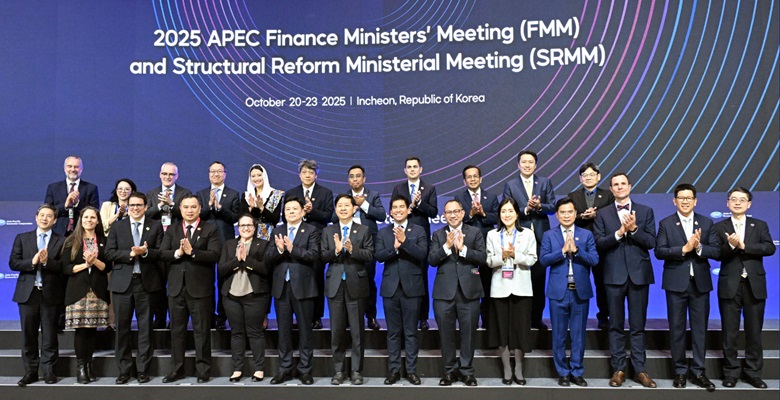
Incheon, Republic of Korea | 23 October 2025
The 2025 APEC Ministerial Meeting on Structural Reform was held in Incheon, Republic of Korea. It brought together Ministers responsible for structural reform to review progress and set future priorities. The meeting took place amid global economic uncertainty, rapid technological change, and significant demographic shifts.
Commitment to Structural Reform
During the meeting, Ministers reaffirmed their commitment to structural reform. This commitment aligns with the APEC Putrajaya Vision 2040 and the Aotearoa Plan of Action. Structural reform was recognized as a central driver of inclusive and sustainable economic growth across the Asia-Pacific region.
Moreover, Ministers reviewed progress under the Enhanced APEC Agenda for Structural Reform (EAASR) 2021–2025. While acknowledging important achievements, they also noted that structural barriers remain. In particular, regulatory misalignment and informality continue to limit connectivity, innovation, and prosperity.
SEAASR 2026–2030: Key Outcomes
A major outcome of the meeting was the endorsement of the Strengthened and Enhanced APEC Agenda for Structural Reform (SEAASR) 2026–2030. This agenda will guide APEC’s structural reform efforts over the next five years.
The SEAASR is structured around four pillars. These include enabling fair, market-oriented competition and improving the business environment. It also promotes innovation and digitalisation. Finally, it aims to empower all people to achieve their economic potential.
Enhancing Connectivity and Innovation
Ministers emphasized the role of structural reform in enhancing regional connectivity. As a result, they endorsed the Fourth APEC Ease of Doing Business Action Plan (2026–2035). They also reaffirmed their commitment to Good Regulatory Practices and international regulatory cooperation.
Additionally, the meeting highlighted the growing importance of services and digitalisation. Ministers encouraged reforms that support digitally enabled services and regulatory innovation. They also welcomed continued cooperation on artificial intelligence–driven digital transformation.
Promoting Inclusive Prosperity
Finally, Ministers stressed the importance of ensuring that structural reform promotes broad-based prosperity. Capacity building, skills development, and access to essential services were identified as key priorities. Support for micro, small, and medium-sized enterprises was also highlighted. These efforts aim to ensure that the benefits of reform are widely shared across the region.
Reference
Asia-Pacific Economic Cooperation. (2025). 2025 APEC Structural Reform Ministerial Meeting Joint Statement. https://www.apec.org