
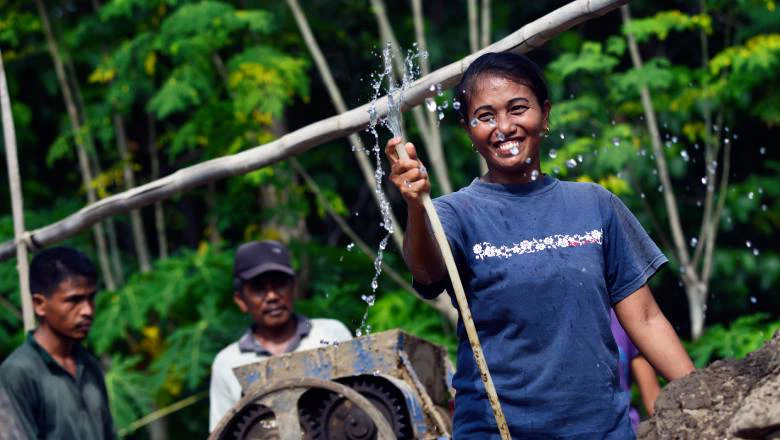
Across Indonesia, access to safe and reliable water depends less on pipes and infrastructure and more on the resilience and adaptive capacity of the people who manage, distribute, and safeguard it every day. In urban and rural communities alike, water workers, local leaders, as well as many citizens are the real front-line defenders of water security. Their actions — digging wells, repairing systems, managing distribution, and organizing community responses — often make the difference between a functioning system and widespread scarcity.
This human-centered reality exposes a hard truth: infrastructure alone cannot guarantee water access in a country shaped by rapid population growth and institutional fragmentation. When systems are weak or fail, it is the local agency and not government plans or donor projects that keeps water flowing. These experiences highlight the political and social dimensions of water governance, where community solidarity often matters way more than technical design.
Indonesia’s water challenges also reflect deeper governance gaps. Fragmented responsibility among agencies, inconsistent policy enforcement and limited investment in maintenance leave many systems vulnerable to disruption. When pipes break, budgets fall short and accountability is diffuse, it is ordinary people who shoulder the burden. This dynamic reveals a broader crisis of public capacity: governments must build institutions that empower communities rather than sideline them.
The stories from Indonesia make clear that water security is ultimately a political issue, not just a technical one. Resilient water systems require inclusive governance, community participation and accountable leadership. Empowering local actors to manage resources, make decisions and shape policy is essential. If nations fail to invest in the social and political infrastructure that sustains water systems, even the most advanced engineering will fall short of meeting people’s needs.
Reference: World Bank. (2026, February 16). 5 days in Indonesia: How people — not pipes — keep water flowing. World Bank Blogs. https://blogs.worldbank.org/en/water/5-days-in-indonesia–how-people–not-pipes–keep-water-flowing