
A Narrow Victory Exposes Ideological Divisions Within the Democratic Party
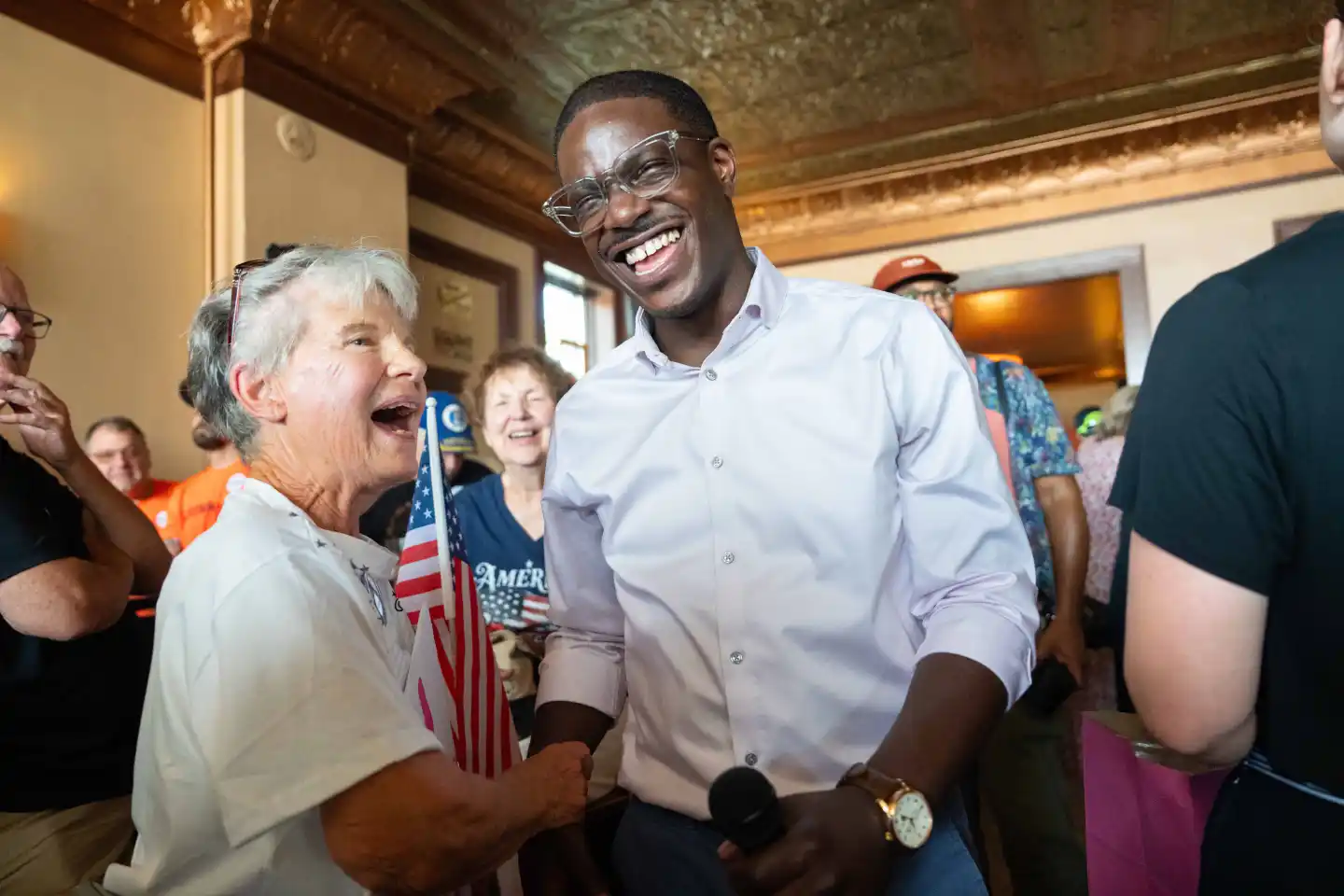
Milwaukee County Executive David Crowley won the Democratic primary for Governor of Wisconsin by a margin of less than one percentage point, defeating democratic socialist Francesca Hong. Crowley will face Republican Congressman Tom Tiffany, backed by President Donald Trump, in November.
The election represents a new test for the Democratic Party, which is navigating an internal debate over its future direction. While Crowley framed his candidacy as a moderate alternative capable of attracting Democrats, independents, and even some Republicans, Hong sought to mobilize the progressive base through proposals such as free healthcare and childcare.
Crowley Bets on Moderation and Electability
Crowley, 40, had temporarily dropped out of the race in July, but returned after other candidates withdrew and secured the endorsement of outgoing Governor Tony Evers.
His central argument was that he represents the candidate with the best chance of defeating Tiffany in November. Wisconsin is considered one of the most politically competitive states in the United States: Donald Trump won the state in 2016 and 2024, but lost it in 2020, with all three presidential elections decided by margins of less than one percentage point.
Crowley also became the first Black candidate from a major party to win the nomination for Governor of Wisconsin, and he aims to become the state’s first Black governor.
Hong Demonstrates That the Progressive Movement Retains Strength
Although she lost the nomination, Hong captured approximately 40% of the Democratic vote, proving that a substantial portion of the electorate supports a more progressive agenda.
Her campaign tapped into frustration with the political establishment, focusing on issues such as the cost of living, healthcare, and public services. However, her defeat also highlighted the limits the progressive movement continues to face in key battleground states.
Hong had faced criticism over past social media posts, including her support for defunding the police and comments regarding holidays like Thanksgiving. Opponents leveraged these positions to question her ability to compete against Republicans in the November general election.
A Dispute Reaching Beyond Wisconsin
The Wisconsin primary is part of a series of elections reflecting a shift within the Democratic Party. In Michigan, progressive Abdul El-Sayed recently secured a major victory in the Senate primary, while in Minnesota, progressive Peggy Flanagan defeated a more moderate candidate.
These results do not necessarily indicate that the Democratic Party is moving entirely to the left. Instead, they reflect a growing desire for change among Democratic voters, alongside persistent concerns regarding progressive candidates’ ability to win general elections in competitive states.
Wisconsin Becomes a Strategic Battleground
The November general election holds significance far beyond the governor’s mansion. Democrats are aiming to retain control of the governor’s office and regain majorities in both chambers of the state legislature, which would give them full control of Wisconsin’s government for the first time since 2010.
For his part, Tiffany will attempt to tie Crowley to Hong’s stances and portray the Democratic Party as overly progressive. In contrast, Crowley is working to center his campaign on Tiffany’s ties to Trump and the necessity of building a broad coalition.
An Election Reflecting the Future of the Democratic Party
The result in Wisconsin underscores a fundamental tension within the Democratic Party: Should it prioritize a more ambitious progressive agenda, or a moderate strategy that maximizes the chances of winning in competitive states?
The narrow margin between Crowley and Hong demonstrates that both factions carry significant weight among Democratic voters. At the same time, the election reveals that the electorate is not necessarily choosing a uniform ideology, but rather demanding political change and new leadership.
International Relevance
Although this is a state-level election, the news holds international analytical relevance because Wisconsin is a crucial battleground state in U.S. politics, and the 2026 electoral results could influence the country’s political landscape leading into the 2028 elections.
For the OGU, this story provides an opportunity to analyze the evolution of the U.S. political system, the internal divisions of the Democratic Party, the impact of Donald Trump on state elections, and voter behavior in one of the primary swing states in the United States.
Reference: Associated Press. (2026, August 11). David Crowley wins Democratic primary for Wisconsin governor over progressive Francesca Hong. Read original article on Associated Press. https://apnews.com/article/wisconsin-primary-governor-hong-socialist-acd872f6cf113e741291b9b47f9d9111?