
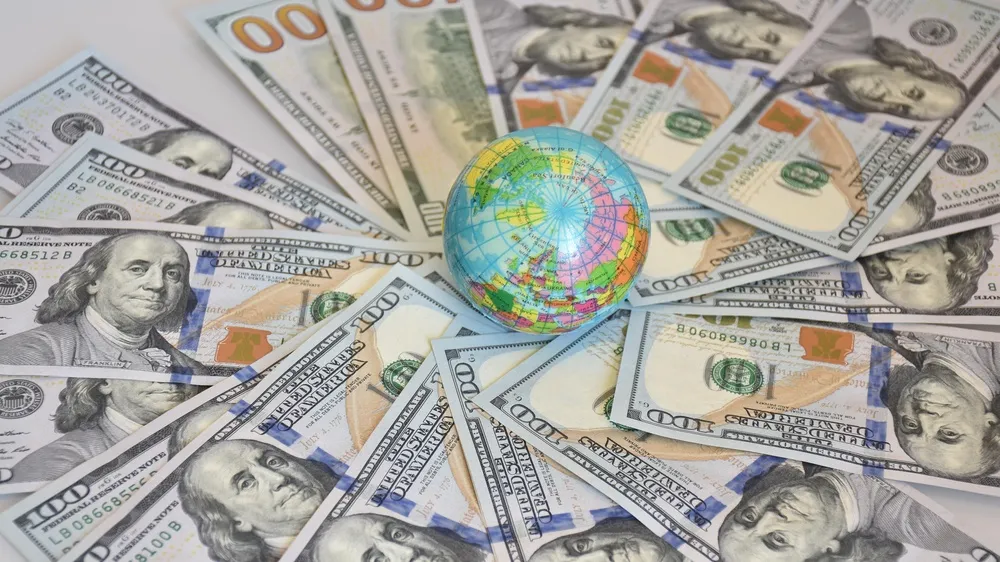
The United States plays a central role in global financial markets. Its government debt is widely held by investors and institutions around the world. As a result, foreign demand for U.S. assets has become an important part of the American economy. However, changes in global investment patterns are creating new challenges. Foreign central banks are buying fewer U.S. Treasury securities, while private investors are becoming more important.
The Growing Role of Foreign Investors
Foreign investors have played an important role in financing the United States for many years. U.S. Treasury securities are especially attractive because they are considered relatively safe assets. Therefore, demand for them has remained strong even during periods of financial stress.
However, the type of foreign investor has changed. In the 2000s, foreign central banks were major buyers of U.S. Treasury securities. They often purchased these assets while building their foreign exchange reserves. In recent years, their role has declined.
At the same time, private investors have increased their holdings. This includes investment funds and other financial institutions. As a result, the foreign demand for U.S. assets has become more diverse.
China and the Changing Investment Pattern
China has traditionally been an important foreign holder of U.S. assets. However, its investment strategy has changed since the Global Financial Crisis. China has gradually reduced its relative exposure to the United States. Instead, it has increased its investments in other markets.
This change is important because China is one of the world’s largest holders of foreign assets. Moreover, geopolitical tensions can influence how countries manage their reserves. Therefore, economic decisions are increasingly connected to broader political considerations.
The article also points out that it is difficult to identify the final owners of U.S. assets. Many investments pass through financial centers such as the Cayman Islands, Ireland, and Luxembourg. As a result, official statistics do not always show the nationality of the final investor.
The Decline of Official Demand
Foreign central banks have reduced their purchases of U.S. Treasury securities for several reasons. First, the rapid growth of foreign exchange reserves has slowed. Second, large purchases by the Federal Reserve have affected the supply available to other investors. Finally, changes in the value of the U.S. dollar have encouraged central banks to adjust their reserve portfolios.
In addition, geopolitical fragmentation has affected investment decisions. Countries may now consider political risks when deciding where to hold their reserves. Therefore, the demand for U.S. Treasury securities is no longer based only on economic factors.
The Rise of Private Investors
Private investors have helped fill the gap left by foreign central banks. Unlike official investors, they often continue buying Treasury securities during periods of financial stress. This behavior reflects the continued importance of U.S. government debt as a safe-haven asset.
However, private investors can also create new risks. Hedge funds and other leveraged investors can change their positions quickly. During periods of market stress, they may sell assets rapidly. As a result, Treasury markets could become more volatile.
Moreover, the use of offshore financial centers makes it harder to identify the final owners of U.S. debt. This lack of information can make it more difficult for policymakers to assess financial risks.
Risks for the U.S. Economy
The changing demand for U.S. assets could have important consequences. Foreign ownership of U.S. stocks is not necessarily a major concern. In fact, international investment can help share financial risks across countries.
External debt presents a different challenge. Higher interest rates increase the cost of servicing U.S. debt. Therefore, the United States could face greater financial pressure if borrowing costs remain high.
If foreign official demand continues to decline, private investors may become even more important. However, these investors can react more quickly to geopolitical or fiscal concerns. Consequently, Treasury yields could become more volatile during periods of economic uncertainty.
Overall, foreign demand for U.S. assets is changing. Central banks have become less important as buyers of Treasury securities. Meanwhile, private investors have taken a larger role. This shift shows how global financial markets are adapting to economic and geopolitical changes.
However, the United States still benefits from the strong international demand for its assets. Treasury securities remain an important safe-haven investment. Nevertheless, greater dependence on private investors could create new risks.
Therefore, understanding who owns U.S. debt and why they invest in it is increasingly important. Changes in foreign demand could affect borrowing costs, financial stability, and the position of the United States in the global economy.
Chari, A., & Milesi-Ferretti, G. M. (2026, August 12). The United States and its creditors: Assessing foreign demand for US assets. Brookings Institution. https://www.brookings.edu/articles/the-united-states-and-its-creditors-assessing-foreign-demand-for-u-s-assets/