
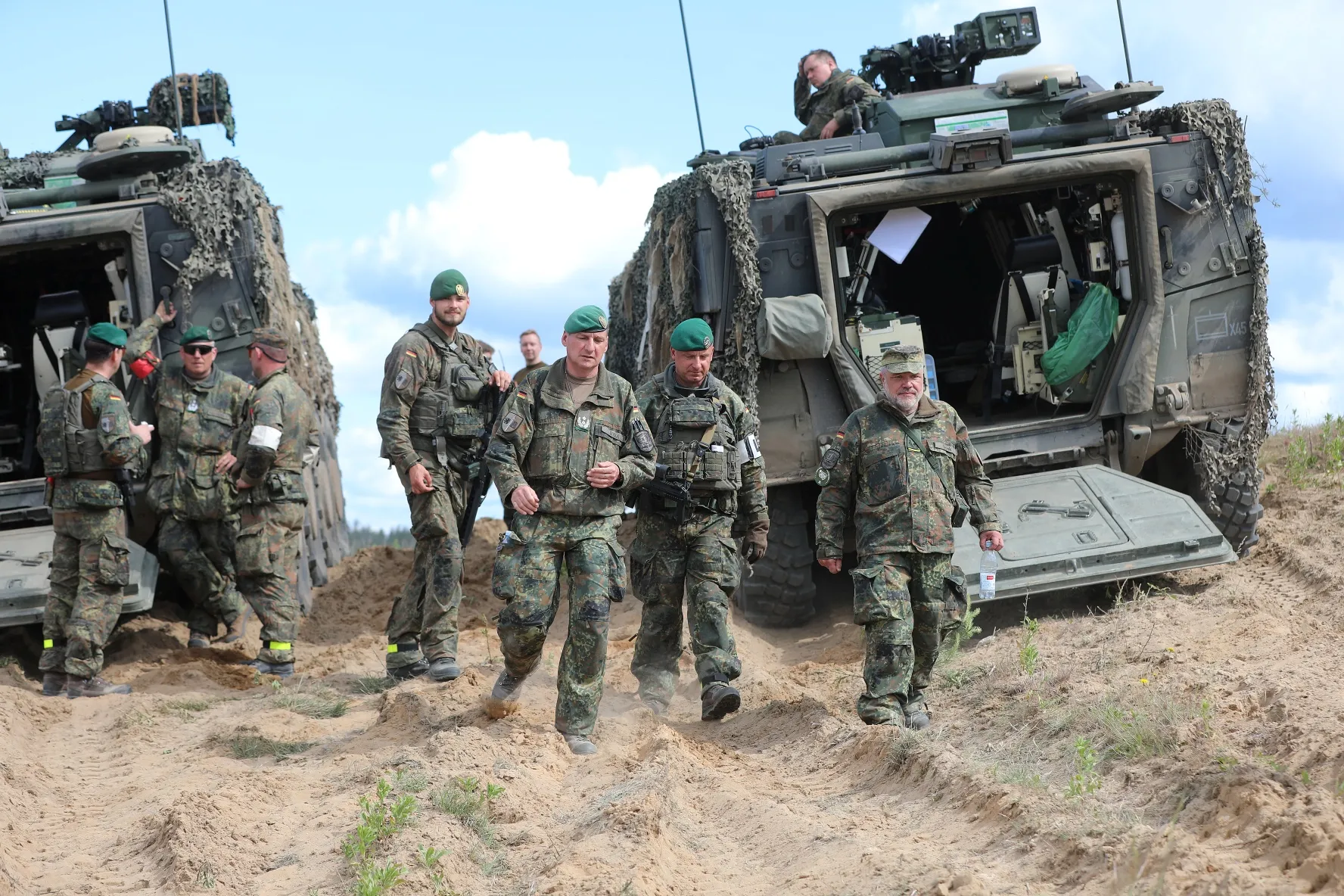
The strategic debate surrounding a Europeanized NATO raises urgent questions. Specifically, it highlights European defense capacity under reduced American support. Following recent U.S. force realignments, European allies must prepare to assume primary responsibility for continental defense.
European states are accelerating defense procurement across key areas. For instance, countries are expanding orders for tanks, fighter jets, and intelligence systems. Furthermore, European investments aim to replace missing capabilities before 2029.
However, analysis by Carlo Masala for the Brookings Institution shows that weapon orders alone cannot ensure security. Instead, two major vulnerabilities threaten European defense cohesion. First, European armies lack sufficient troop numbers. Second, the absence of U.S. integration leaves European forces without a unified operational command.
Operational Gaps in Immediate Conflict Scenarios
A fight tonight scenario presents even greater operational hurdles. In this case, European forces would face conflict before receiving new hardware. Consequently, European armies must adjust their defense doctrines.
Under these constraints, European NATO allies face three primary operational limitations:
- Capabilities: European militaries lack critical deep-strike, space, and electronic warfare assets. Therefore, maintaining operational freedom of action remains difficult.
- Geography: Allies lack sufficient firepower to strike deep into enemy territory. As a result, destroying key command centers requires new tactical methods.
- Readiness: Limited early warning systems impair battlefield awareness. Consequently, armies must overextend defensive lines to cover unknown attack points.
Strategic Shifts and Policy Implications
Therefore, European defense planners must abandon aggressive forward defense strategies. Instead, a realistic European approach must focus on holding territory to delay enemy advances. For example, extensive drone swarms can mitigate personnel shortages and absorb frontline wear.
In addition, maintaining political cohesion becomes vital during a crisis. For instance, European allies must manage nuclear threats and avoid internal divisions. Furthermore, European nations must decide which regional powers will lead integrated command structures.
As a result, long-term European security depends on structural unity rather than hardware procurement alone.
Reference
Masala, C. (2026, August 24). How can a ‘Europeanized NATO’ defend Europe with reduced American support? Brookings Institution. https://www.brookings.edu/articles/how-can-a-europeanized-nato-defend-europe-with-reduced-american-support/