
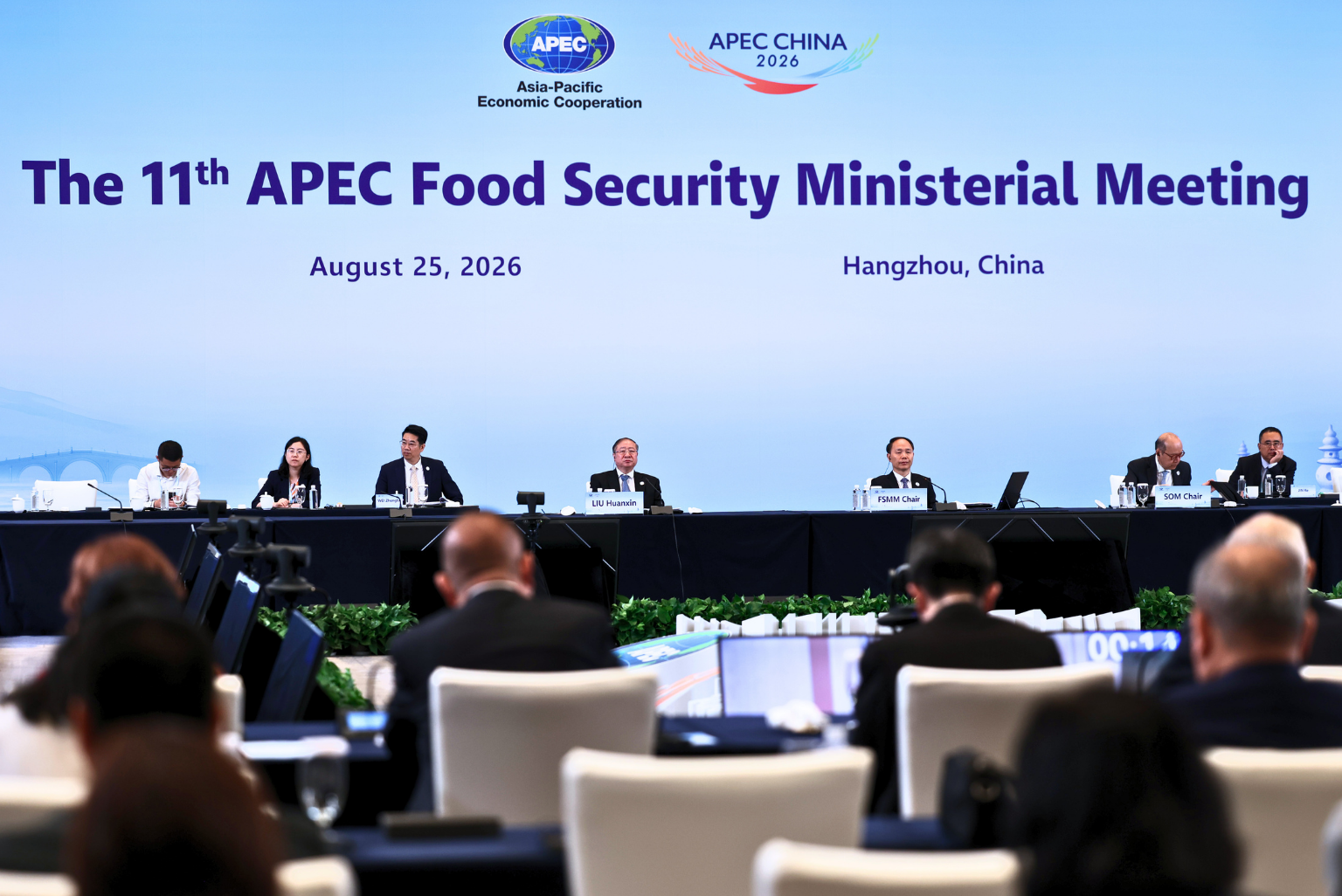
Global agri-food systems face unprecedented risks from climate shocks and supply chain friction. Consequently, the 11th Asia-Pacific Economic Cooperation (APEC) Food Security Ministerial Meeting (FSMM) convened on August 25, 2026, in Hangzhou, China.
Chaired by Chinese Agriculture Minister Zhang Zhu, the summit brought together delegates from all 21 APEC member economies. Furthermore, international organizations including the FAO, WFP, and the APEC Business Advisory Council actively participated.
The central objective was establishing joint policy mechanisms to transform regional agriculture through digital tools. Ultimately, this ministerial release underscores APEC’s imperative to transition from reactive crisis response to proactive structural adaptation.
Development and Key Findings
The Hangzhou summit culminated in the adoption of the Hangzhou Joint Statement and regional innovation guidelines. Specifically, ministers focused on harnessing technological breakthroughs to optimize productivity and minimize food waste.
Moreover, delegates prioritized capacity building to bridge the digital divide between advanced and emerging economies.
- Digital Transformation Framework: Member economies endorsed formal principles to integrate artificial intelligence, digital mapping, and agricultural biotechnology into core production systems.
- Supply Chain Resilience: Delegates pledged to maintain open, transparent market access while applying science-based standards for cross-border disease control.
- Post-Harvest Loss Mitigation: The consensus highlighted public-private partnerships as crucial drivers to reduce food loss across processing, storage, and logistics.
- Smallholder Inclusion: Policy guidelines emphasized improving rural digital infrastructure to ensure small-scale producers gain access to financial networks and market data.
- Sustainable Marine Management: Ministers recognized aquaculture and sustainable fisheries management as critical components of regional nutrition and employment.
Policy Implications
Therefore, the commitments established at the 2026 FSMM mark a pivotal shift toward digitalized regional food governance. However, successful implementation will depend entirely on sustained policy alignment across diverse economic jurisdictions.
In addition, member states must balance rapid tech adoption with equitable access to prevent widening rural inequality. As a result, transparent cross-border investment will remain essential to fortifying supply chains against future macroeconomic shocks. Looking ahead, these principles lay the operational groundwork for the 12th APEC Ministerial Meeting on Food Security in Vietnam in 2027.
Reference
Asia-Pacific Economic Cooperation. (2026, August 25). 11th APEC Food Security Ministerial Meeting joint statement and principles on agri-food innovation [Press release]. APEC Secretariat. https://www.apec.org/press/news-releases/2026/0825_FSMM