
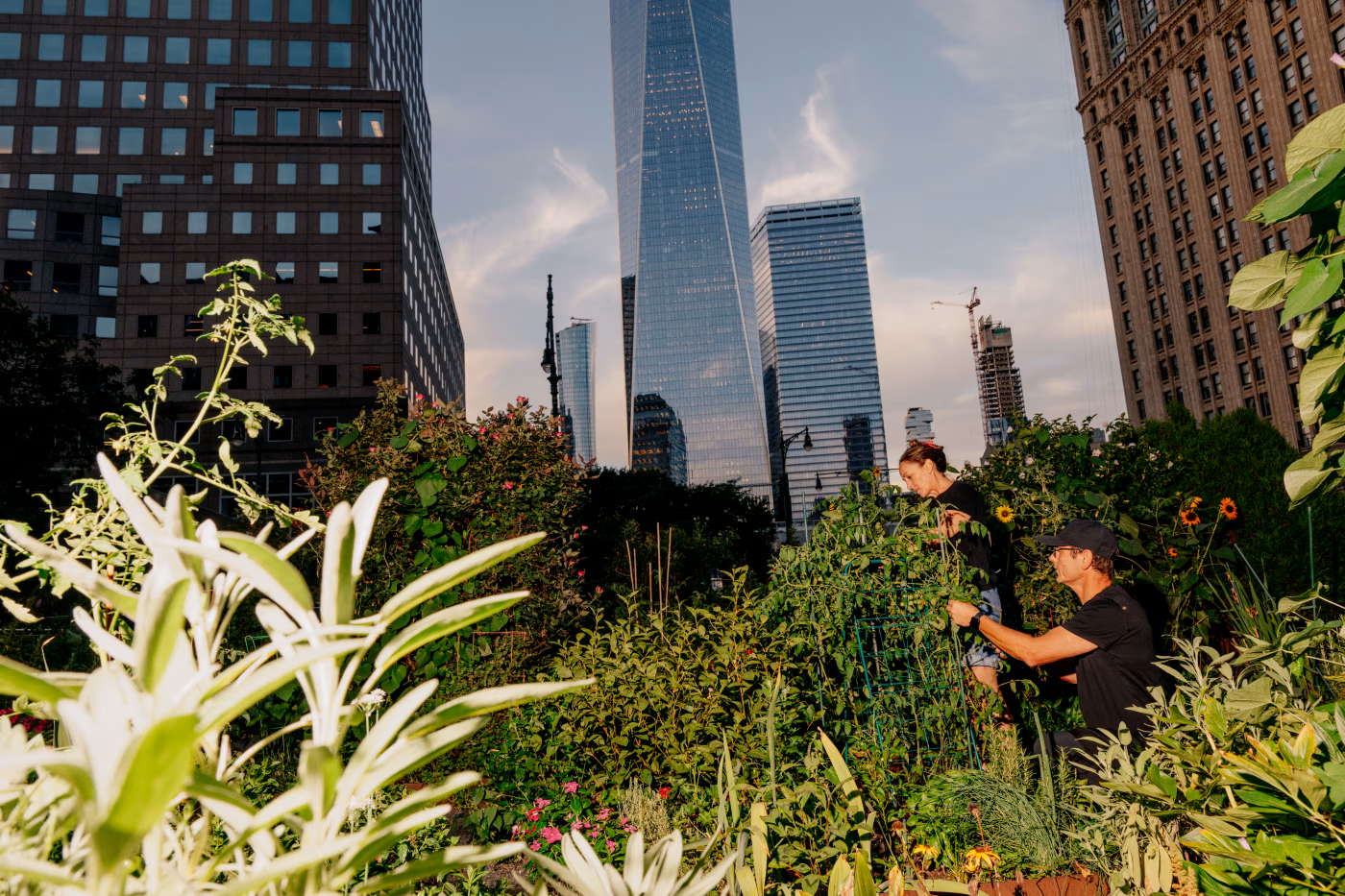
From the destruction of 9/11 to a major urban transformation
Twenty-five years after the September 11, 2001 terrorist attacks, Lower Manhattan has undergone a profound economic and demographic transformation. The destruction of the World Trade Center devastated the Financial District and raised questions about whether the area could recover.
However, more than $20 billion in public and private investment has contributed to rebuilding the World Trade Center site and surrounding areas. New office towers, transportation infrastructure, retail spaces, residential buildings and the 9/11 Memorial and Museum have reshaped Lower Manhattan.
Investment and diversification reshape the Financial District
The recovery has extended beyond rebuilding physical infrastructure. Lower Manhattan has diversified its economic base, reducing its previous dependence on financial services and attracting companies from technology, media, advertising and other industries.
Moreover, the area has experienced significant residential growth. Its population has roughly tripled since the attacks, while more than 230,000 people now work in Lower Manhattan, bringing employment levels close to those recorded before 2001. The number of hotels has also increased from six in 2001 to 42 today, reflecting the area’s growing importance as a residential and tourism destination.
Urban resilience and the future of Lower Manhattan
The transformation has also been supported by policies encouraging the conversion of underused office buildings into residential properties. Consequently, Lower Manhattan has evolved from a predominantly business-oriented district into a mixed-use community with housing, offices, retail, tourism and entertainment operating throughout the day.
Nevertheless, the recovery remains an ongoing process. Office availability remains relatively high, while the broader commercial real-estate sector continues to adapt to changes in work patterns and demand for office space. Even so, Lower Manhattan’s experience demonstrates how sustained public investment, private capital and economic diversification can reshape an urban center after a major crisis.
International Relevance
This news has high international relevance because Lower Manhattan is one of the world’s most important financial and commercial districts. Its recovery demonstrates how major global economic centers can respond to terrorism, infrastructure destruction, demographic changes and subsequent economic crises through long-term investment and urban planning.
For the OGU, the article is particularly relevant because it allows analysis of the relationship between urban resilience, international finance, infrastructure investment, economic diversification, tourism and post-crisis reconstruction. The transformation of Lower Manhattan also provides a case study for other global cities seeking to revitalize business districts, adapt commercial real estate to changing economic conditions and strengthen their resilience following major disruptions.
Reference: The Wall Street Journal. (2026, September 7). 25 Years After the Sept. 11 Attacks, Lower Manhattan Is Thriving. https://www.wsj.com/real-estate/commercial/25-years-after-the-sept-11-attacks-lower-manhattan-is-thriving-96ac9b85?