
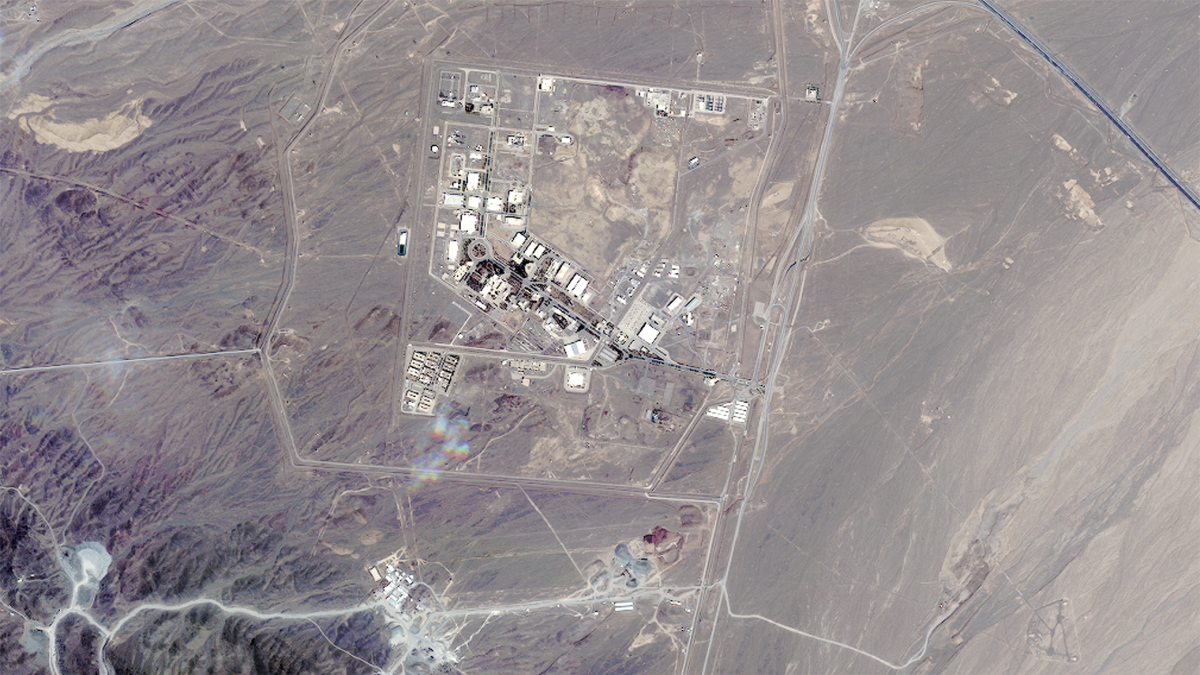
Multisource satellite imagery analysis reveals a clear surge in construction activity at an underground site located near a primary nuclear complex. Synthetic aperture radar and high-resolution optical imagery show that the site has entered a new phase of development. The operational focus has shifted away from initial ground excavation toward internal facility construction and heavy structural reinforcement.
Engineers have raised and hardened tunnel access portals, paved internal road networks, and reinforced security perimeters across the facility. Ground signatures indicate increased heavy vehicle traffic, road compaction, and the systematic removal of excavation spoil. The subterranean tunnel entrances feature specialized U-bend designs engineered to mitigate shockwaves and protect against potential direct aerial strikes.
The heavily fortified underground complex is widely assessed as a protected location intended to safeguard nuclear-related activities or centrifuge assembly from external disruption. However, the absence of high-security transport vehicles or operational radiation signatures suggests the subterranean facility is not yet actively processing nuclear materials.
In conclusion, while the satellite data confirms that the underground site is not yet operational, the rapid pace of structural reinforcement underscores ongoing efforts to build deeply buried facilities capable of withstanding external military pressure.
Reference
Rodgers, J., Comstock, D., & Bermudez, J. S. J. (2026, September 9). New Satellite Imagery Analysis Reveals an Uptick in 2026 Construction Activity at Pickaxe Mountain. CSIS; Center for Strategic and International Studies. https://www.csis.org/analysis/satellite-imagery-pickaxe-mountain