
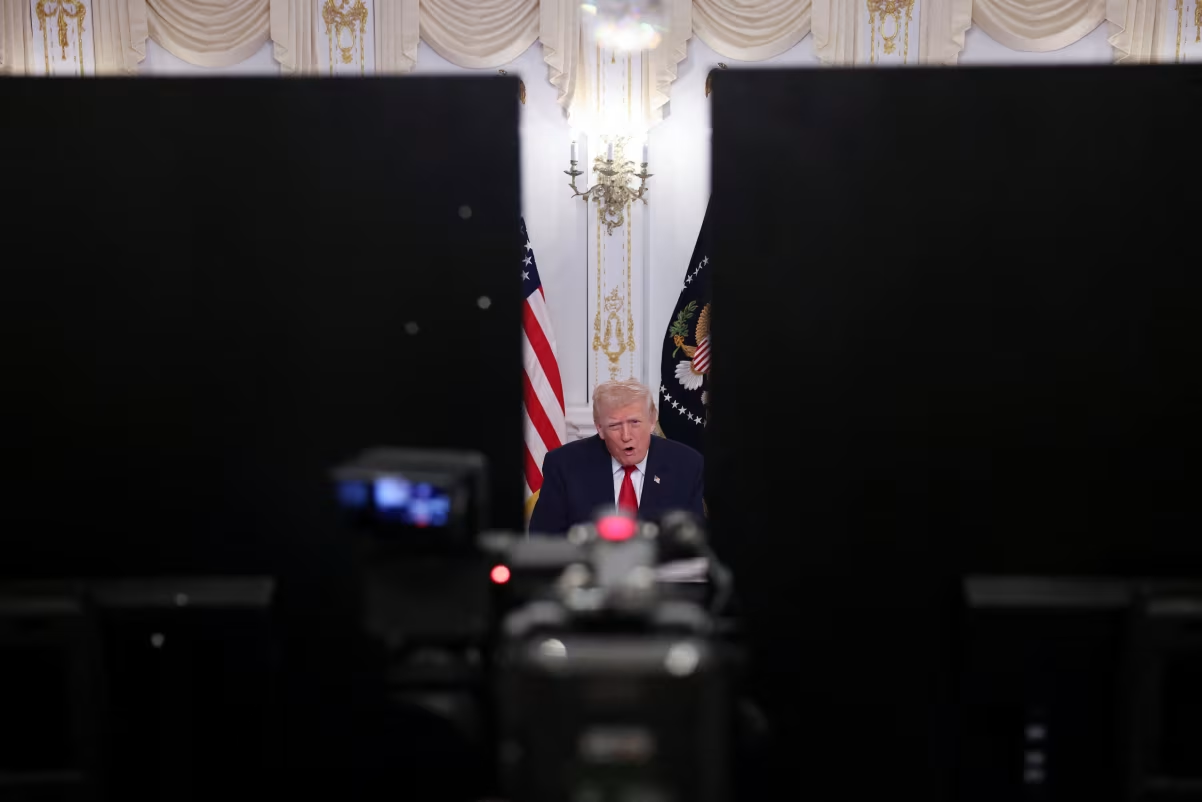
President Donald Trump’s push for regime change in Venezuela is slipping into a deep strategic and political predicament. A high-level Oval Office meeting signaled growing concern inside the administration as events in Caracas and Washington move beyond the White House’s control. Nicolás Maduro, far from retreating, appeared in front of massive crowds in Caracas, defiantly rejecting U.S. pressure and projecting confidence. Meanwhile, Trump faces rising scrutiny at home over a controversial U.S. strike on an alleged drug-trafficking boat. An episode that Democrats warn may constitute a war crime and that even some Republicans say warrants investigation.
After months of escalating political, economic, and military pressure , symbolized by the deployment of the USS Gerald R. Ford and an accompanying naval force , the administration is confronting difficult questions about strategy, legality, and credibility. Defense Secretary Pete Hegseth’s role in the boat strike is under intense examination, adding domestic turbulence to an already faltering foreign policy effort.
Maduro defying US ‘options’ to leave


Washington’s hope that military pressure would push Maduro toward exile or provoke an internal coup has not materialized. Trump acknowledged having spoken with Maduro directly, but the Venezuelan leader remains unmoved. Opposition figures say the U.S. had offered Maduro “options” for departure, yet the regime shows no sign of fracturing. The administration may have underestimated how deeply entrenched Maduro’s political and financial networks are. A recurring error in U.S. efforts to topple authoritarian governments.
This entrenched resilience poses a stark dilemma for Trump. Escalate toward military action, risking regional instability and domestic political backlash, or step back and seek a negotiated outcome that could be framed as a partial victory. While a peaceful transition in Venezuela would be a major foreign-policy win for the White House, failure would damage Trump’s credibility. Which would embolden adversaries like Russia and China, and leave the U.S. trapped in its own high-stakes rhetoric.
White House flails over follow-up boat strike

While seizing broader strategic choices, the administration is also struggling to contain a growing controversy over the September 2 boat strike. Reports indicate the possibility of a “double-tap” attack. A second strike that may have targeted wounded survivors, which is raising profound questions about potential violations of U.S. and international law. Initial denials from Hegseth and Trump have given way to shifting explanations from the White House, which now acknowledges the second strike but refuses to specify the threat U.S. forces faced at the time.
The legal and political fallout is expanding. Senior lawmakers from both parties are calling for hearings, and classified legal justifications reviewed by Democratic senators have been described as sloppy and alarming. Tensions within the military hierarchy also simmer, as public statements by Hegseth risk blurring lines of accountability.
Ultimately, responsibility rests with President Trump, who now faces a two-front crisis. A faltering Venezuela strategy and a potentially unlawful military operation under his command. The administration is boxed in by its own escalatory posture, with no clean or cost-free path forward , in Washington or in Caracas.

Reference
Collison, S. (2025, December 2). Trump struggles with Venezuelan dilemma as Maduro digs in and storm build at home over potential ‘war crime.’ CNN News. https://edition.cnn.com/2025/12/02/politics/trump-venezuelan-dilemma-boat-strike-maduro