
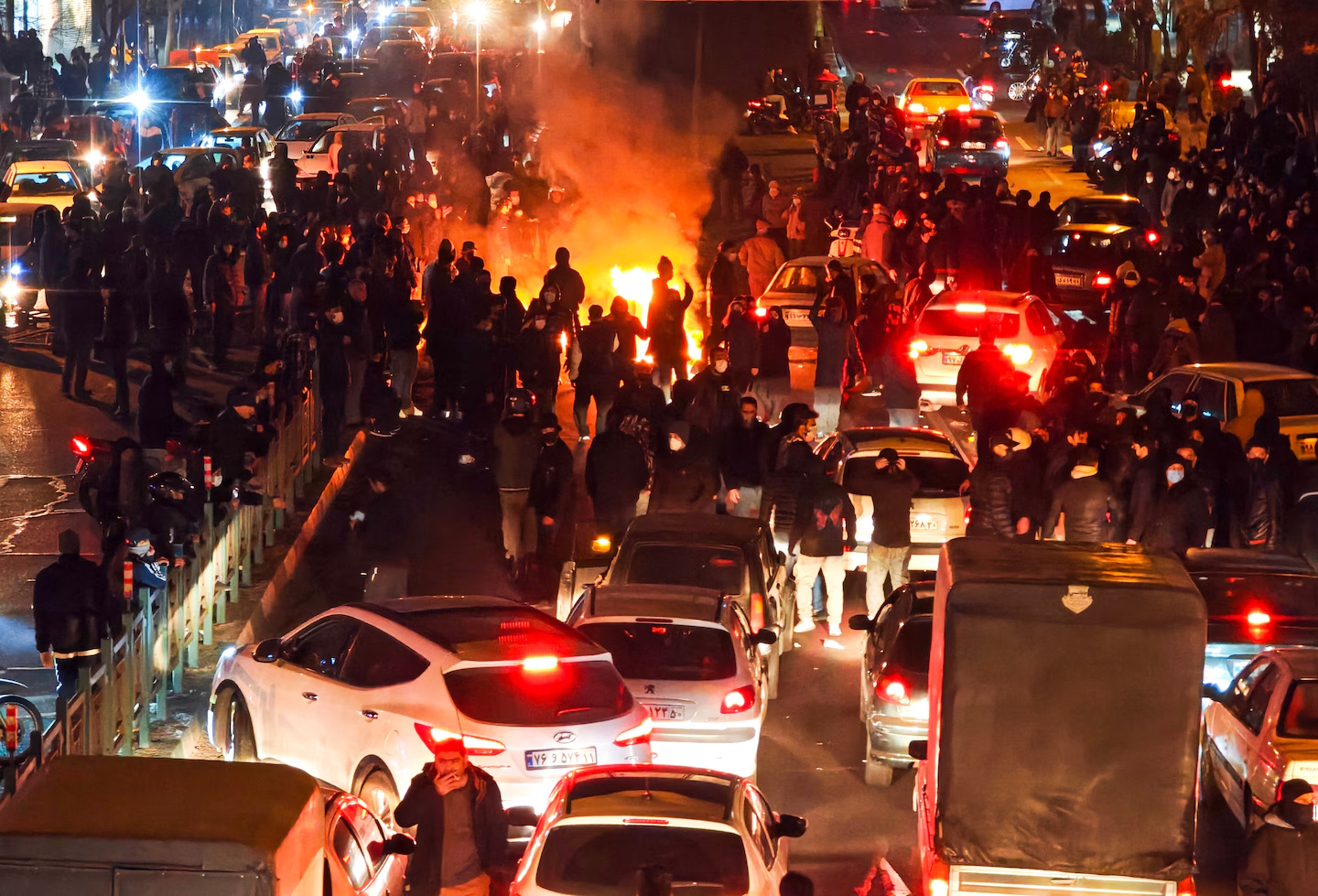
Escalating unrest in Iran has drawn increasingly forceful responses from the United States and Europe, as protests against the Iranian regime face a violent crackdown. Donald Trump publicly urged Iranian protesters to continue demonstrating and warned that the government would pay a “big price” for its actions. He claims that external “help is on its way.” Washington signaled its weighing diplomatic measures alongside more severe options, including potential military strikes, while suspending formal engagement with Iranian officials amid the ongoing violence.
Human rights organizations report a rapidly mounting death toll. The estimates are more than 2,000 people who have been killed since demonstrations began in late December. Although the figures remain difficult to independently verify due to a nationwide communications blackout. Eyewitness accounts from Tehran describe widespread brutality, including security forces firing on protesters, discovering bodies in alleyways, and raiding clinics treating the injured. European diplomats characterize the situation as existential for the Iranian regime, arguing that overwhelming force reflects fear of collapse rather than confidence.
Iranian officials have attempted to keep diplomatic channels open, with Foreign Minister Abbas Araghchi stating readiness for both negotiations and war. European diplomats, however, view such overtures as a tactic to buy time while suppressing dissent. The United States has intensified economic pressure by imposing a 25% tariff on goods from countries trading with Iran. A move that could ripple through global supply chains involving China, India, and Turkey.
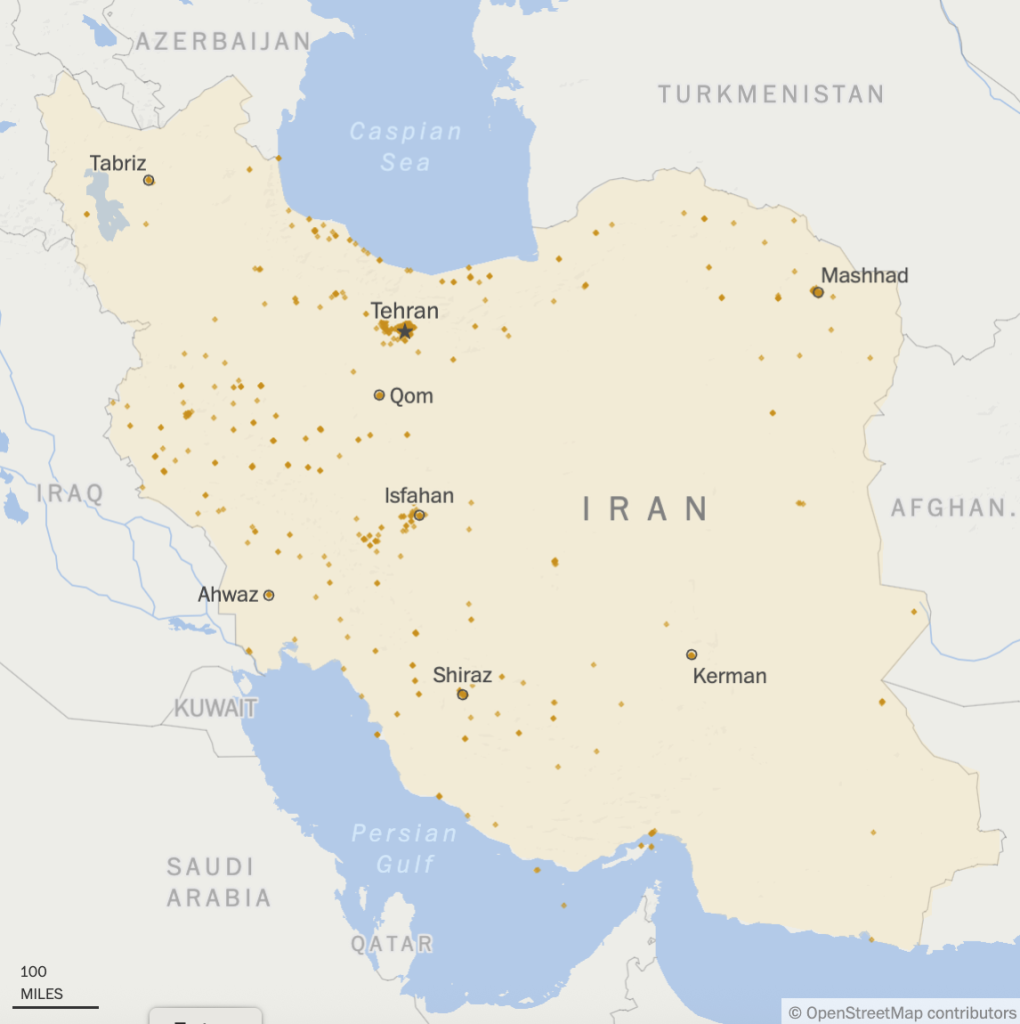
Reported protests in Iran between Dec. 29, 2025, and Jan. 12, 2026
Uncertain outcomer
European leaders have also hardened their stance. Ursula von der Leyen and Kaja Kallas condemned the excessive use of force and announced plans for expanded sanctions, including measures targeting Iran’s security apparatus. Several European governments have taken symbolic diplomatic steps, such as banning Iranian representatives from parliamentary premises and summoning ambassadors in protest. While some officials speculate that Iran could face a collapse similar to Syria, others caution that authoritarian regimes often prove resilient despite widespread unrest.
Overall, the situation underscores a volatile convergence of internal rebellion, state violence, and mounting international pressure, with uncertain prospects for either de-escalation or regime change as Iran enters a critical phase.
Reference
Cheessman, A., Mekhennet, S., George, S., & Masih, N. (2026, January 13). Trump encourages Iranian protesters; rights group says 2,000 killed. The Washington Post. https://www.washingtonpost.com/world/2026/01/13/iran-protests-deaths-internet-blackout-economy/