
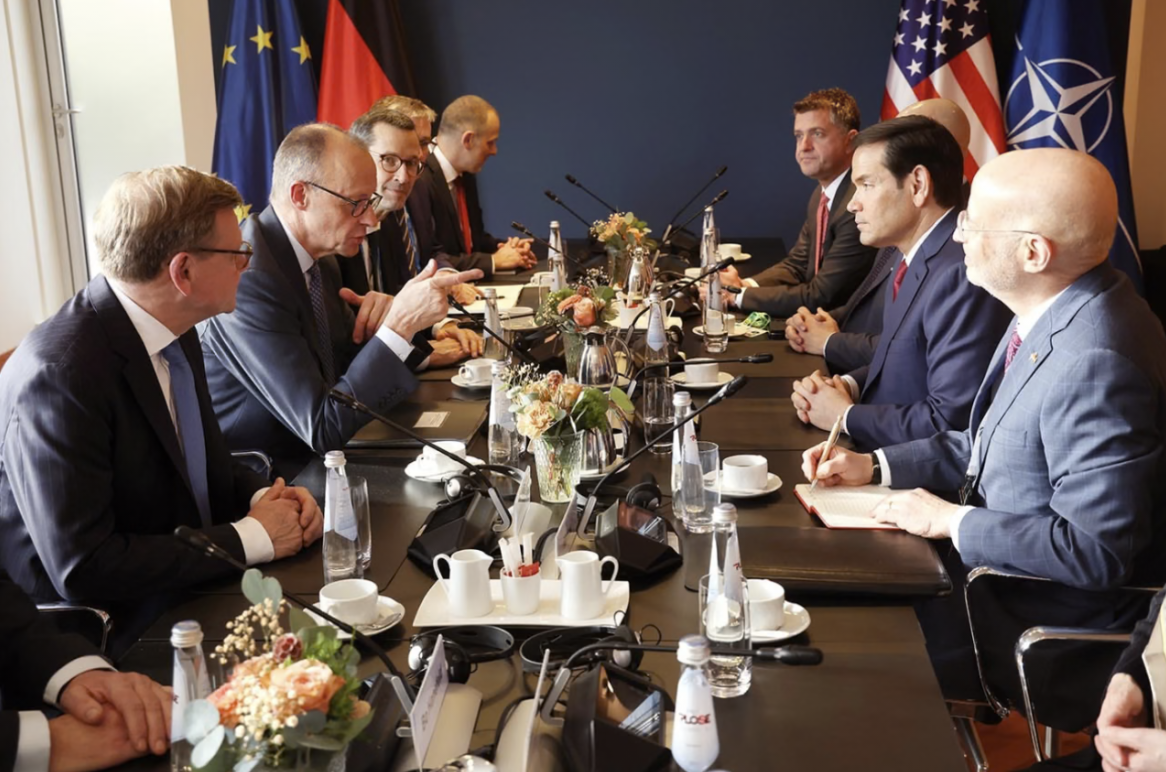
Setting the Scene
The Munich Security Conference in February 2026 stands at a crucial inflection point for Western security cooperation. Gathered in Munich’s Hotel Bayerischer Hof, leaders confront rising geopolitical instability and shifting alliance dynamics.
A Choice Between Two Paths
Currently, the trans-Atlantic relationship faces a true “fork in the road”. One path emphasizes a recalibrated NATO anchored by a stronger, more autonomous Europe.
Alternatively, continued disputes over values, interests, and burden sharing could deepen divisions. Thus, unfocused disagreements risk widening the security gap between the United States and its European partners.
Role of U.S. Leadership
In response, U.S. Secretary of State Marco Rubio’s engagement seeks to steer discussions onto constructive ground. This requires advancing shared commitments on defense strategy and burden-sharing to avoid unnecessary alienation.
European Strategic Choices
Meanwhile, European leaders face their own strategic decisions about autonomy and integration. Proposed reforms include wider economic cooperation and a defense industrial base spanning national borders.
Such changes demand political trade-offs like increased defense spending and shared sovereignty. Yet, bureaucratic inertia continues to complicate implementation of deep reforms.
The Stakes of Failure
If substantive progress does not emerge, the conference may amplify discord rather than strengthen alliances. In such a scenario, trans-Atlantic cooperation could fracture, undermining collective security. Consequently, the Prague-era security order could give way to a less cohesive Western defense posture.
Thus, Munich represents more than another forum; it is a test of shared resolve. Meaningful progress will hinge on strategic alignment across Europe and with the United States.
Source:
Froman, M. (2026, 13 de febrero). A fork in the road at the Munich Security Conference. Council on Foreign Relations. https://www.cfr.org/articles/a-fork-in-the-road-at-the-munich-security-conference