
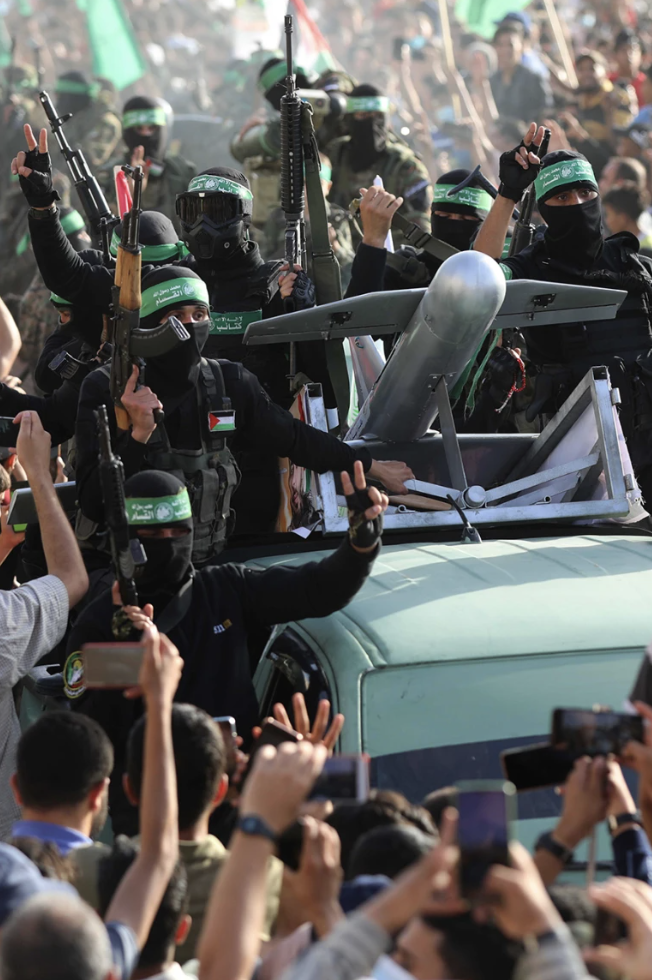
Hamas is a Palestinian Islamist political and militant organization founded in the late 1980s during the First Intifada. It grew out of the Muslim Brotherhood movement and combines religious ideology with Palestinian nationalism. Over time, Hamas established social services, schools and charitable networks, which helped it gain support among Palestinians frustrated by corruption and stagnation in other political groups.
Hamas also emerged in response to decades of Zionist occupation, displacement and political repression in Palestinian territories. Many Palestinians experienced (and continue to experience) restrictions on movement, loss of land and unequal political rights, which fueled anger and resistance. In this context, Hamas presented itself as both a resistance movement and a political alternative, claiming to defend Palestinian rights and self-determination. Its rise reflected broader grievances tied to military control, economic hardship and the absence of an independent Palestinian state.
Hamas’s armed wing has carried out attacks against Israeli military and civilian targets, leading many countries (including the United States and the European Union) to designate it as a terrorist organization. The group rejects Israel’s right to exist and calls for resistance against occupation, making it a central actor in the Israeli-Palestinian conflict. Its military actions and political positions have drawn both local support and international criticism.
In 2006, Hamas won elections in the Palestinian territories, later taking full control of the Gaza Strip. Since then, it has governed Gaza while engaging in periodic violent escalations with Israel. These conflicts have caused widespread destruction and loss of life on both sides, contributing to deepening humanitarian challenges in Gaza. Hamas’s governance has also been marked by internal tensions with rival Palestinian factions, especially Fatah.
Hamas’s role in regional politics goes beyond Gaza, influencing relationships between Middle East states, resistance movements and global powers. Its continued presence and actions remain a major factor in peace negotiations and security and humanitarian concerns throughout the region.
Reference: Council on Foreign Relations. (2025). What is Hamas? Council on Foreign Relations. https://www.cfr.org/backgrounders/what-hamas