
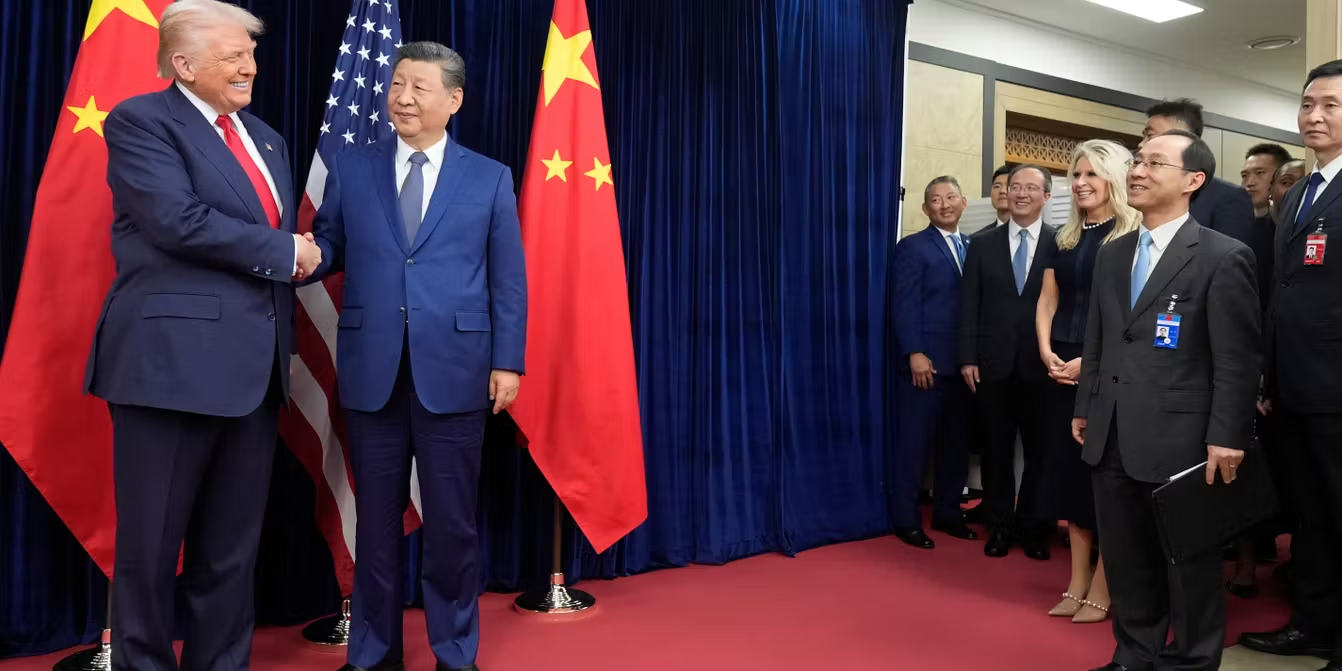
A Temporary Pause in Trade Hostilities
In October 2025, the People’s Republic of China and the United States reached a significant one-year trade truce following a period of intense escalation. This agreement was designed to stabilize a volatile economic relationship that had seen U.S. tariffs on Chinese imports peak at over 100 percent earlier in the year. Consequently, the truce provided a much-needed reprieve for global markets, delaying new restrictive measures and establishing a framework for temporary cooperation in sensitive sectors.
Origins and the Escalation Cycle
Originally, the year 2025 was marked by a series of aggressive trade actions, including sharp tariff hikes in February and March related to fentanyl and retaliatory measures in April. Although a preliminary truce in May briefly lowered bilateral tariffs and eased restrictions on semiconductors and rare earth minerals, tensions resurfaced in September. Furthermore, by December 2025, effective tariffs on Chinese exports to the U.S. had increased by approximately 23 percentage points compared to 2024. This cycle of retaliation necessitated the October agreement to prevent a full-scale trade war that threatened to derail China’s 5 percent GDP growth target.
Structure of the October Agreement
The truce is organized around specific mutual commitments intended to lower the cost of trade and increase transparency. Specifically, the U.S. agreed to reduce fentanyl-related tariffs by 10 percentage points and suspend the implementation of additional 100 percent tariffs for one year. Simultaneously, China committed to suspending retaliatory tariffs on certain U.S. agricultural products and extended the suspension of a 24 percent additional tariff on other U.S. imports. Moreover, the deal included a pause on export control measures for rare earths and strategic minerals, which had been a major point of contention regarding global supply chains.
Purchase Commitments and Maritime Cooperation
In contrast to purely regulatory adjustments, the October deal also includes tangible purchase commitments for U.S. agricultural and energy products. These commitments are reminiscent of earlier trade phases but are more narrowly focused to address immediate trade imbalances. For instance, both nations agreed to suspend port fees that specifically targeted their respective maritime, logistics, and shipbuilding industries. Therefore, the truce acts as a stabilization mechanism that combines political signaling with concrete economic concessions to maintain a baseline of bilateral commerce.
Synthesis of Diplomatic Strategy and Future Outlook
The successful implementation of this one-year truce relies on the continued suspension of “unreliable entities” lists and the avoidance of extraterritorial licensing requirements. This synergy between Presidents Trump and Xi demonstrates a pragmatic, albeit fragile, attempt to manage competition without total decoupling. Simultaneously, trade policy uncertainty remains elevated, as the truce is only temporary and does not resolve deep-seated issues like industrial subsidies. Ultimately, the October agreement provides a stable roadmap for 2026, yet the IMF warns that a renewed escalation remains the key external risk to China’s economic stability.
Source
International Monetary Fund. (2026, February). People’s Republic of China: 2025 Article IV Consultation-Press Release; Staff Report; and Statement by the Executive Director (IMF Country Report No. 26/44).