
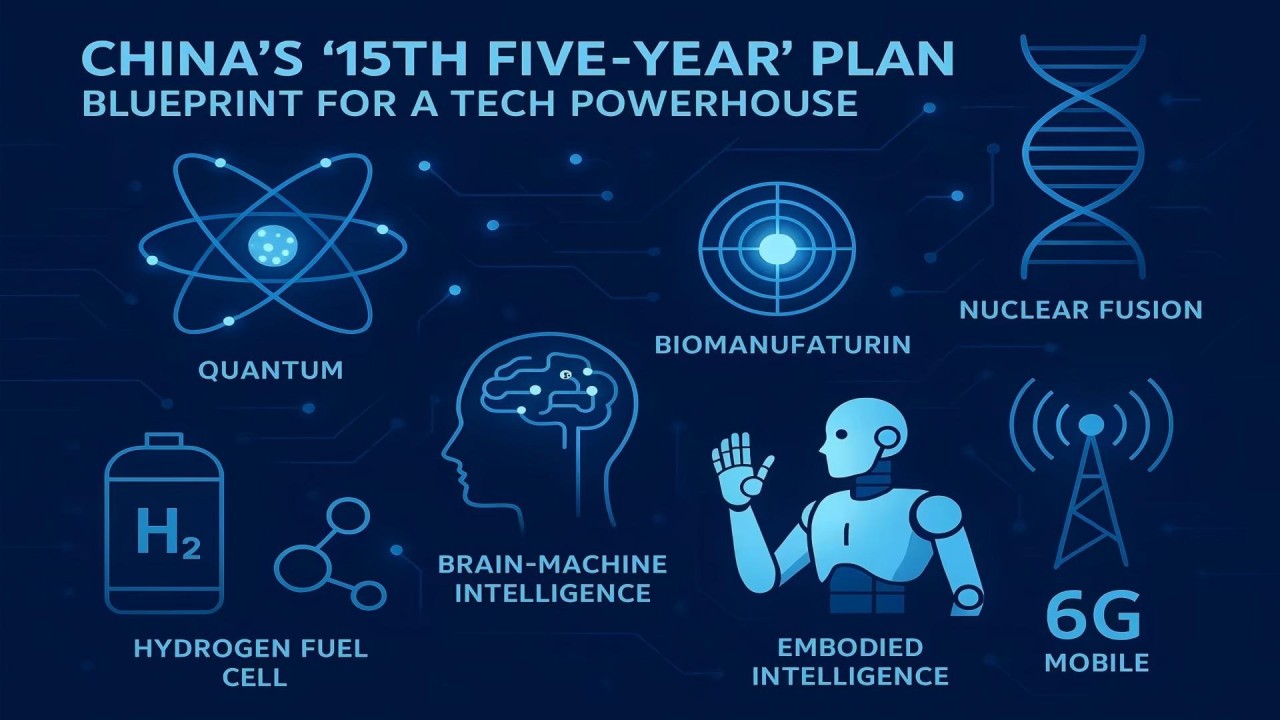
A Strategic Blueprint for a New Era
The year 2026 marks the official launch of China’s 15th Five-Year Plan (FYP), a pivotal policy framework that defines the nation’s economic and social objectives through 2030. In the 2026 Article IV report, the IMF analyzes this plan as a strategic pivot away from high-speed growth toward “high-quality development.” Consequently, the success of this plan is seen as critical for China to overcome middle-income trap challenges and establish a more sustainable, innovation-led economic model that is less dependent on traditional sectors like real estate.
Origins and the “New Development Philosophy”
Originally, China’s growth was fueled by massive infrastructure investment and export-led manufacturing. However, the 15th FYP emerges at a time when these traditional engines are losing steam due to diminishing returns and heightened geopolitical tensions. Furthermore, the plan is rooted in the “New Development Philosophy,” which emphasizes self-reliance in science and technology as a response to external “containment” efforts. This shift reflects a long-term vision to build a “modern socialist country” by 2035, prioritizing domestic resilience and the dual circulation strategy, where internal consumption becomes the primary driver of the economy.
Structure of the Plan’s Core Priorities
The 15th FYP is organized around several high-level pillars, including industrial modernization, green transition, and common prosperity. Specifically, the plan focuses on fostering “New Quality Productive Forces,” which involves deep integration of digital technologies and green energy into the manufacturing base. Moreover, the framework includes robust targets for narrowing the urban-rural income gap and strengthening the social safety net to encourage household spending. By restructuring the supply side, the Chinese government intends to move up the global value chain while simultaneously addressing the demographic challenge of a shrinking workforce.
Innovation and the AI-Driven Industrial Revolution
In contrast to previous plans that focused on heavy industry, the 2026–2030 period places an unprecedented emphasis on the “AI Plus” initiative and quantum computing. For instance, the plan mandates the acceleration of digital transformation in traditional factories to boost productivity in the face of aging-related labor shortages. Therefore, the 15th FYP is not just an economic document but a comprehensive strategy for technological sovereignty. This innovation-centric approach is intended to decouple China’s growth from carbon emissions and resource intensity, positioning the country as a leader in the global “green and digital” twin transition.
Synthesis of Policy Synergy and Global Implications
The successful execution of the 15th Five-Year Plan relies on a delicate synergy between state-led industrial policy and market-oriented reforms. This objective is essential to ensure that massive investments in high-tech do not lead to new forms of industrial overcapacity that could trigger trade disputes. Simultaneously, there is a clear intent to align these domestic goals with international commitments, such as the 2030 carbon peak target. Ultimately, the 15th FYP provides a stable roadmap for China’s evolution into a sophisticated, consumption-based economy, signaling to the world that the era of “growth at any cost” has officially been replaced by a quest for systemic resilience and technological leadership.
Source
International Monetary Fund. (2026, February). People’s Republic of China: 2025 Article IV Consultation-Press Release; Staff Report; and Statement by the Executive Director (IMF Country Report No. 26/44).