
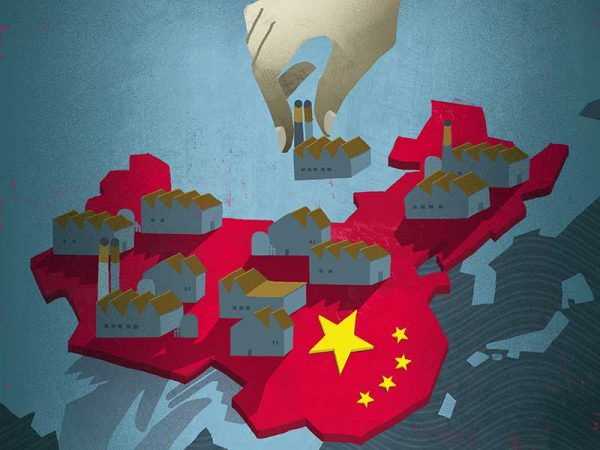
Overview: The Dual Role of the State in the Economy
The 2026 report revisits the long-standing debate over the efficiency and role of State-Owned Enterprises (SOEs) within the People’s Republic of China’s unique economic model. While SOEs provide crucial stability during crises and execute large-scale national strategies, they often lag behind the private sector in terms of innovation and return on assets. Consequently, the IMF continues to advocate for “competitive neutrality” policies to ensure that resources are not disproportionately funneled into less efficient state firms at the expense of private entrepreneurs.
The Productivity Gap and Resource Misallocation
Originally, SOEs in the People’s Republic of China were viewed as the “ballast” of the economy, providing essential services and employment stability. However, the IMF’s recent data show that SOEs typically exhibit lower total factor productivity (TFP) compared to their private counterparts. The report suggests that the PRC should accelerate the exit of non-performing “zombie” SOEs and reduce “implicit guarantees” that allow them to borrow from state banks at lower rates. This misallocation of capital hinders the overall growth potential of the economy and prevents more innovative private firms from accessing the credit they need to scale.
Structural Reforms and Corporate Governance
The structure of SOE reform involves a shift toward “professional management” and market-based incentives within state entities. Specifically, the IMF recommends that the government separate its role as a regulator from its role as an owner to minimize political interference in commercial decisions. Moreover, the report highlights the importance of “mixed-ownership” reforms, where private capital is invited into state firms to improve efficiency and governance standards. By introducing market discipline into the state sector, the authorities aim to transform SOEs into “national champions” that are both strategically aligned with the state and commercially competitive on a global stage.
Synthesis of State Direction and Market Efficiency
The successful reform of the state sector relies on a delicate synergy between national security goals and market-oriented efficiency. This objective is essential to avoid the “middle-income trap,” where growth stalls because the economy is weighed down by inefficient legacy industries. Simultaneously, there is a clear intent to maintain state control over “backbone” industries like energy, telecommunications, and defense, while allowing for more competition in consumer goods and services. Ultimately, the 2026 roadmap for SOE reform provides a stable framework for the People’s Republic of China to balance its socialist identity with the requirements of a modern, innovation-driven global economy.
Source
International Monetary Fund. (2026, February). People’s Republic of China: 2025 Article IV Consultation-Press Release; Staff Report; and Statement by the Executive Director (IMF Country Report No. 26/44)