
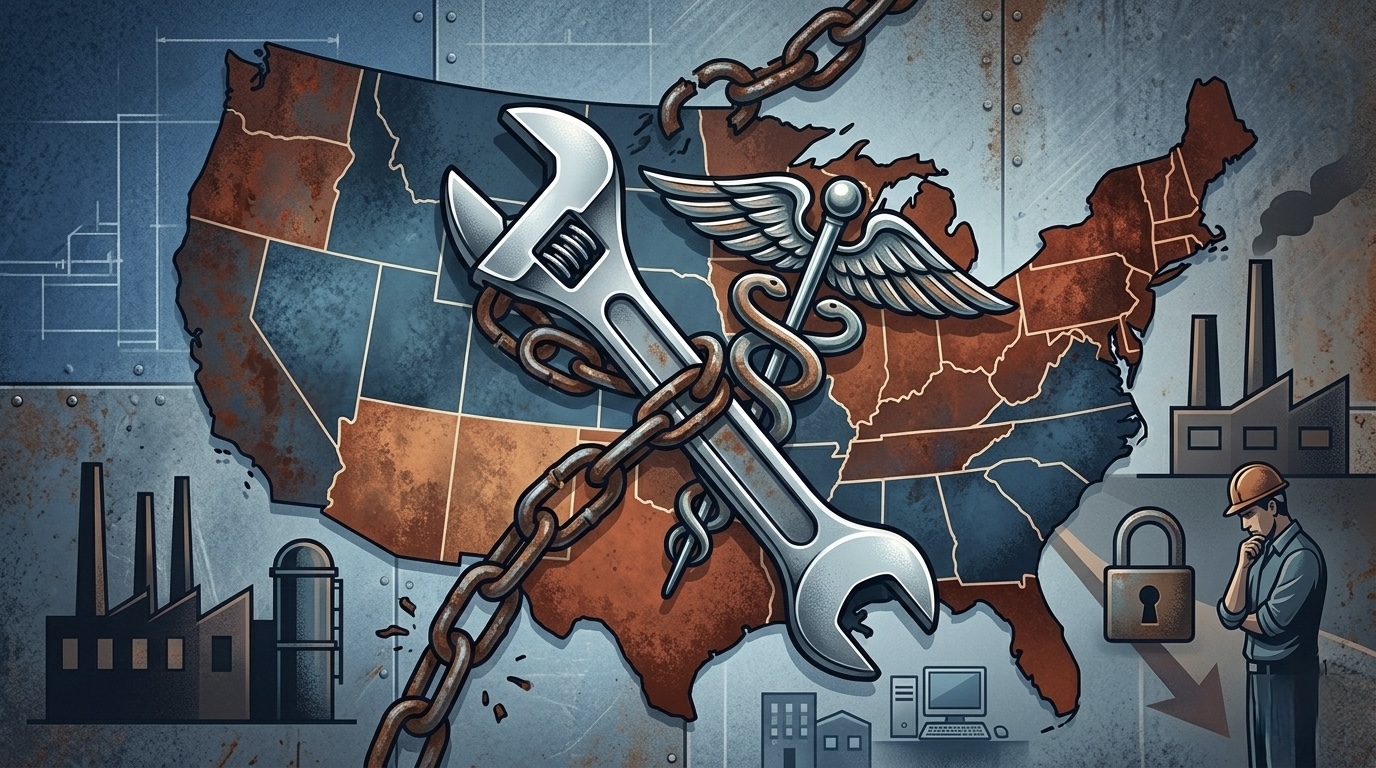
How do we measure the success of a trade agreement? Most people look at GDP or investment flows. However, a recent study by the National Bureau of Economic Research (NBER) reveals a darker side. The paper, Trading Goods for Lives: NAFTA’s Mortality Impacts and Implications, examines a literal human cost: the mortality rate.
The Hidden Cost of the Trade Deal
Economists Amy Finkelstein, Matthew J. Notowidigdo, and Steven X. Shi analyzed the aftermath of the 1994 North American Free Trade Agreement (NAFTA). They found that trade competition with Mexico significantly changed public health in the U.S. Specifically, mortality rates rose in regions that relied heavily on manufacturing.
The data shows an alarming trend. In the 15 years after NAFTA, areas with high exposure to Mexican competition saw a 0.68% increase in their annual mortality rate. Interestingly, this increase is large enough to offset many of the economic gains generated by the treaty.
Why Manufacturing Matters
The study highlights that not all job losses are equal. When a factory closes, the impact goes beyond a lost paycheck. For many working-age men, these industries provided lifelong stability. Therefore, when these jobs disappeared, the social and personal fabric of these communities began to unravel.
Furthermore, the researchers compared manufacturing to other sectors. They discovered that job losses in services or retail do not show the same deadly pattern. In fact, contractions in non-manufacturing sectors sometimes correlate with slight improvements in local health. This suggests that industrial jobs hold a unique place in maintaining community wellbeing.
A Lesson for Future Policies
The findings from Finkelstein and her colleagues serve as a vital warning for today’s policymakers. Whether dealing with new trade deals or the rise of automation, the sector matters. If a policy triggers a decline in manufacturing, the human cost may be much higher than traditional models predict.
Ultimately, international trade does more than move goods across borders. As this research proves, it has the power to shift the life expectancy of entire populations.
Reference
Finkelstein, A., Notowidigdo, M. J., & Shi, S. X. (2025). Trading Goods for Lives: NAFTA’s Mortality Impacts and Implications (NBER Working Paper No. 34855). National Bureau of Economic Research. https://www.nber.org/papers/w34855