
Context and Timing
A girl’s school in Iran was struck by a missile, killing many children and adults two days before a major UN speech on education and peace.
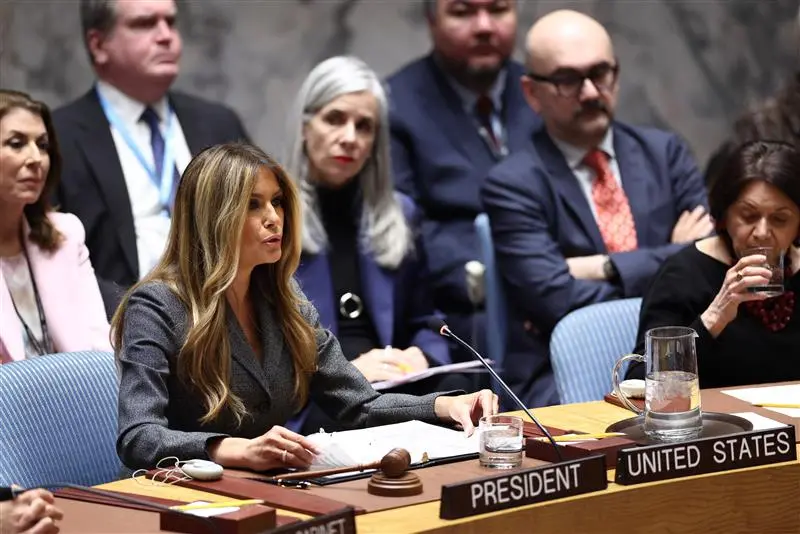
Subsequently Melania Trump presided over a UN Security Council session titled “Children, Technology and Education in Conflict,” without mentioning that school attack.
Misleading Causal Claims
The speech suggested that simply increasing education automatically produces peace in societies.
However, decades of research show education can also deepen division, reinforce inequality, and be manipulated for political ends.
Thus, education’s effect on peace is complex and cannot be reduced to a simple formula or slogan.
Broad Nature of Education
In practice schooling is just one part of education’s broader social, cultural, and psychological roles.
Under conflict conditions, social cohesion, cultural preservation, and community resilience often matter more than economic skills.
Sustainable peace through education requires deep engagement with local contexts and broad social transformations.
Colonial Rhetoric Echoes
The speech framed education as a one-way transfer of knowledge from “advanced” societies to others.
This mirrors colonial notions of civilizing missions that assumed superiority of some cultures over others.
Such one-directional approaches have historically failed and can worsen conflict rather than preventing it.
What Research Actually Shows
Studies reveal that education reforms imposed externally without local voices often fail.
Conversely, reforms developed collaboratively with teachers and communities show better outcomes for peace and learning.
Therefore effective education for peace needs community grounding and professional trust, not top-down declarations.
Silences and Implications
Global bodies publicly condemned the school bombing, but none addressed it during the Security Council session.
Failing to mention active conflict while extolling “peace through education” undermines international credibility and real protection efforts.
This silence signals that schools and children’s lives may be treated as rhetoric rather than genuine priorities.
Core Argument
In sum, promoting peace through education requires nuanced understanding, local engagement, and urgent protection of learners from conflict’s immediate harms.
Source:
Qargha, G. O. (2026, March 4). The weaponization of education rhetoric: A response to Melania Trump’s “Peace Through Education” address at the UN Security Council. Brookings Institution. https://www.brookings.edu/articles/the-weaponization-of-education-rhetoric-a-response-to-melania-trumps-peace-through-education-address-at-the-un-security-council/