
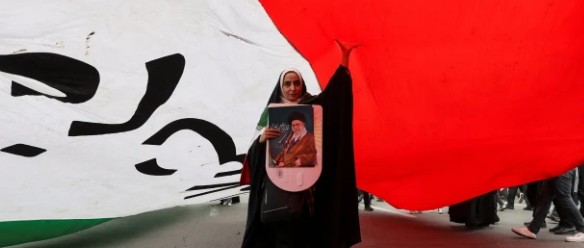
Contingency Planning Memorandum — A report by the Council on Foreign Relations
After Khamenei and the uncertainty of Iran’s next transition
After Khamenei is no longer a distant question but an urgent strategic contingency. Suzanne Maloney argues that Iran is approaching only its second leadership transition since the 1979 revolution, and that the consequences of Khamenei’s ouster, death, or incapacitation will reverberate across the Middle East and beyond. Given his age, the regime’s mounting internal strains, and intensified external pressure, change appears increasingly likely, even if its exact timing remains uncertain.
The memorandum stresses that U.S. policymakers should not assume that leadership change in Tehran will automatically produce moderation or democratic reform. On the contrary, the most plausible outcomes are unstable and potentially more dangerous. The core recommendation is not to try to prevent transition, but to prepare for it realistically: reconsider assumptions about regime change, revive accountability efforts, anticipate opportunistic escalation by Iranian proxies, and prepare for renewed nuclear diplomacy.
Three possible paths after Khamenei
The report identifies three broad trajectories for Iran’s leadership transition: managed continuity, military takeover, or regime collapse. These paths are not mutually exclusive. A transition could begin as an effort to preserve the system and then slide into more overt military rule or institutional breakdown.
The first scenario, managed continuity, would rely on the Islamic Republic’s constitutional mechanisms and elite planning. In this version, the Assembly of Experts would appoint a successor from within the current regime’s clerical establishment. Maloney notes that such a process could preserve the current balance of power, what she effectively describes as continuity without Khamenei himself. Yet this path carries risk because likely candidates lack Khamenei’s authority, visibility, and political longevity. Even if continuity is achieved formally, it may not deliver comparable regime durability.
The second scenario is a hard-right shift toward military dominance. The report argues that the security services, especially the IRGC, have become indispensable to regime survival and could assume overt control in a post-Khamenei vacuum. In that case, Iran could evolve into a more openly authoritarian system, less dependent on clerical legitimacy and more reliant on force. Figures with strong ties to both security institutions and the current power structure could become central players.
The third scenario is regime collapse, whether through decapitation strikes, internal unrest, or the interaction of both. Although many outside Iran might welcome the Islamic Republic’s downfall, the report warns that collapse would likely be chaotic, destabilizing, and regionally disruptive. It could trigger ethnic unrest, power struggles, and prolonged instability before any new order emerges.
Why the transition may worsen risks before it creates opportunities
A major strength of the memorandum is its caution against wishful thinking. Maloney emphasizes that even if the regime changes at the top, Iran’s institutions remain deeply entrenched. Therefore, a leadership transition is unlikely to generate positive political transformation in the short term.
In fact, the report argues that the period after Khamenei could become more dangerous for U.S. interests. A successor regime (whether clerical, military, or fractured) may seek to prove its strength through repression at home and escalation abroad. Proxy militias, naval forces in the Persian Gulf, cyber operations, and nuclear brinkmanship could all become tools of signaling and coercion during an uncertain transition.
The memorandum also highlights potential second-order effects: intensified internal repression, protests and unrest, worsening economic conditions, and greater activity by diaspora opposition groups. Those dynamics could create cycles of reaction and overreaction by a new leadership still trying to consolidate power.
At the same time, the report does not dismiss the possibility of longer-term openings. Elite fissures could widen, internal legitimacy could erode further, and a leadership preoccupied with survival might have fewer resources for regional adventurism. Still, these are only possible indirect benefits, not likely near-term outcomes.
Warning indicators and what Washington should do now
The memorandum outlines several warning signs that a transition may be approaching. These include changes in Khamenei’s public presence, more open elite discussion of succession, growing coordination among political insiders, renewed debates within the Shia clerical establishment, worsening economic conditions, escalating repression, and defections from among military or security personnel.
From a policy standpoint, the report advises the United States to prepare rather than overreach. Before a transition, Washington should refresh intelligence assessments, support accountability for repression, strengthen Iranian civil society and independent media, preserve communications tools such as internet access, and avoid endorsing specific aspirants to power. It should also prepare tools to disrupt another round of mass repression.
Once a succession process begins, the recommendations become more operational. The United States should use formal and informal diplomatic channels to communicate with Iran’s new leadership, deter proxy escalation, reinforce regional defenses, step up sanctions and interdictions against militia networks, protect detainees, and coordinate with allies on a framework for renewed nuclear diplomacy. The report’s broader message is clear: the United States should avoid assuming it can engineer Iran’s future, but it should be ready to shape incentives, deter opportunism, and test diplomatic openings when they emerge.
Reference
Maloney, S. (2026). After Khamenei: Planning for Iran’s leadership transition. Council on Foreign Relations. Contingency Planning Memorandum. https://www.cfr.org/reports/