
The Deviation from Historical Safe-Haven Norms
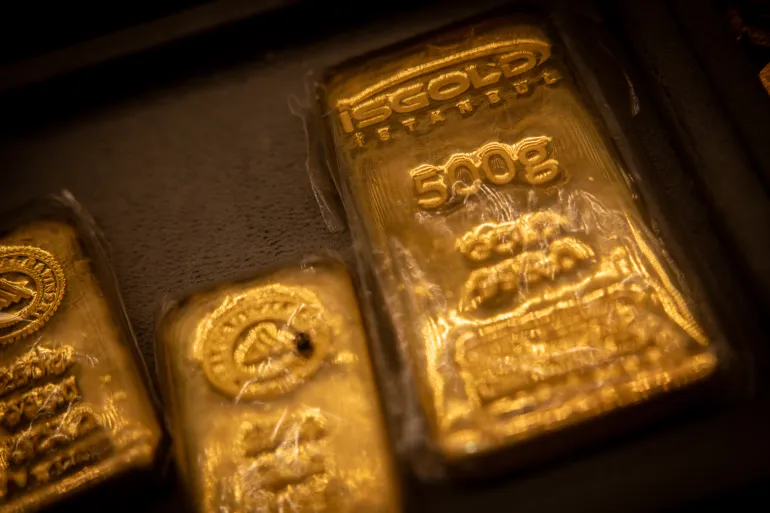
By mid-March 2026, as the conflict between the U.S.-Israeli coalition and Iran enters its third week, a strange phenomenon has emerged in global markets: gold prices are not rising. Historically, gold is the ultimate safe-haven asset, spiking during geopolitical shocks like the 1990 Gulf War or the 2022 invasion of Ukraine. However, despite the assassinations of top Iranian leaders and the effective closure of the Strait of Hormuz, gold has remained range-bound, even seeing slight declines to around $5,000 per ounce from its pre-war highs. Consequently, investors are forced to look beyond “geopolitical fear” to understand why the yellow metal is failing to shine during one of the most significant Middle East escalations in decades.
Origins and the “Interest Rate Trap”
Originally, analysts expected a $6,000 gold peak as “Operation Epic Fury” began. However, the Al Jazeera report indicates that the origin of the current price stagnation lies in the unexpected surge of the U.S. Dollar. In times of extreme uncertainty, the dollar competes with gold as a safe haven; currently, the greenback is winning. Furthermore, the war has pushed oil prices above $100 a barrel, which has reignited fears of “sticky” inflation. This leads to a structured paradox: because oil-driven inflation is rising, the U.S. Federal Reserve is now expected to keep interest rates “higher for longer.” Since gold provides no yield or interest, it becomes less attractive to institutional investors who can now get guaranteed high returns from interest-bearing government bonds.
Structure of Market Friction and De-Risking
The structure of this market behavior is organized around “liquidity requirements” and “profit-taking.” Specifically, as stock markets in Asia and Europe cratered following the strikes on Tehran and the blockade of the Gulf, many institutional investors were forced to sell their “winning” gold positions to cover losses in other sectors—a process known as a liquidity squeeze. Moreover, the report highlights that the “shock factor” of the war was partially priced in by markets that had been navigating global friction for years. This structured resistance is further bolstered by the People’s Republic of China, which, despite its “de-dollarization” rhetoric, has slowed its official gold purchases in recent weeks to preserve cash reserves amid the global energy shock.
Synthesis of Geopolitical Risk and Monetary Dominance
The successful future of gold as a hedge now relies on a synergy between a potential pause in Fed rate hikes and a sustained breakdown of the U.S. dollar’s credibility. This objective is essential for gold bugs to see a return to record highs. Simultaneously, there is a clear intent among market participants to prioritize monetary policy signals over battlefield headlines; as long as the Fed remains hawkish to combat war-driven inflation, gold’s upside remains capped. Ultimately, the March 17, 2026, analysis provides a stable roadmap for understanding the modern global economy, signaling that in the 21st century, the “monetary safe haven” (the Dollar) currently holds more weight than the “physical safe haven” (Gold).
Reference: Al Jazeera. (2026, March 17). Why aren’t gold prices rising, despite Iran war uncertainty? Al Jazeera Economy. https://www.aljazeera.com/economy/2026/3/17/why-arent-gold-prices-rising-despite-iran-war-uncertainty