
The Shift from Physical to Digital Hegemony
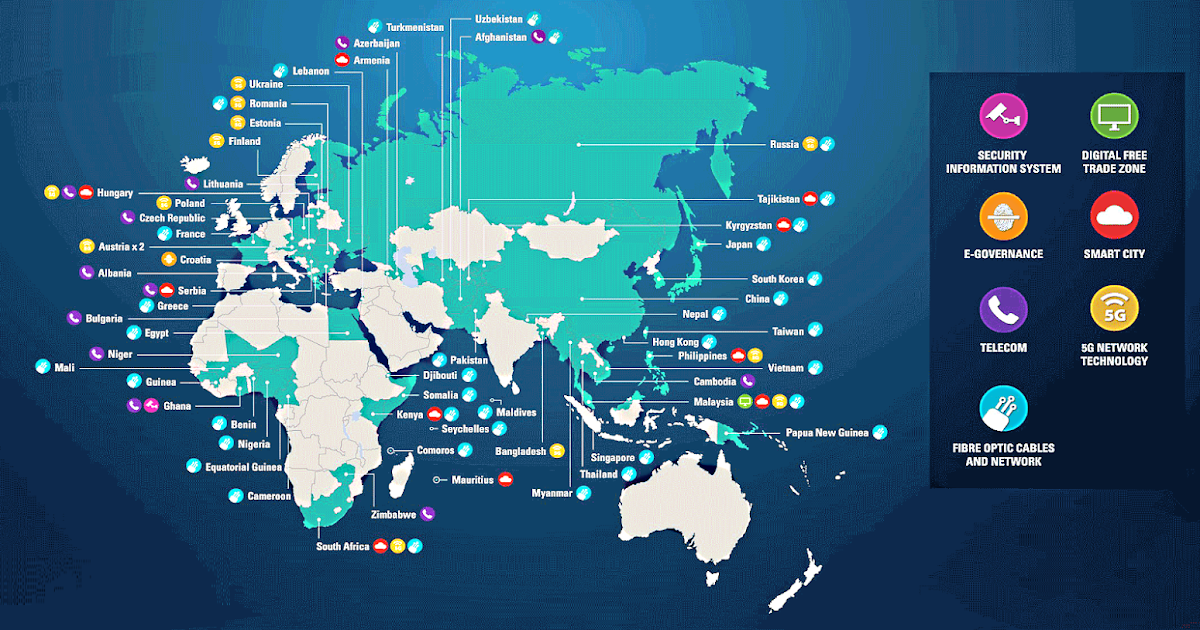
In 2024, the Council on Foreign Relations (CFR) analyzed the “Digital Silk Road” (DSR) as a cornerstone of China’s Belt and Road Initiative, marking a transition from building ports and railways to deploying global telecommunications and data infrastructure. Through the DSR, Beijing provides developing nations with affordable 5G networks, fiber-optic cables, and satellite navigation systems, often undercutting Western competitors. Consequently, this initiative is not merely a commercial venture but a strategic move to create a Sinocentric digital ecosystem. This expansion suggests that the future of global influence will be determined by who controls the flow of information, as nations that adopt Chinese technology may find themselves increasingly integrated into Beijing’s normative and technical standards.
Origins and the Response to Western Dominance
Originally, the global internet and telecommunications landscape were almost entirely shaped by U.S. and European firms, ensuring a Western-led liberal framework for data governance. However, the origin of the DSR lies in China’s desire to reduce its reliance on foreign technology and to project its own “Cyber Sovereignty” model internationally. As the U.S. began restricted access to high-end semiconductors and scrutinized firms like Huawei, Beijing accelerated the DSR to secure alternative markets and establish “first-mover” advantages in emerging economies. Furthermore, the report emphasizes that by offering “turnkey” digital solutions, China is filling a massive investment gap in the Global South that the West has historically ignored, effectively bypassing traditional multilateral lending institutions.
Structure of Digital Integration and Data Governance
The structure of the DSR is organized around three primary layers: physical infrastructure, digital platforms, and governance standards. Specifically, Chinese state-backed firms are installing the subsea cables that carry global internet traffic and the “Beidou” satellite system that rivals GPS. Moreover, the article highlights the “strategic embedding” of Chinese surveillance technology and facial recognition software within the “Safe Cities” programs of participating nations. This structured integration creates a dependency where the recipient country’s digital backbone becomes inseparable from Chinese technical support. This environment facilitates a “closed-loop” system where data standards are dictated by Beijing rather than international consensus, complicating future interoperability with Western systems.
Synthesis of Global Fragmentation and the Future of the Internet
The successful expansion of the DSR now faces a paradox where the more China dominates the digital infrastructure of the Global South, the more it triggers “de-risking” and “decoupling” efforts from the U.S. and its allies. This objective is essential to understand because it signals the end of a single, unified global internet, giving way to a “Splinternet” divided by geopolitical loyalties. Simultaneously, there is a clear intent among Western powers to counter the DSR through initiatives like the G7’s “Partnership for Global Infrastructure and Investment” (PGII). Ultimately, the CFR report provides a stable warning for the future: the battle for the Digital Silk Road is not just about cables and 5G; it is a fundamental struggle over whose values—and whose surveillance—will define the 21st-century global order.
Reference
Council on Foreign Relations. (2024). China’s Digital Silk Road. CFR Backgrounder. https://www.cfr.org/china-digital-silk-road/