
Technological Leap and Deep Space Leadership
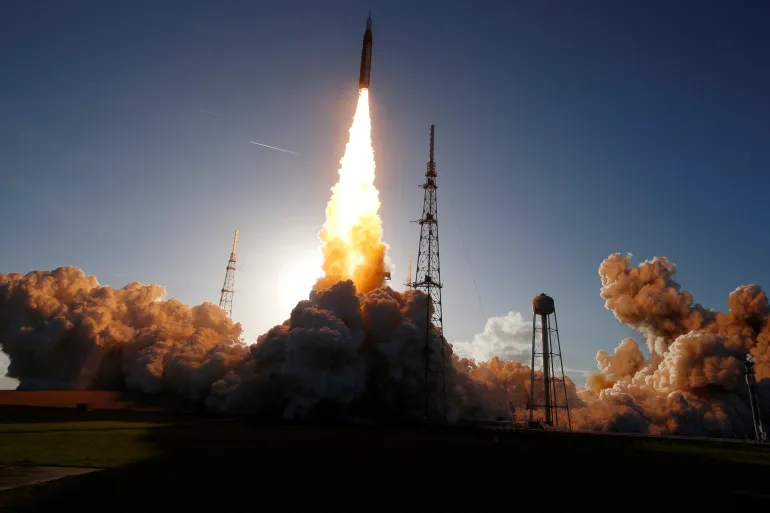
On April 1, 2026, NASA successfully launched the Artemis II mission from the Kennedy Space Center, carrying four astronauts on a ten-day journey around the Moon. As the first crewed mission of the Artemis program, it utilizes the Space Launch System (SLS) rocket and the Orion spacecraft to validate life support and navigation systems essential for future surface landings. Consequently, the successful liftoff is not merely a technical milestone but a definitive assertion of U.S. industrial capacity to operate beyond low Earth orbit (LEO) for the first time in over 50 years. This advancement suggests that the infrastructure for a permanent human presence on the Moon is shifting from theoretical planning to operational execution.
Origins and the New Geopolitical Space Race
Originally, the Artemis program was envisioned as the spiritual successor to the Apollo missions, focused on sustainability and international partnership. However, the origin of NASA’s current urgency lies in the strategic competition with the China-led International Lunar Research Station (ILRS). By launching Artemis II in 2026, Washington aims to consolidate its network of space allies—bolstered by the Artemis Accords—before Beijing achieves similar crewed milestones. Furthermore, the report emphasizes that this mission is the critical precursor to Artemis III, which intends to land the first woman and first person of color on the lunar surface, integrating a dimension of social policy and soft power into U.S. national prestige.
Mission Structure and International Cooperation
The structure of Artemis II is organized around a “free-return trajectory,” where lunar gravity will naturally slingshot the capsule back to Earth without requiring significant additional propulsion. Specifically, the crew includes Canadian Space Agency (CSA) astronaut Jeremy Hansen, marking the first time a non-U.S. citizen has traveled to lunar vicinity—symbolizing the cost-sharing and tech-sharing structure of the Artemis coalition. Moreover, the article highlights the role of the European Space Agency (ESA), which provided the European Service Module (ESM) responsible for the craft’s power and propulsion. This structural collaboration creates a framework where NASA’s success is intrinsically linked to the stability of its transatlantic and transpacific alliances.
Synthesis of Lunar Economics and Future Sovereignty
The successful maintenance of a U.S. presence in cislunar space now faces a paradox where the high cost of the SLS program must be justified against competing domestic priorities and the economic strain of the Iran war. This objective is essential to understand because it signals a transition toward a “Lunar Economy,” where the Moon is viewed as a gateway for resource extraction and a testing ground for Mars. Simultaneously, there is a clear intent among the “Artemis nations” to establish “safety zones” on the lunar surface, a move that critics argue could lead to de facto territorial claims. Ultimately, the Al Jazeera report provides a stable warning: Artemis II is the opening salvo in a struggle over whose laws, values, and corporations will define the 21st-century frontier.
Reference
Al Jazeera. (2026, April 1). NASA successfully launches historic Artemis II moon mission. Al Jazeera Space News. https://www.aljazeera.com/news/2026/4/1/nasas-artemis-ii-lifts-off-to-the-moon