
The Transition from Border Skirmishes to Trilateral Diplomacy
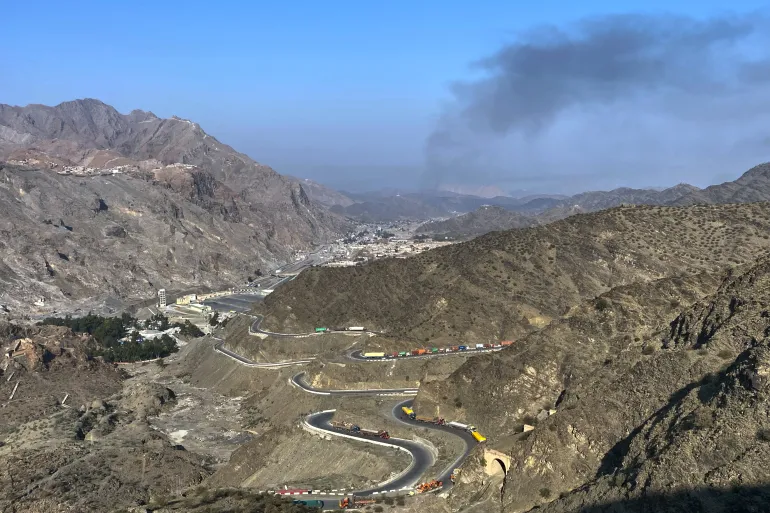
On April 2, 2026, high-level delegations from Pakistan and Afghanistan met in Beijing for a Chinese-brokered summit intended to end three months of intensified border conflict. The tensions, which centered on the disputed Durand Line and cross-border militant activity, had escalated into artillery exchanges and disrupted key trade corridors. Consequently, the Beijing talks represent a significant shift toward a regionalized solution, moving away from the failed security frameworks of the previous decade. This suggests that as the U.S. remains preoccupied with the Iran war, China is stepping in to protect its Belt and Road Initiative (BRI) investments by acting as the primary security guarantor for its Western neighbors.
Origins and the “Terrorism-Sovereignty” Paradox
Originally, the relationship between the Taliban-led Afghan government and Islamabad was expected to stabilize following the U.S. withdrawal. However, the origin of the current conflict lies in Pakistan’s “Operation Azm-e-Istehkam,” a military campaign launched in early 2026 to target TTP (Tehrik-i-Taliban Pakistan) sanctuaries within Afghan territory. As Kabul condemned these strikes as violations of its sovereignty, the resulting trade blockades at the Torkham and Chaman crossings pushed both nations to the brink of economic collapse. Furthermore, the report emphasizes that China’s intervention was triggered by the direct threat these “border wars” posed to the China-Pakistan Economic Corridor (CPEC), particularly the safety of Chinese personnel working on energy projects.
Structure of the “Security-for-Investment” Proposal
The structure of the Beijing agreement is organized around a “Security-for-Investment” swap. Specifically, China has offered to extend CPEC infrastructure into Afghanistan—including the long-delayed Trans-Afghan Railway—on the condition that Kabul provides verifiable guarantees to prevent militant groups from using its soil to attack Pakistani and Chinese interests. Moreover, the article highlights the “Institutional Friction” within the Taliban leadership; while the pragmatic wing in Kabul seeks Chinese capital, the hardline elements in Kandahar remain resistant to external security oversight. This creates a structured challenge where the success of the peace talks depends on whether the Taliban can centralize command and control over its disparate border units.
Synthesis of Regional Integration and the Waning Western Influence
The successful de-escalation of the Pakistan-Afghanistan conflict now faces a paradox where the “peace” maintained by Chinese mediation may lead to a permanent exclusion of Western diplomatic influence in the region. This objective is essential to understand because it illustrates the “Sinicization of Central Asian Security,” where stability is managed through economic dependency rather than democratic conditionality. Simultaneously, there is a clear intent among the three nations to establish a “Trilateral Counter-Terrorism Mechanism” that bypasses INTERPOL or UN-led initiatives. Ultimately, the Al Jazeera report provides a stable warning: if China fails to bridge the trust deficit between Islamabad and Kabul, the resulting vacuum will not be filled by a return to international norms, but by a prolonged, fragmented insurgency that could bleed into the wider “Iran War” theater.
ReferenceAl Jazeera. (2026, April 2). Pakistan, Afghanistan hold talks in China to end months of conflict. Al Jazeera News. https://www.aljazeera.com/news/2026/4/1/pakistan-afghanistan-hold-talks-in-china-to-end-months-of-conflict