
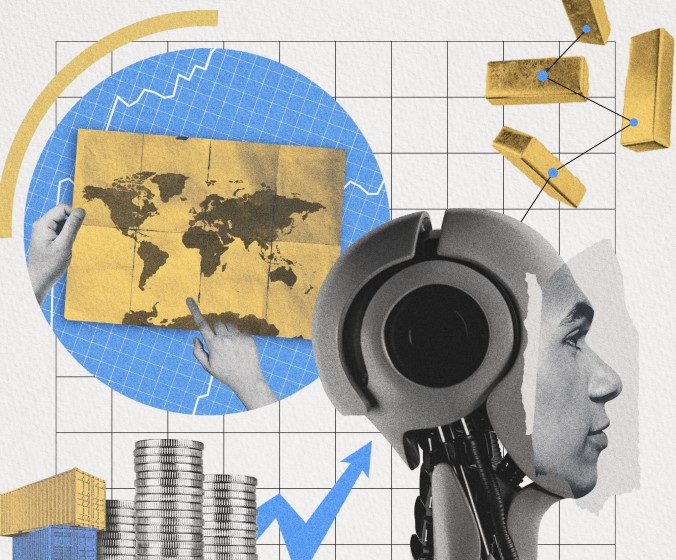
Chief Economists’ Outlook: January 2026. World Economic Forum
Published by the World Economic Forum, this report synthesizes survey responses from leading economists to assess the global economic outlook for 2026. Overall, expectations remain cautious. Although sentiment has improved compared to 2025, 53% of economists still anticipate weaker global conditions in the year ahead.
A fragile but resilient global economy
The global economy shows resilience, yet significant risks persist. On the one hand, financial markets remain strong, driven largely by AI-related investments and concentrated gains in major tech firms. On the other hand, concerns about inflated asset valuations and potential market corrections are increasing.
At the same time, debt has become a central issue. Governments and firms continue to operate with historically high debt levels, forcing difficult fiscal decisions. Consequently, economists expect a combination of strategies, including higher taxes, moderate inflation, and selective spending cuts, particularly in advanced economies.
Geopolitics and the restructuring of global trade
Geopolitical tensions are reshaping trade and investment patterns. While the United States and China have stabilized tensions temporarily, underlying conflicts persist. As a result, global trade is becoming more fragmented and increasingly regionalized.
Moreover, countries are prioritizing strategic sectors such as technology and critical minerals. This shift is leading to more bilateral and regional agreements, even as global trade volumes remain uncertain. Meanwhile, foreign direct investment is being redirected, with stronger inflows expected in the United States and weaker prospects for China.
Artificial intelligence: opportunity and disruption
Artificial intelligence stands out as a key driver of future growth. In particular, investment in AI infrastructure is boosting economic activity, especially in the United States and China. However, its benefits are uneven.
Productivity gains are expected to appear quickly in advanced economies but more slowly in developing regions. Furthermore, impacts vary across industries, with technology and finance advancing faster than sectors such as agriculture or manufacturing.
At the same time, the labor market faces uncertainty. In the short term, most economists expect modest job losses. In contrast, the long-term outlook is more mixed, with both job creation and displacement likely depending on how economies adapt.
Diverging regional outlooks
Regional growth prospects differ significantly. The United States benefits from strong AI investment and relatively solid growth expectations. China maintains momentum through exports and technology, despite internal pressures.
By contrast, Europe faces weaker growth due to demographic challenges, policy fragmentation, and lower technological competitiveness. Meanwhile, regions such as South Asia show stronger growth potential, supported by reforms and integration into global markets.
Conclusion
In sum, the global economy in 2026 is defined by uncertainty and transition. Although resilience remains, risks related to debt, geopolitical fragmentation, and asset valuations are substantial. Therefore, the report emphasizes that policy decisions in the coming years will be critical in determining whether technological change leads to broad-based growth or increased inequality.
Reference
World Economic Forum. (2026, January). Chief Economists’ Outlook. https://www.weforum.org/publications/chief-economists-outlook-january-2026/