
Council on Foreign Relations. The Global Water Crisis: Stress, Scarcity, and Conflict
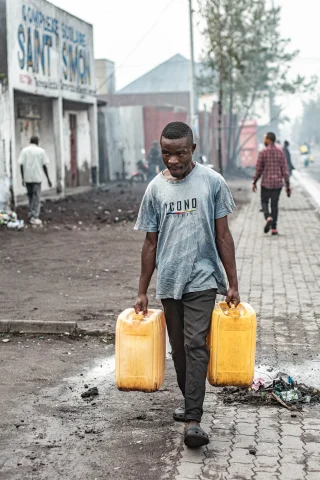
Updated on March 20, 2026, this CFR Backgrounder by Diana Roy, Claire Klobucista, and Kali Robinson examines the growing global water crisis. More than two billion people across the world lack adequate access to clean water. In a January 2026 flagship report, UN researchers warned that the world is in a state of “water bankruptcy,” in which human demand and depletion of natural water systems exceed replenishment rates, threatening global energy and food security and causing irreversible ecological degradation.
Causes and Regional Vulnerabilities
Water stress results from intersecting human and natural pressures. Agriculture accounts for about 70 percent of global freshwater withdrawals. Rising temperatures due to climate change are intensifying stress in already affected regions and making water availability less reliable. In addition, population growth and poor water governance exacerbate the problem. Geographically, close to 75 percent of the world’s population lives in countries classified as “water-insecure” or “critically water-insecure.” Fifteen of the world’s twenty most water-scarce countries are located in the Middle East and North Africa.
Water as a Source of Conflict and Cooperation
The security implications are significant and growing. In 2024, there were a record 420 water-related conflicts worldwide. Transboundary waters are a rapidly growing source of tension, either because there is no agreement in place or an existing water regime is disputed. cfr The Nile Basin — where Ethiopia’s Grand Ethiopian Renaissance Dam has intensified tensions with Egypt — is the most prominent example. However, scarcity can also foster dialogue. As one expert notes, water can bring groups to the table when they cannot agree on anything else. Moreover, water stress disrupts global trade, as illustrated by the 2023 Panama Canal drought, which forced authorities to restrict daily ship traffic.
Responses and the Path Forward
Progress has been uneven. Between 2000 and 2020, the share of people using safely managed drinking water rose by more than 13 percent. Nevertheless, many countries are behind on meeting SDG Goal 6 ahead of the 2030 target date. Promising approaches include green infrastructure, wastewater recycling, smarter agriculture, and land restoration. However, unlike climate change, there is still no comprehensive global framework specifically addressing water stress. Consequently, sustained international cooperation and increased investment remain essential to reversing the crisis.
Reference
Roy, D., Klobucista, C., & Robinson, K. (2026, March 20). The global water crisis: Stress, scarcity, and conflict. Council on Foreign Relations. https://www.cfr.org/backgrounders/water-stress-global-problem-thats-getting-worse