
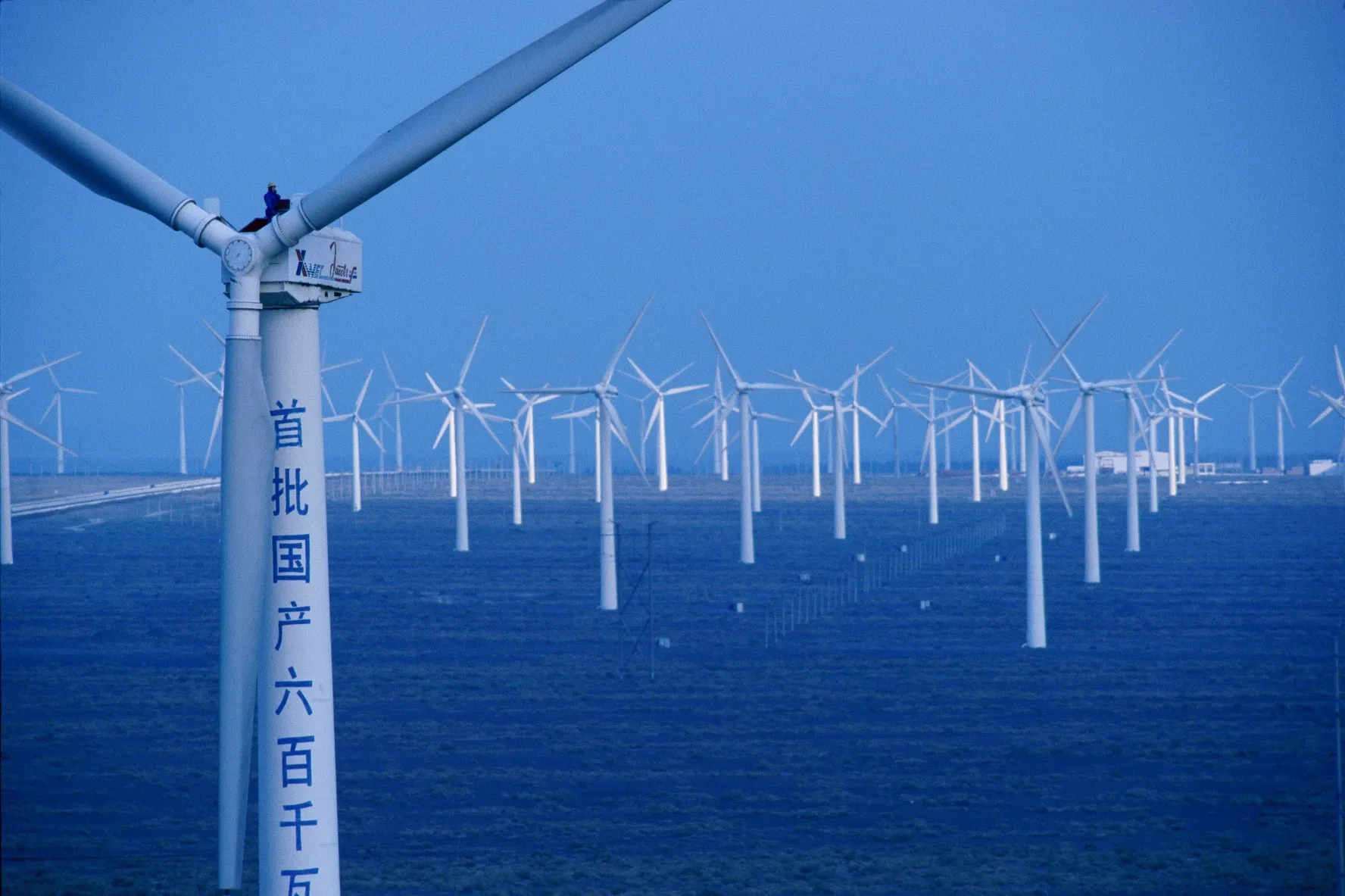
The urgent need to meet climate goals has placed the United States at a strategic crossroads. Policymakersmust decide whether to restrict Chinese investment in the clean energy sector to protect national security or welcome it to speed up the energy transition.
A recentanalysis by the Brookings Institution explores the risks, benefits, and the need for clear “red lines.”
Identifying the Core Security Risks
The debate is not simple. Experts agree that the risksof allowing Chinese capital and technology fall intothree main categories. First, there are “hard” security risks. These include cyber vulnerabilities and the potential manipulation of critical infrastructure throughdata-transmitting devices.
Second, there is a deep concern regarding economicdependency. If China controls essential components, it could use that leverage as a political tool. Finally, thereis a market risk. Because Chinese firms often operateclosely with the state, they do not follow traditionalmarket rules. This dynamic could distort the U.S. domestic industry and hinder fair competition.
Are These Risks Manageable?
Despite these tensions, the analysis suggests that not all hardware is dangerous. So-called “dumb” or passivecomponents, those that do not transmit data or connect to critical networks, represent a manageablerisk.
However, experts warn that the U.S. must still diversifyits supply chains. The goal is to prevent a situationwhere a Chinese export ban could paralyze American energy projects. Instead of total isolation, the proposedsolution is to build “networked supply chains” with strategic allies who share similar security standards.
The Challenge of Staying Competitive
China currently leads the world in key sectors like high-capacity battery manufacturing and electric vehicles(EVs). The Brookings report highlights a difficult reality: if U.S. auto companies want to remain competitive, integration with Chinese firms like CATL may be unavoidable in the short term.
Total restrictions could backfire. A complete ban mightdelay innovation, increase costs for the energy transition, and leave the U.S. behind in the global techrace. Therefore, the challenge for policymakers is to be “surgical.” They must create safeguards that protectnational infrastructure without suffocating access to the technologies needed to fight climate change.
Reference
Cartin, J. M., Chan, K., Gallagher, M. E., & Lewis, J. (2026, April 16). Should the US restrict Chinese investment in clean energy? Brookings Institution. https://www.brookings.edu/articles/should-the-us-restrict-chinese-investment-in-clean-energy/