
The Transition from Deterrence to Proactive Escalation
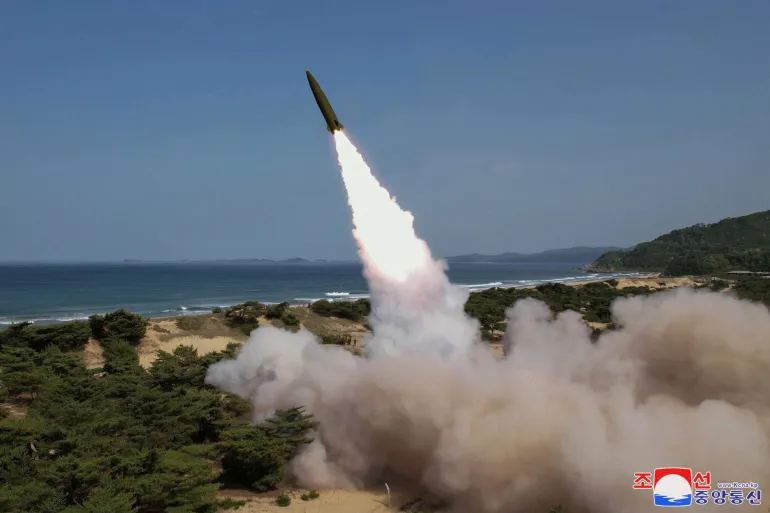
By April 19, 2026, North Korea’s military posture has transitioned from periodic deterrence displays to a pattern of proactive escalation. The Al Jazeera report details the launch of multiple ballistic missiles towards the sea off its east coast, a move that coincides with heightened regional tensions and the strengthening of the Australia-Japan-US security architecture. Consequently, the focus has shifted from the technical specifications of the missiles to the timing and political intent of the launches. This suggests that Pyongyang is capitalizing on the global preoccupation with the Middle East conflict to advance its own weapons development and assert its status as a permanent, non-negotiable nuclear power.
Origins and the Collapse of the “Freeze-for-Freeze” Concept
Originally, international diplomacy centered on a “freeze-for-freeze” model where North Korea would halt testing in exchange for a reduction in joint military exercises by the U.S. and South Korea. However, the origin of this latest launch cycle lies in the total collapse of that framework following the 2025 regional security shifts. For 2026, these launches serve as a defiant response to the $7 billion Australia-Japan warship deal and the perceived “encirclement” of the peninsula. The report emphasizes that North Korea is no longer testing to gain a seat at the negotiating table, but rather to perfect its tactical nuclear delivery systems in a world where it perceives global norms and enforcement mechanisms to be fundamentally broken.
The Structure of the “Multi-Front” Pressure Strategy
The structure of this latest provocation is organized around three layers of strategic and technical friction. First is the “Saturation” tactic; by launching multiple missiles simultaneously, Pyongyang is testing the tracking and interception capabilities of the Aegis-equipped destroyers recently prioritized by regional powers. Second is the domestic variable, as the report notes that these high-profile launches are used to consolidate internal support during a period of severe food shortages and economic isolation. Finally, the article highlights the institutional friction within the UN Security Council, where the “Moral Bloc” of BRICS+ (Article #119) and the veto power of Russia and China have effectively paralyzed any attempt to impose fresh sanctions for these violations.
Synthesis of the Normalization of Risk and the New Nuclear Order
The successful advancement of North Korea’s missile program now faces a paradox where the “normalization of risk” makes the peninsula more dangerous precisely because it is being ignored. This represents the “fatigue paradox” in political science, where frequent provocations lead to a decrease in international response, thereby granting the aggressor more space to innovate. There is a clear intent in the Al Jazeera news report to show that Pyongyang is exploiting the “global focus gap” created by the war on Iran. Ultimately, it is clear that for 2026, the ballistic launches are a reminder that while the world’s eyes are on the Strait of Hormuz, the nuclear “Third Front” in the Pacific is reaching a point of no return.
Reference
Al Jazeera. (2026, April 19). North Korea launches ballistic missiles towards sea off its east coast. Al Jazeera News. https://www.aljazeera.com/news/2026/4/19/north-korea-launches-ballistic-missiles-towards-sea-off-its-east-coast