
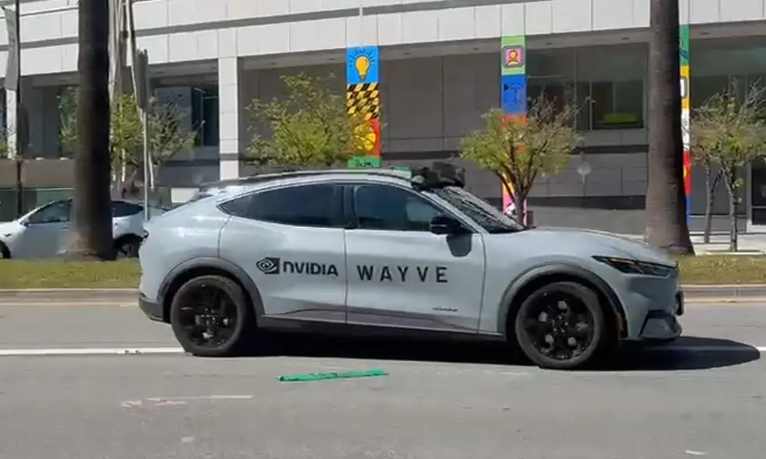
Wayve positions partial automation as a scalable path to widespread self-driving, aiming to embed its AI in almost any modern car using relatively cheap, existing hardware such as cameras and chips that already support features like adaptive cruise control and automatic emergency braking. Rather than building dedicated robotaxis, its system runs on cars like the Ford Mustang Mach-E and relies on “standard navigation maps” similar to those used by human drivers, which allows operation in many cities without the detailed, custom mapping that competitors such as Waymo require. This strategy is designed to create a data flywheel: large-scale deployment of partially autonomous vehicles generates real-world driving data that can be used to train more advanced models, with the long-term goal of achieving fully autonomous “hands-off and eyes-off” driving.
The company’s approach contrasts with incumbents that entered the market earlier and now command huge advantages in valuation, deployed fleets, and data collection, like Waymo’s thousands of robotaxis and Tesla’s millions of vehicles running Full Self-Driving software. Wayve’s reliance on low-cost, widely available sensors initially appears to offer a cost edge over Waymo’s expensive setups with multiple cameras, radar units, and LiDAR, but this difference is less stark when considering that safe full autonomy would likely require additional sensors for Wayve as well. To demonstrate generalization, Wayve conducted a 1.45 million‑kilometer “road trip” across 500 cities worldwide, many of them unseen before, emphasizing adaptability across geographies and vehicle types.
Commercially, the startup seeks to license its technology to automakers and fleets rather than sell cars, betting that by the 2030s vehicles without advanced autonomous capabilities will see “near zero” demand. Planned ride-hailing pilots with Uber in London and Tokyo, initially with safety drivers, aim to gather more data and refine “world models” that simulate complex environments for training and testing. However, competitors are also evolving: Waymo has reduced sensor complexity in newer vehicles and is moving beyond robotaxis through partnerships with carmakers like Toyota, narrowing Wayve’s hardware advantage and intensifying the race to define the future of everyday autonomous driving.
Reference
Ostrovsky, N. (2026, April 3). Wayve wants to take on Waymo—and put self-driving tech in every car. TIME. https://time.com/article/2026/04/02/waymo-wayve-self-driving-ai/