
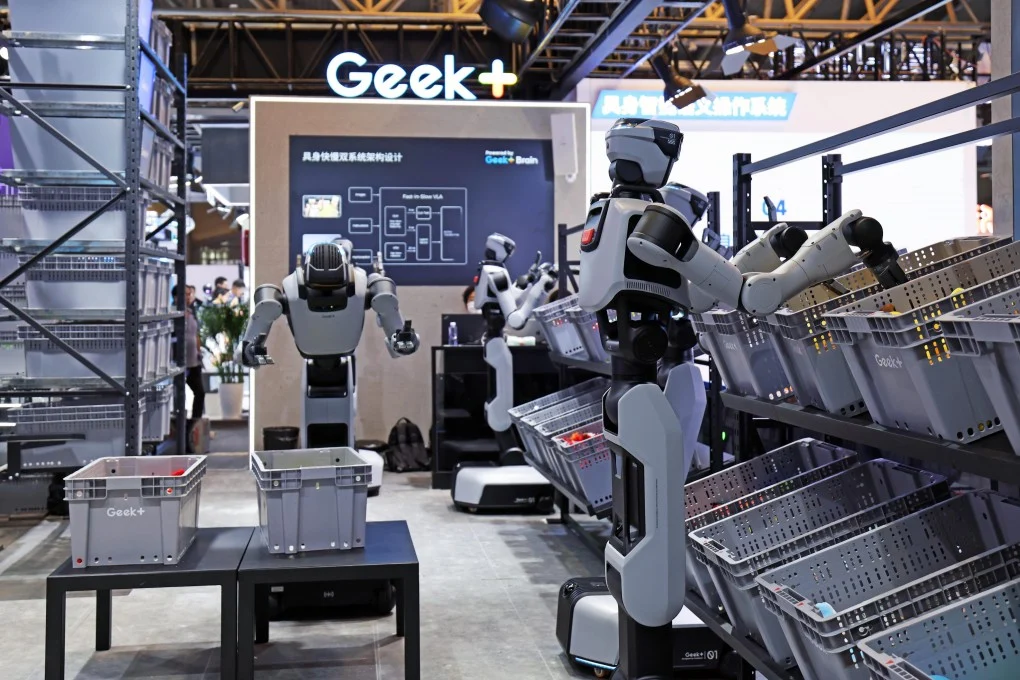
In a major escalation of the bilateral technology war, the Federal Communications Commission announced a sweeping US Chinese robotics ban prohibiting imports of foreign-made advanced humanoid and quadruped robots. Reporting from the South China Morning Post indicates that Washington aims to shield domestic supply chains and protect American artificial intelligence buildouts from national security risks. Consequently, Chinese robotics start-ups face immediate market restrictions as they expand global commercial operations.
Market Barriers and Global Commercial Realities
China currently dominates global advanced robotics manufacturing, accounting for nearly 85 percent of international humanoid deployments. Leading domestic start-ups like Unitree and AGIBOT each shipped over 5,000 units annually, vastly outstripping Western competitors.
“Restricting access removes an important future revenue market for Chinese firms while protecting US developers from price competition,” noted technology research analysts.
Specifically, the restrictions threaten cross-border technical partnerships between Silicon Valley chipmakers and Chinese hardware manufacturers.
Pivot Toward European and Regional Markets
Furthermore, industry analysts suggest that losing access to American buyers will not halt China’s broader robotics momentum. A massive domestic manufacturing base and strong demand across European markets provide alternative growth avenues for expanding firms.
Therefore, Chinese robotics leaders are reallocating capital investments toward European and Asian distribution networks. Moving forward, tech start-ups will focus on geographical diversification to maintain global market leadership.
Chan, H.-H. (2026, July 29). What will US foreign robot ban mean for China’s world-leading start-ups?. South China Morning Post. https://www.scmp.com/tech/tech-war/article/3362277/what-will-us-foreign-robot-ban-mean-chinas-world-leading-start-ups