
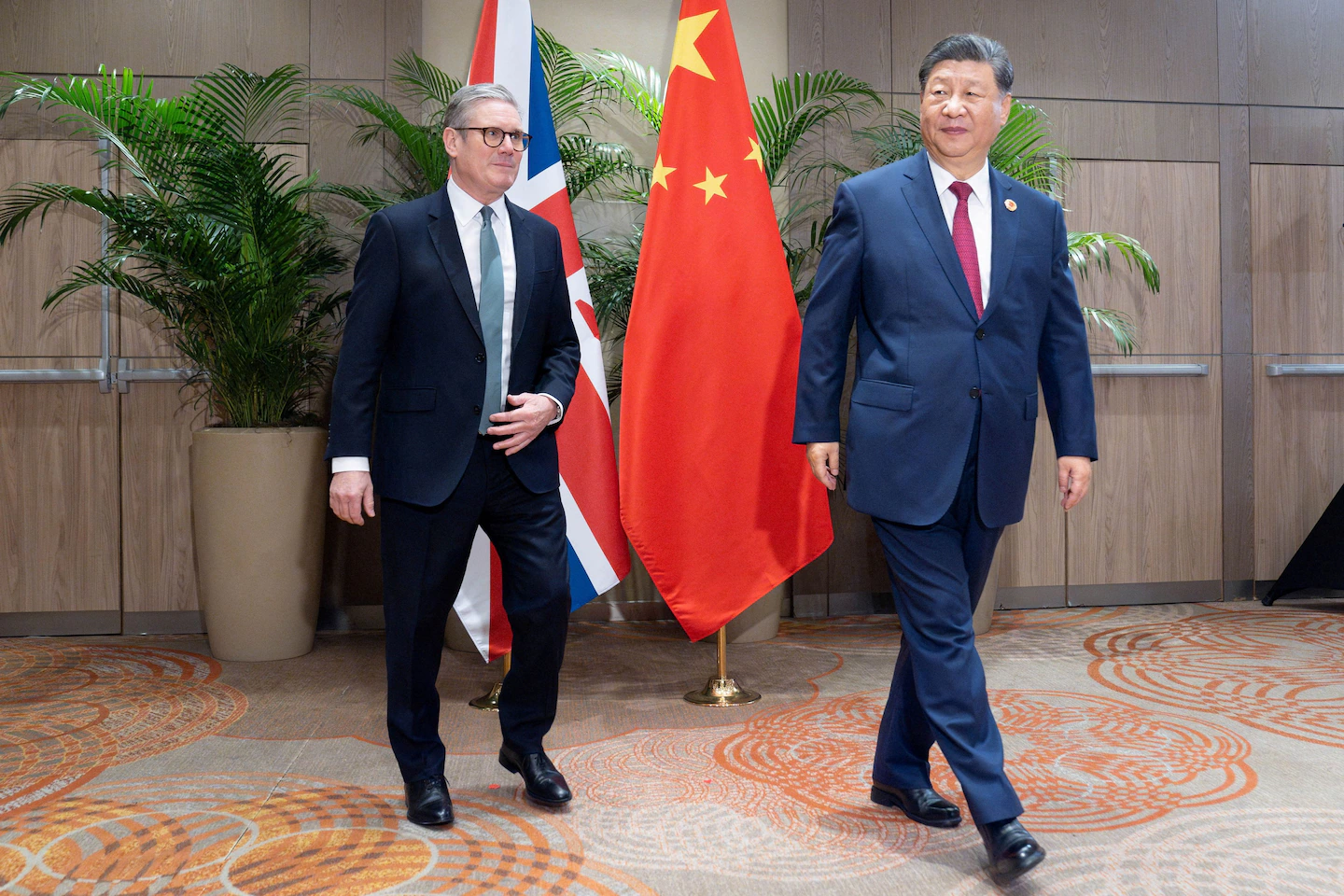
Prime Minister Keir Starmer’s visit to China signals Britain’s attempt to recalibrate its foreign policy. Crucial as a moment of global instability and growing uncertainty over U.S. leadership under Donald Trump. The trip carries high stakes, as Starmer aims to build a steadier, more pragmatic relationship with Beijing. Treating China neither as a partner nor an enemy but as a strategic reality that Britain must manage while safeguarding its own interests.
The timing reflects broader unease among U.S. allies. Trump’s tariff threats, confrontational diplomacy and wavering commitment to traditional alliances have pushed Britain, Europe and other middle powers to rethink their options. In response, European leaders have increased engagement with Beijing, joining recent visits by officials from Finland, Ireland, Germany and Canada. Analysts see this diplomatic flurry as a consequence of American unpredictability, accelerating closer ties between Europe and China out of necessity rather than shared values.
At home, the visit has stirred debate. Government approval for a new Chinese embassy in London and the inclusion of senior business leaders in Starmer’s delegation highlight a shift toward economic engagement. That change contrasts sharply with Britain’s tougher stance earlier in the decade. Even so, Starmer stated that national security remains nonnegotiable and that engagement with China will include raising concerns about human rights, Hong Kong and Xinjiang.
Skeptics argue that the reset moves too quickly. They point to intelligence risks, recent espionage controversies and fears that economic priorities could eclipse security and values. Supporters counter that Britain needs growth, market access and cooperation with the world’s second-largest economy. Especially in areas such as climate policy, technology, public health and research, even if political differences persist.
Pragmatism for a Fractured Global Order
China also stands to gain from the visit. Beijing seeks to present itself as a reliable and cooperative partner at a time when many countries hedge against U.S. volatility. Still, major obstacles remain, including trade disputes, concerns over cheap exports, China’s alignment with Russia in the war against Ukraine and unresolved human rights issues that have already derailed broader European trade agreements.
Overall, the visit reflects a wider global recalibration. European governments increasingly accept that the United States no longer functions as a predictable security anchor. Meanwhile China no longer fits neatly into the role of a singular threat. Engagement now rests on pragmatism and necessity, balancing cooperation with caution in a world that has become far more uncertain.
Reference
Adam, K., Northrop, K., & Li, L. (2026, January 27). As Trump shuffles global order, U.K. prime minister heads to Beijing. The Washington Post. https://www.washingtonpost.com/world/2026/01/27/britain-china-starmer-economic-relations/