
Brookings. Does Chinese Investment in US Clean Energy Sectors Help or Hurt America?
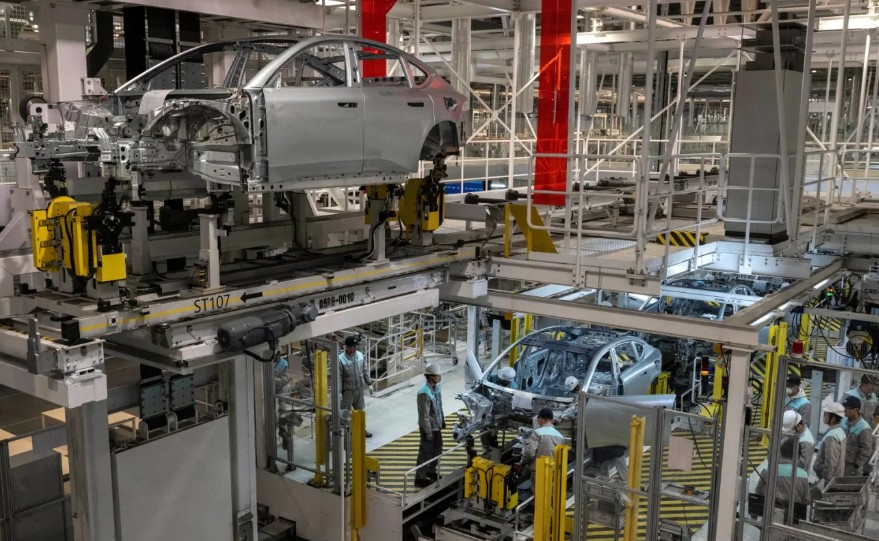
Published on March 12, 2026, this commentary by Mary E. Gallagher and Joyce Yang opens a Brookings series titled “Between Dependence and Delay: Chinese Investment and America’s Clean Energy Future.” The article examines a central strategic paradox: the United States’ transition toward energy security currently relies on a global supply chain dominated by Chinese manufacturing. As of 2024, China manufactured 92% of the world’s solar modules, 82% of wind turbines, and over 85% of global battery capacity. Meanwhile, U.S. electricity demand is projected to grow 35–50% by 2040. Therefore, policymakers face a growing tension between rapid clean-energy deployment and national security concerns.
How China Came to Dominate — and Its Costs
Decades of sustained government support, including subsidies, low-cost financing, and deliberate demand creation, propelled China to its dominant position in clean energy. However, this expansion came at a cost. Oversupply exceeded domestic demand and saturated global markets, triggering dumping allegations and trade defense measures from both the United States and the European Union. Additionally, reports of forced labor in Xinjiang — which produces nearly half the world’s polysilicon, a key material in solar panels — continue to disrupt international procurement and invite regulatory scrutiny.
The Risks of Restricting Investment
The authors argue that excessive restrictions carry serious economic and climate consequences. By 2030, the clean energy sector is projected to support over 575,000 jobs, with workers earning roughly $42,000 more annually than the average U.S. employee. Moreover, job creation in this sector grew three times faster than the rest of the U.S. economy in 2024, although momentum is slowing due to policy uncertainty. At the same time, delays in deployment risk excluding the United States from key innovation pathways, since clean-energy technologies improve through learning by doing, workforce development, and dense supplier networks. As a result, excessive restrictions could drive ecosystem divergence, with China and the United States advancing along separate technological paths.
The Risks of Investing Without Guardrails
On the other hand, the authors warn that unchecked Chinese investment also introduces risks. Cybersecurity concerns stand out, as connected vehicles, battery systems, and grid-linked equipment create vulnerabilities through integrated data flows and remote connectivity. Furthermore, dependence on a single foreign supplier that has shown willingness to use economic leverage for political ends could expose the United States to disruptions or coercion. In addition, political sustainability becomes an issue. Projects such as the Gotion EV battery factory in Michigan and the Ford-CATL joint venture faced federal scrutiny, local backlash, and public opposition, showing how community resistance can derail viable investments.
A Framework for Smarter Policy
To address these tensions, the authors outline three guiding questions for the series: how to balance deployment urgency with supply-chain risks; where to establish guardrails without slowing progress; and which policy frameworks can effectively manage these trade-offs. Ultimately, the challenge is not whether to manage risk, but how to do so while preserving deployment speed, industrial competitiveness, and public trust alongside national security.
Reference
Gallagher, M. E., & Yang, J. (2026, March 12). Does Chinese investment in US clean energy sectors help or hurt America? Brookings Institution. https://www.brookings.edu/articles/does-chinese-investment-in-us-clean-energy-sectors-help-or-hurt-america/