
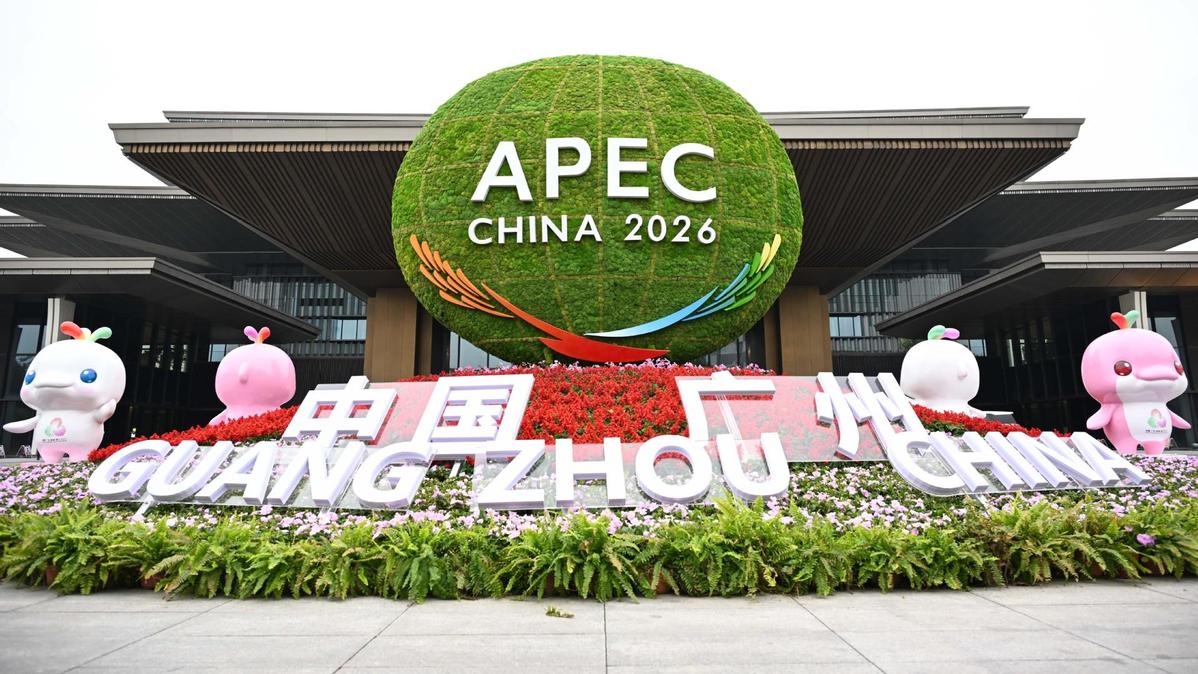
Overview: A Results-Oriented Dialogue
The First APEC 2026 Senior Officials’ Meeting (SOM1) commenced on Tuesday in Guangzhou, marking China’s return as host after twelve years. Consequently, this session offers a results-oriented conversation grounded in scale and economic realities. The meeting occurs at a critical juncture where the Asia-Pacific region’s decisions will significantly influence global growth trajectories.
Origins and Macroeconomic Context
Originally founded over three decades ago, APEC’s 21 member economies currently represent approximately 60 percent of global GDP and nearly 40 percent of the world’s population. Furthermore, the World Bank estimates that this region has contributed more than half of global growth in recent years. However, the IMF warns that medium-term global growth is likely to remain around 3 percent, which is well below historical averages.
Structure of the Cooperation Framework
The discussions in Guangzhou focus on a tripartite agenda centered on openness, innovation, and cooperation. Specifically, Chinese Foreign Minister Wang Yi emphasized the need to strengthen macroeconomic policy coordination and uphold the WTO-centered multilateral trading system. Moreover, the framework aims to advance the Free Trade Area of the Asia-Pacific (FTAAP), a structured mechanism designed to translate voluntary principles into concrete regional integration.
Addressing Trade Fragmentation and Risks
In contrast to past eras of rapid integration, current supply chains are being stress-tested by “de-risking” strategies and attempts at decoupling. For instance, UNCTAD estimates that global economic fragmentation could reduce global GDP by up to 7 percent in the long run. Therefore, maintaining the integrity of production networks is crucial, as intermediate goods account for more than 60 percent of intra-APEC trade.
Inclusiveness, Equity, and Digital Dividends
A central pillar of the 2026 agenda involves promoting green transformation and sharing the gains from artificial intelligence. While extreme poverty in the region has fallen drastically, significant development gaps persist among member economies. Additionally, China’s entry into its 15th Five-Year Plan (2026-2030) underscores its commitment to high-quality opening-up, which serves as a benchmark for regional inclusive growth.
Recommendations for Future Regional Stability
First, prioritize the reaffirmation of “open regionalism” to prevent the formation of rigid, exclusionary economic blocs. Second, accelerate the implementation of the FTAAP to streamline intra-regional trade and reduce operational costs. Third, coordinate macroeconomic policies more closely to mitigate the effects of global inflation and high interest rates. Fourth, expand technical cooperation in AI and green energy to ensure that developing members are not left behind during the technological transition. Fifth, strengthen the resilience of intertwined supply chains by discouraging unilateral trade bullying and economic coercion. Finally, adopt an iterative approach to cooperation that balances national security concerns with the necessity of regional economic integration.
Source
China Daily. (2026, February 10). Doubling down on cooperation offers better payout for APEC economies. China Daily Hong Kong. https://www.chinadailyhk.com/hk/article/628804