
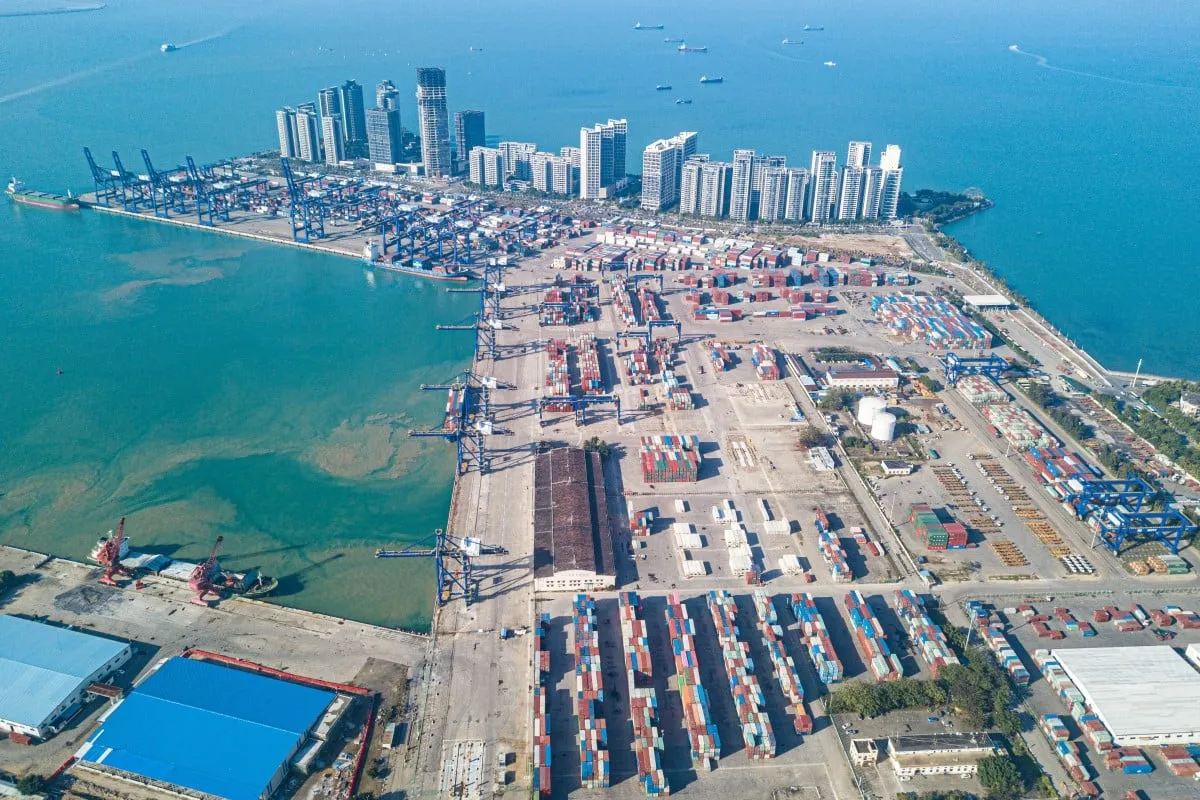
The Frontier of Economic Liberalization
The 2026 Article IV report emphasizes the strategic importance of the Hainan Free Trade Port (FTP) as a cornerstone of China’s commitment to high-level economic opening. Recently, Hainan launched its island-wide customs operation, a milestone that facilitates the seamless flow of goods, capital, and people within the zone. Consequently, the FTP is positioned not just as a regional hub, but as a sophisticated testing ground for international trade rules and modern governance models that aim to reduce institutional friction for foreign enterprises.
Origins and the Island-Wide Customs Transition
Originally conceptualized as part of a long-term plan to transform the island into a world-class free trade zone, the project moved into a critical operational phase by early 2026. This transition involves a “first line” of relaxed customs controls for international trade and a “second line” of regulation between the island and the Chinese mainland. Furthermore, the FMI notes that this dual-track system allows China to experiment with zero-tariff regimes and simplified tax structures without immediately exposing the entire national economy to external volatility. This strategic evolution reflects China’s intent to remain integrated with global markets despite the broader trend toward trade fragmentation.
Structure of the Regulatory and Financial Framework
The Hainan FTP is organized around a “6+1+4” policy system, which focuses on the liberalization of trade, investment, capital, and data, alongside a modern tax system and strengthened legal protections. Specifically, the port offers significant tax incentives, including a reduced 15% corporate income tax rate for encouraged industries. Moreover, the report highlights the implementation of a “negative list” for cross-border services trade, which is more liberal than those applied in other parts of China. This structured environment is designed to attract high-end manufacturing, modern services, and international tourism, positioning Hainan as a gateway to the Southeast Asian market.
Innovation and Data Dissemination Commitments
In contrast to traditional special economic zones, Hainan is being used to pilot advanced data governance and financial transparency standards. For instance, the authorities have worked closely with the IMF to improve data quality and adhere to international dissemination obligations, particularly regarding trade in goods and financial accounts. Therefore, the success of Hainan is measured not only by its trade volume but also by its ability to adopt the IMF’s balance of payments principles and other global benchmarks. This innovation in transparency is intended to build international trust and signal China’s readiness to adopt high-standard international economic and trade rules.
Synthesis of Strategic Autonomy and Global Synergy
The successful development of the Hainan Free Trade Port relies on the synergy between local institutional reforms and the broader national goal of “technological sovereignty.” This objective is essential to ensure that Hainan serves as a bridge for global talent and technology while maintaining national security. Simultaneously, there is a clear intent to align the port’s operations with regional agreements like the RCEP (Regional Comprehensive Economic Partnership). Ultimately, the 2026 operational status of Hainan provides a stable roadmap for China’s future engagement with the global economy, demonstrating that targeted liberalization remains a key component of its long-term development strategy.
Source
International Monetary Fund. (2026, February). People’s Republic of China: 2025 Article IV Consultation-Press Release; Staff Report; and Statement by the Executive Director (IMF Country Report No. 26/44).