
A Landmark Deployment Amidst Regional Volatility
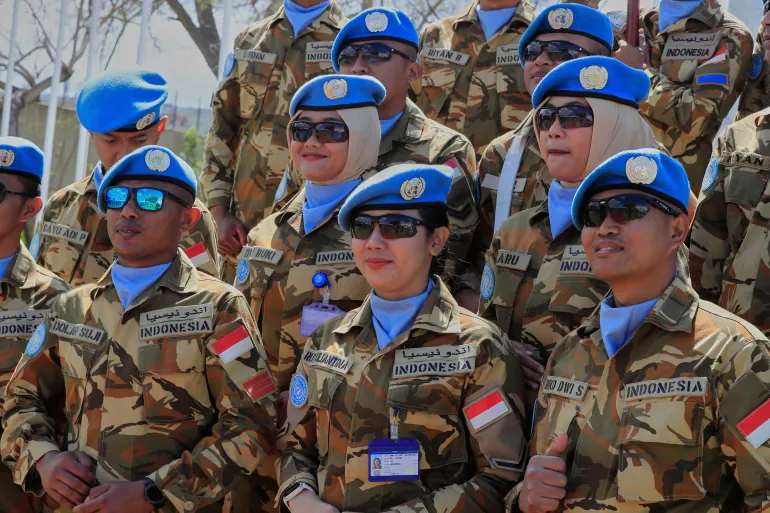
In late February 2026, Al Jazeera reported on the historic decision by the Indonesian government to prepare its troops for a peacekeeping mission in the Gaza Strip. As the largest Muslim-majority nation in the world, Indonesia has long maintained a staunch rhetorical stance in support of Palestinian statehood. However, this transition from diplomatic advocacy to active military presence on the ground represents a significant shift in Jakarta’s foreign policy. Consequently, the deployment is being scrutinized by international observers as a test of whether Indonesia can move beyond symbolic solidarity to become a substantive security actor in the Middle East.
Origins and the Domestic Pressure for Action
Originally, Indonesia’s involvement in the Palestinian cause was primarily channeled through multilateral forums like the United Nations and the Organization of Islamic Cooperation (OIC). However, by 2026, mounting domestic pressure from civil society and religious organizations forced the government to take more “concrete” steps. The report suggests that the origin of this deployment is rooted in a desire to align the nation’s constitutional mandate—which dictates a commitment to world peace—with the public’s high expectations for Palestinian support. Furthermore, the Indonesian military (TNI) has cited its extensive history in UN peacekeeping missions as a justification for its readiness to operate in one of the world’s most complex conflict zones.
Structure of the Mission and Diplomatic Constraints
The structure of the Indonesian mission is organized around a dual mandate of humanitarian assistance and security stabilization. Specifically, the deployment includes medical units and engineering corps designed to rebuild critical infrastructure alongside traditional peacekeeping forces. Moreover, the Al Jazeera report highlights the significant diplomatic hurdles Indonesia faces, as it does not maintain formal diplomatic relations with Israel. This lack of a direct channel complicates the logistical coordination required for troop movements and supply lines. Therefore, the mission relies heavily on a “trilateral synergy” involving Egyptian mediation and UN oversight to ensure the safety and operational viability of the Indonesian personnel.
Synthesis of Middle Power Influence and Neutrality
The successful execution of this mission relies on a synergy between Indonesia’s perceived neutrality and its strategic ambition to be a “Middle Power” leader. This objective is essential to prove that a non-Western, non-Arab state can play a stabilizing role in the Israeli-Palestinian conflict without being sidelined by traditional power brokers. Simultaneously, there is a clear intent to use this mission to bolster Indonesia’s bid for a more permanent role in global security governance. Ultimately, the 2026 deployment to Gaza provides a stable roadmap for Indonesia’s future foreign policy, signaling that the nation is willing to assume the physical and political risks associated with its long-standing humanitarian rhetoric.
Reference
Al Jazeera. (2026, February 27). Solidarity with Palestinians questioned as Indonesian troops set for Gaza. Al Jazeera News. https://www.aljazeera.com/news/2026/2/27/solidarity-with-palestinians-questioned-as-indonesian-troops-set-for-gaza