
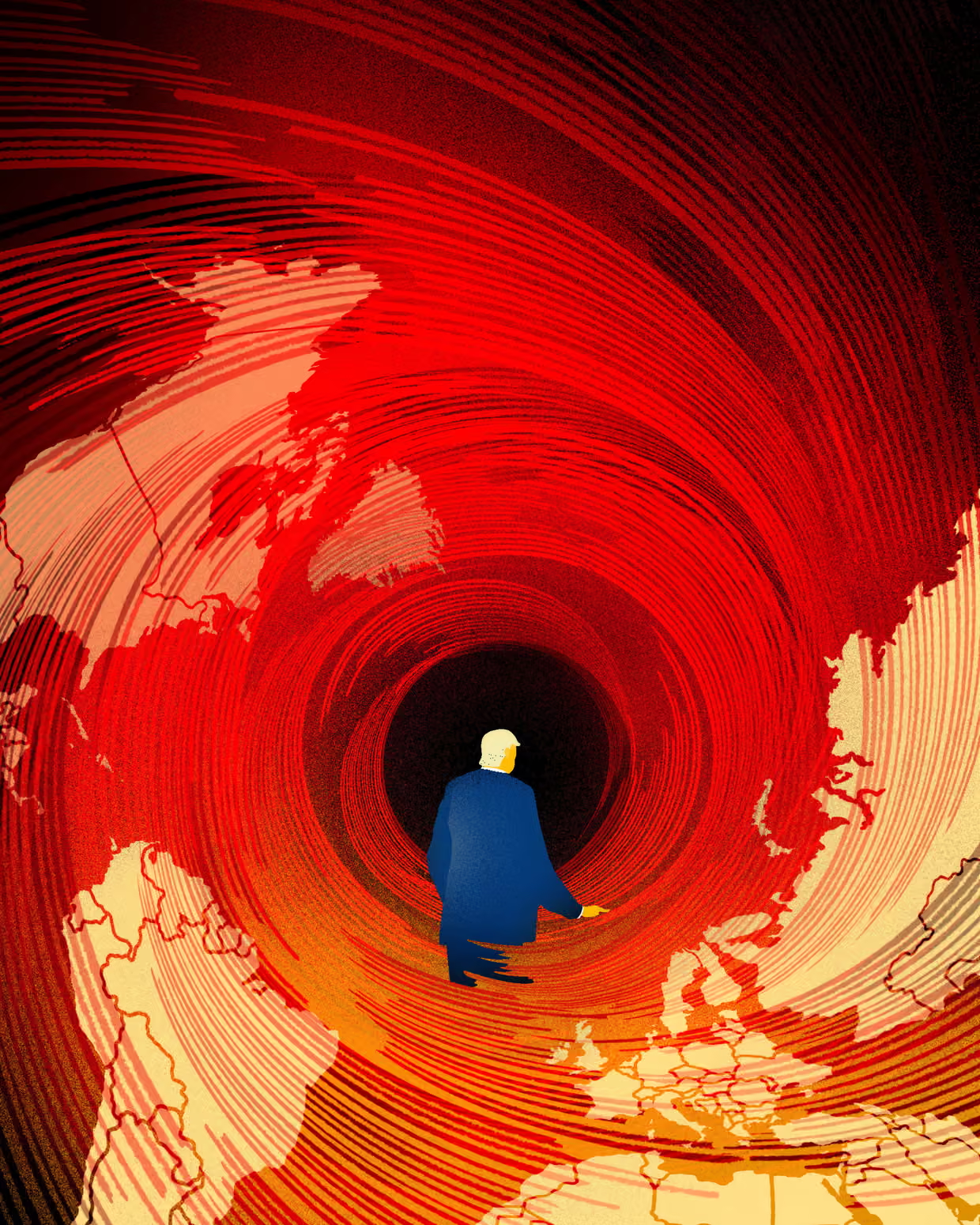
The article portrays a world slipping from the framework that governed international relations since the end of the Second World War. Referencing Antonio Gramsci’s idea of an “interregnum,” it argues that global politics in 2025 reflect a moment where the old order has collapsed but no stable alternative has emerged. Which is creating space for disorder, coercion and moral ambiguity.
At the center of this breakdown is the United States under Donald Trump, whose administration openly rejects the postwar rules-based international system. Senior figures such as Secretary of State Marco Rubio have framed that order as not merely outdated but actively hostile to U.S. interests. In practice, this has produced a foreign policy marked by unpredictability. A mix of proclaimed non-interventionism alongside aggressive, selective uses of power driven less by principle than by transactional gain and personal relationships.

International law, particularly constraints on the use of force and respect for sovereignty, is portrayed as a prime casualty. The U.S. approach is described as one of raw coercion. “Mobster diplomacy”, evident in its willingness to sacrifice Ukraine’s sovereignty for economic or strategic deals with Russia. Its treatment of countries such as Venezuela, another example, whose vast oil reserves have drawn overt pressure and military action. The bombing of suspected drug-smuggling boats and the dismissal of civilian protections are presented as emblematic of a broader erosion of legal and ethical limits.
Trade rules have also been hollowed out. The sheer weight of the U.S. market is used to extract concessions from allies, not only economically but politically. Meanwhile democratic credentials matter less than personal loyalty to Trump. At the same time, Israel’s war in Gaza and the reluctance or complicity of Western states — is depicted as exposing the selective application of international norms, further undermining claims of universality.
The erosion of internationa law

The assault on international institutions is both practical and symbolic. Judges at the International Criminal Court have faced U.S. sanctions for pursuing cases involving allies, disrupting their daily lives and intimidating financial institutions into compliance. Funding cuts and withdrawals from U.N. bodies. This alongside pressure on the International Court of Justice, reinforce the message that legal accountability will not be tolerated when it conflicts with power.
This collapse has produced a paradox. International law is invoked more frequently than ever in public discourse, especially by younger generations, yet seems increasingly incapable of restraining violence or resolving disputes. Legal language saturates politics, but its effectiveness fades, turning norms into performance rather than enforcement. Critics argue this merely exposes what was always true — that powerful states, especially the U.S., have long treated international law as optional.
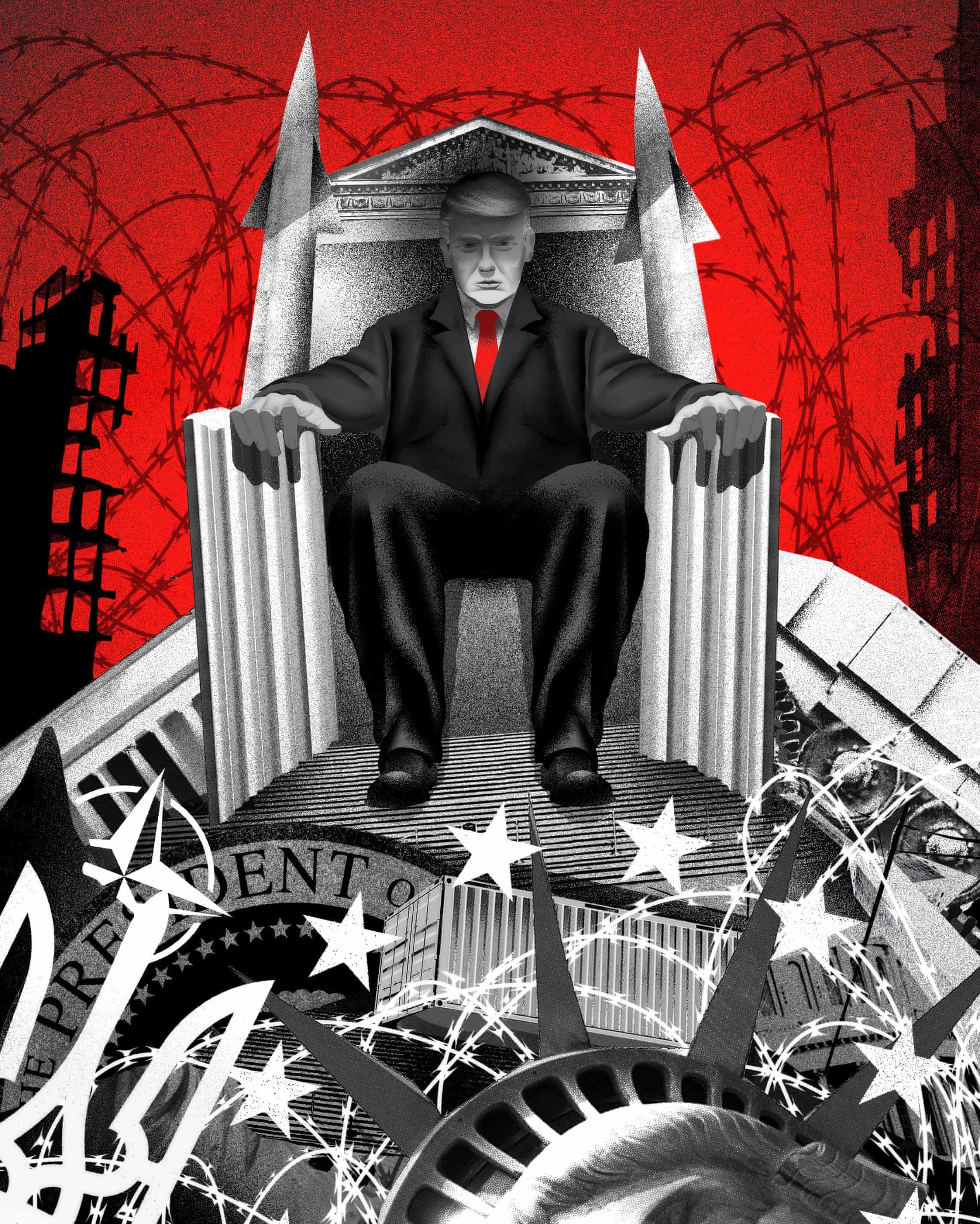
A world losing its moral anchors
Voices from Europe, the Middle East and the Global South warn that the consequences extend far beyond Trump alone. Some trace the erosion of restraint back to the post-9/11 interventions in Iraq and Afghanistan, which normalized regime change and exceptionalism. Others fear the world is no longer moving toward a multipolar order or even a power-based system, but toward outright disorder. A landscape where any actor capable of inflicting damage can act with impunity.

Amid widespread resignation, a handful of figures still call for resistance and moral clarity. They’re insisting that the U.N. charter and human rights remain worth defending precisely because they are fragile. Yet the dominant mood is one of despair. A sense that accountability is vanishing, institutions are hollowed out, and the promise of a shared international order is giving way to a future defined by force, cynicism and unchecked power.
Reference
Wintour, P. (2025, December 25). Into the void: how Trump killed international law. The Guardian. https://www.theguardian.com/law/ng-interactive/2025/dec/25/how-donald-trump-killed-international-law