
Center for Preventive Action – Updated March 2, 2026
1. Escalation to Direct War in 2026
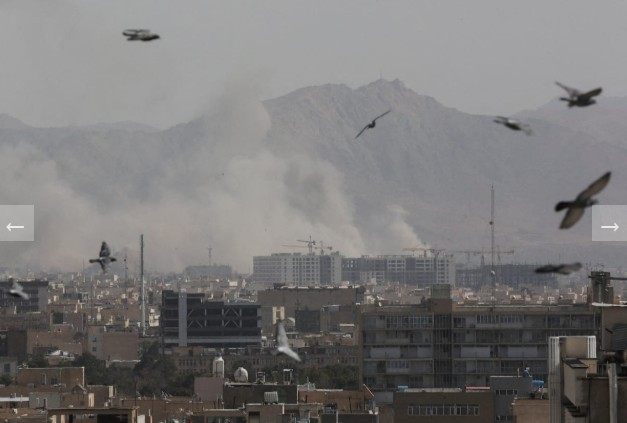
On February 28, 2026, the United States and Israel launched a large-scale offensive against Iran following weeks of military buildup and public threats from President Donald Trump. According to official statements, the objective was to prevent Iran from obtaining a nuclear weapon and eliminate what were described as imminent threats from the Iranian regime. Subsequent Israeli Defense Force (IDF) strikes in Tehran reportedly killed Supreme Leader Ayatollah Ali Khamenei.
Additional U.S. strikes targeted military sites in Isfahan, Karaj, Kermanshah, Qum, and Tabriz. Iran retaliated rapidly with ballistic missile attacks against Israel and U.S. facilities across the Middle East, including in Bahrain, Kuwait, Qatar, and the United Arab Emirates. The confrontation marked an unprecedented direct military alignment between Washington and Tel Aviv against Tehran’s nuclear infrastructure.
2. The Nuclear Dispute: From JCPOA to Collapse
Iran’s nuclear program dates back to 1957 and intensified during the late 1980s as a perceived security necessity. In 2002, previously undeclared nuclear facilities were exposed, triggering international scrutiny. Diplomatic efforts culminated in the 2015 Joint Comprehensive Plan of Action (JCPOA), which required Iran to reduce enriched uranium stockpiles by 98 percent, cut centrifuges by two-thirds, and allow intrusive inspections. In exchange, Iran received nearly $100 billion in sanctions relief.
However, tensions resurfaced when the Trump administration withdrew from the JCPOA in 2018, reimposed sanctions, and pursued a maximum pressure strategy. Iran gradually exceeded enrichment limits, and in June 2025 the International Atomic Energy Agency (IAEA) declared Iran in violation of its non-proliferation obligations for the first time in two decades. Israel responded with unilateral strikes, and within weeks the United States directly attacked nuclear sites in Fordow, Isfahan, and Natanz. While Washington claimed significant setbacks to Iran’s nuclear capability, UN assessments suggested only temporary disruption.
3. Regional Proxies and Strategic Depth
Even during nuclear negotiations, Iran expanded its regional influence through proxy groups coordinated by the IRGC’s Quds Force. Tehran provided military support to Hamas, Hezbollah, Shiite militias in Iraq and Syria, and Yemen’s Houthis. The United States considers Iran the foremost state sponsor of terrorism, allocating over one billion dollars annually to proxy activities.
After the October 7, 2023 Hamas attack on Israel, Iran-backed forces intensified regional operations. Direct confrontation escalated further in 2024, when Iran launched over three hundred drones and missiles against Israel following an Israeli strike in Damascus. By late 2024, Israel had severely weakened Hamas and Hezbollah leadership, diminishing Iran’s axis of resistance.
4. Ceasefire and Strategic Uncertainty
Following U.S. intervention in June 2026 and Iranian retaliation against Al Udeid Air Base in Qatar, President Trump announced a ceasefire. Although both parties accused one another of violations, the truce has largely held.
Nevertheless, Iran’s war with Israel and the United States represents a historic shift: it is the first time a U.S. president has directly attacked another country’s nuclear program in coordination with Israel. The conflict underscores the collapse of nuclear diplomacy, the fragility of regional deterrence, and the continued volatility of Middle Eastern geopolitics.
Reference
Center for Preventive Action. (2026, March 2). Iran’s war with Israel and the United States. Council on Foreign Relations. https://www.cfr.org/