
How Innovation Can Secure U.S. Supply Chains — Council on Foreign Relations (February 2026)
Critical Minerals at the Center of Geopolitics
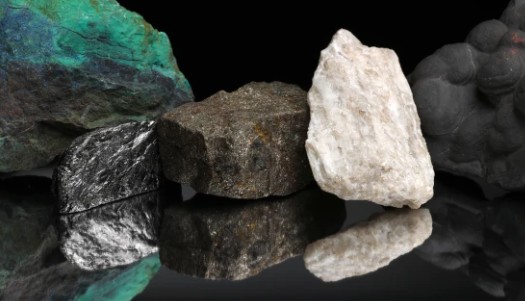
Critical minerals (such as rare-earth elements, lithium, and cobalt) have become central to geopolitical competition because they are essential inputs for electric vehicles, semiconductors, renewable energy systems, and advanced weapons. In recent years, China has consolidated near-total dominance across the global critical minerals supply chain, from extraction and refining to manufacturing and export control regimes.
According to the report, Beijing’s dominance was not accidental. It stems from decades of strategic investment across the entire minerals ecosystem and was explicitly outlined in the “Made in China 2025” industrial strategy. This effort combined state-backed investment in mining and processing with massive domestic demand in sectors such as clean energy, aerospace, and semiconductors.
China’s ability to weaponize this position became evident when it expanded export controls on rare-earth elements and related technologies in 2025. These restrictions highlighted the vulnerability of global supply chains and raised urgent questions about whether the United States can reduce its dependence on Chinese-controlled mineral inputs.
Why the United States Cannot Compete Through Mining Alone
The report argues that the United States cannot realistically out-mine or out-process China. Traditional mining expansion takes many years—often decades—and would still struggle to match China’s scale, cost structure, and industrial coordination.
Instead, the United States should pursue a strategy of “leapfrogging” China’s dominance by investing heavily in disruptive innovation across the mineral supply chain. This includes breakthroughs in materials science, new extraction technologies, recycling, and waste recovery.
Examples already exist. U.S. government research programs such as ARPA-E and DARPA have funded pioneering work in precision mining technologies, advanced processing methods, and bioengineered mineral extraction systems. Artificial intelligence is also accelerating materials discovery, allowing scientists to identify and test new mineral substitutes and chemical processes far more rapidly than traditional research methods.
The report emphasizes that innovation must complement (not replace) traditional mining. However, innovation offers the fastest pathway to reducing strategic vulnerability.
Recycling, Waste Recovery, and Circular Supply Chains
One of the most promising opportunities for reducing dependence on China lies in waste-based mineral recovery. Mining waste, industrial byproducts, and discarded electronics contain large quantities of valuable minerals that can be extracted using emerging technologies.
The report describes several innovative approaches already being deployed:
- Bioengineered protein technologies that selectively bind and separate rare-earth elements from waste streams.
- Chemical extraction systems capable of recovering rare earths from mine tailings without toxic solvents or extreme heat.
- Lithium extraction technologies that capture lithium from oil-and-gas wastewater.
- Phytomining, which uses genetically engineered plants to absorb metals from contaminated soils.
These technologies offer multiple advantages. They can reduce environmental damage, shorten permitting timelines, and scale more quickly than traditional mining operations. In many cases, they also transform environmental liabilities (such as coal ash ponds or mine tailings) into economically valuable resources.
Recycling electronic waste represents another critical opportunity. However, the United States currently exports large amounts of e-waste overseas, allowing critical minerals to reenter Chinese supply chains. Developing domestic recycling capacity would create a circular supply chain capable of feeding recovered minerals back into U.S. manufacturing.
Building an Innovation-Driven Mineral Strategy
To implement an innovation-focused strategy, the report calls for coordinated policy action across government, industry, and allied nations.
First, the United States should launch a national critical minerals innovation strategy led by the White House and coordinated across federal agencies. This strategy would prioritize emerging technologies in materials engineering, waste recovery, and recycling while ensuring sufficient financing for early-stage companies developing breakthrough technologies.
Second, policymakers must address the financing “valleys of death” that prevent many mineral technologies from moving from laboratory research to commercial deployment. The report recommends establishing a dedicated critical minerals innovation venture fund capable of providing patient capital for early-stage technologies.
Finally, the United States should deepen cooperation with allies such as Canada, Australia, and Japan. These countries possess expertise in mining, processing, and industrial scaling that complements U.S. strengths in research and innovation. Coordinated investment, joint research initiatives, and shared financing mechanisms could help create supply chains independent of China’s state-backed mineral system.
Reference
Crebo-Rediker, H. E., & Khan, M. (2026, February). Leapfrogging China’s critical minerals dominance: How innovation can secure U.S. supply chains. Council on Foreign Relations. https://www.cfr.org/reports/