
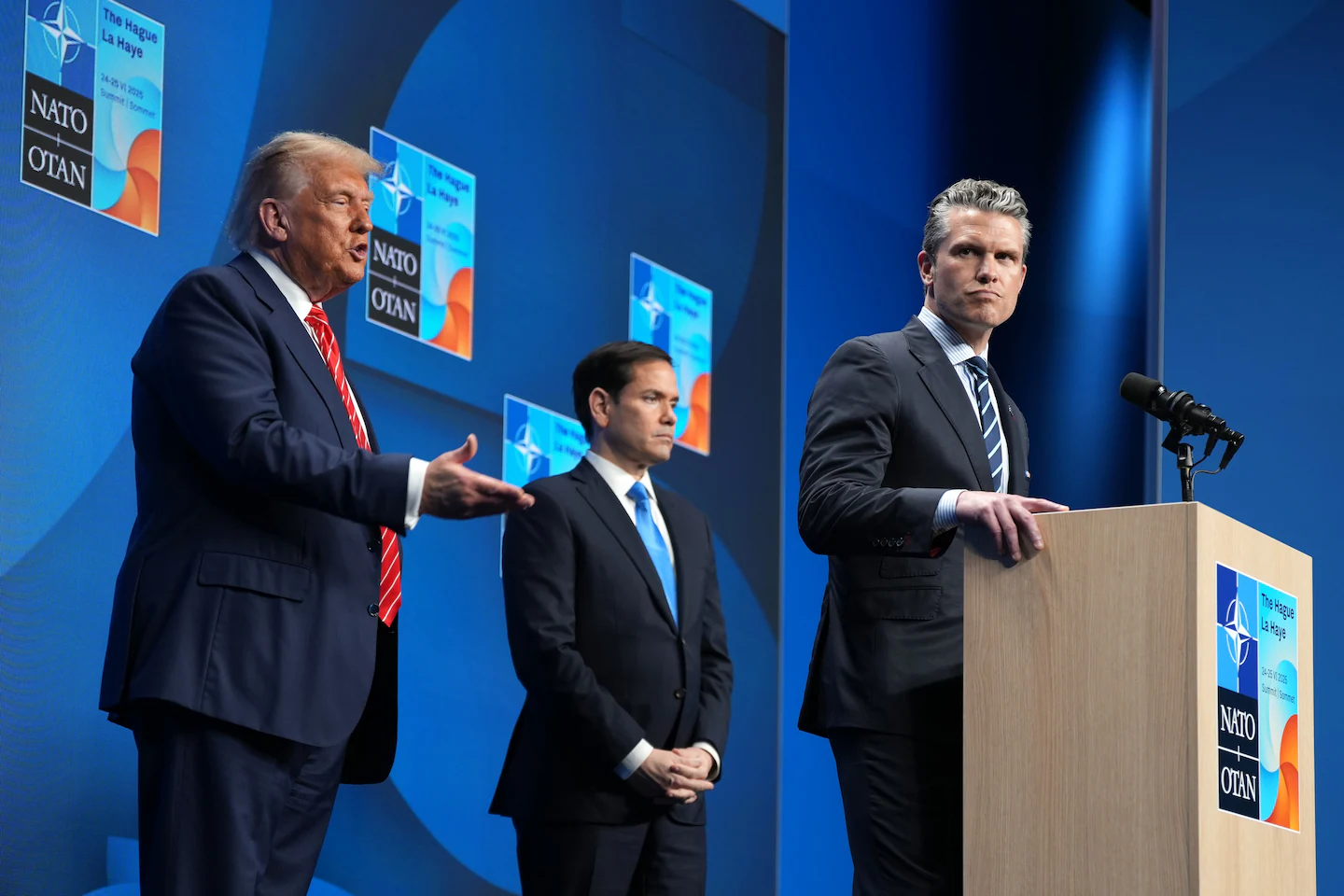
The Pentagon is preparing to scale back parts of the United States’ role within NATO. This marks yet another step in the Trump administration’s effort to reduce the American military footprint in Europe. The plan would affect roughly 200 U.S. personnel and reduce participation in nearly 30 NATO bodies. Including several Centers of Excellence that focus on training and strategic development across different areas of warfare.
Rather than an immediate withdrawal, the Pentagon intends to let current assignments expire without replacing personnel, a gradual process that could unfold over several years. U.S. involvement in NATO institutions will not end entirely. However, advisory groups linked to energy security, naval warfare, special operations and intelligence are expected to see reduced American participation. Some responsibilities may shift to other NATO members, partially softening the operational impact.
Officials say the proposal has been under review for months and is not directly tied to President Donald Trump’s recent threats regarding Greenland. Still, those threats have intensified concerns among European allies and U.S. lawmakers, who warn that the administration risks inflicting lasting damage on the alliance. Trump has framed his interest in Greenland as a matter of U.S. security. He has refused to rule out the use of force, creating what many view as NATO’s most serious internal crisis in decades
The drawdown fits a broader pattern since Trump’s return to office, as the U.S. presses European allies to shoulder more responsibility for their defense. Recent actions include withdrawing troops from Romania and cutting security assistance to the Baltic states. Even when Russia’s war in Ukraine heightens fears of a wider conflict. Under U.S. pressure, NATO members agreed last year to raise defense spending to 5% of GDP over the next decade.
Risk of a NATO “Brain Drain”

Danish soldiers disembark at the port in Nuuk, Greenland, on Sunday. (Mads Claus Rasmussen/AFP/Getty Images)
The moves have faced resistance in Congress, including from Republicans, who argue that reduced U.S. engagement could weaken NATO at a critical moment. Lawmakers have passed legislation requiring the Pentagon to consult Congress before making major reductions to U.S. forces in Europe.
Although the planned cuts involve a relatively small number of troops, current and former officials warn they could have an outsized effect by depriving NATO of American operational experience. Critics describe the risk of a “brain drain” that could undermine alliance effectiveness even without a large-scale troop withdrawal.
Reference
Robertson, N. (2026, January 20). Pentagon moves to cut U.S. participation in some NATO groups. The Washington Post. https://www.washingtonpost.com/national-security/2026/01/20/trump-nato-advisory-groups/