
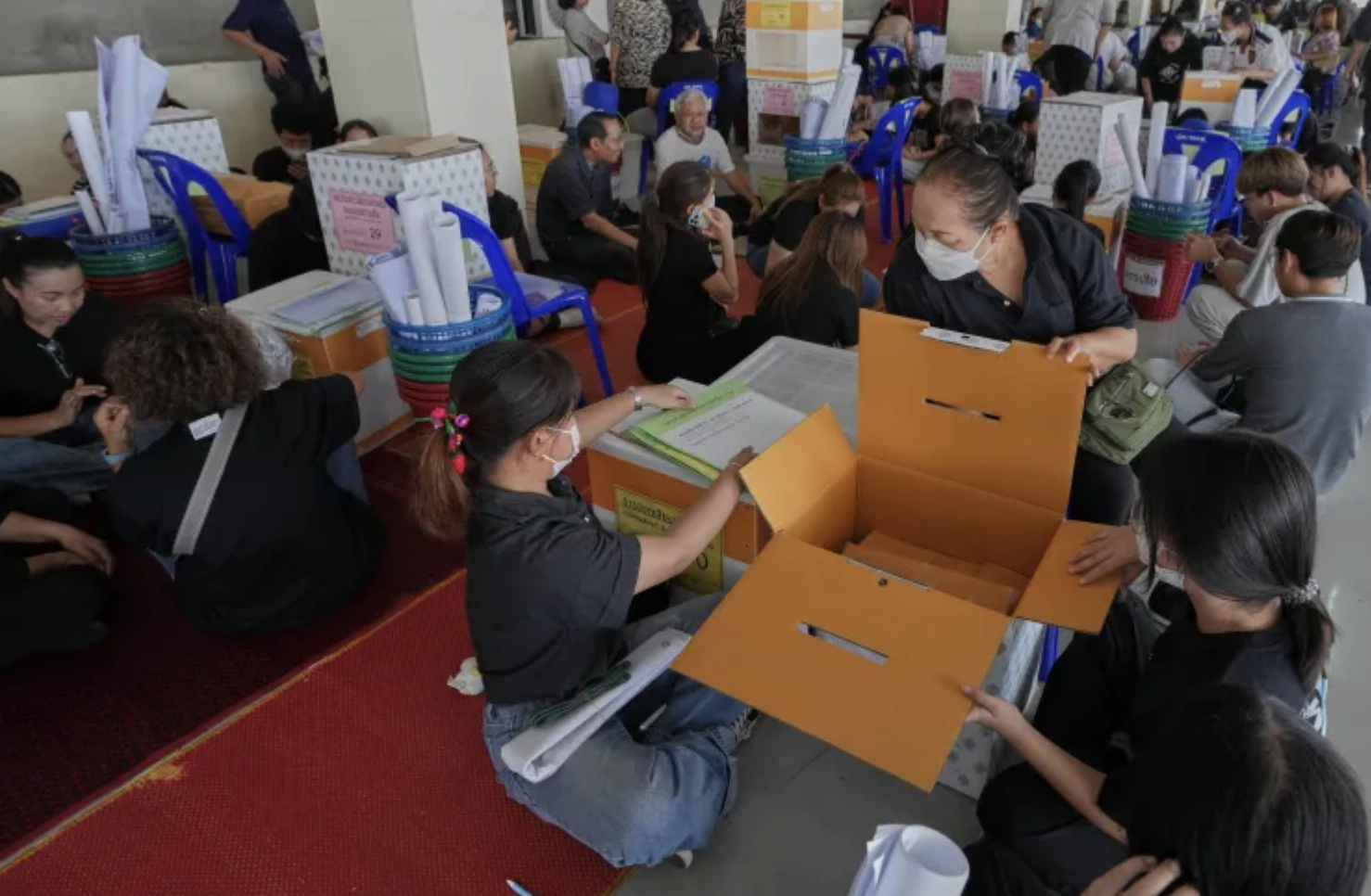
Thailand is holding a highly contested general election in which no single party is expected to secure an outright majority, raising concerns about potential political instability. Progressive reformers, military-aligned conservatives, and populist forces are competing for power amid slow economic growth and rising nationalist sentiment. With more than 53 million registered voters and over 2.2 million early ballots already cast, the election is seen as a decisive moment for the country’s political direction, with coalition negotiations almost certain given the fragmented political landscape.
Although more than 50 parties are participating, three major contenders dominate the race: the progressive People’s Party, the conservative Bhumjaithai, and the populist Pheu Thai. With 500 parliamentary seats at stake and no party projected to win a majority, the next prime minister will likely emerge from complex political bargaining rather than a clear electoral mandate. This scenario reflects Thailand’s persistent tension between reformist aspirations and entrenched power structures.
The People’s Party, led by Natthaphong Ruengpanyawut, is expected to win the most seats but faces strong resistance from rival parties due to its ambitious reform agenda, which seeks to curb military and judicial influence and dismantle economic monopolies. As the successor to the Move Forward Party, it carries the legacy of a reformist movement that was previously blocked from power and dissolved by the Constitutional Court, highlighting the structural barriers facing democratic change in Thailand. Meanwhile, Bhumjaithai, led by caretaker Prime Minister Anutin Charnvirakul, positions itself as the defender of the royalist-military establishment, focusing its campaign on economic stimulus and national security amid heightened tensions with Cambodia.
Pheu Thai, rooted in the political legacy of former Prime Minister Thaksin Shinawatra, campaigns on economic revival and populist policies, nominating his nephew as its prime ministerial candidate. Alongside the election, voters are also deciding in a referendum whether to replace the military-drafted 2017 constitution, a proposal supported by pro-democracy groups but criticised by conservatives who fear instability. Together, the election and referendum underscore Thailand’s deeper struggle between democratic reform and the enduring power of unelected institutions, making the outcome a turning point for the country’s political future.
Source:
Jazeera, A. (2026, February 8). Polls open in Thailand with three main parties vying for power. Al Jazeera. https://www.aljazeera.com/news/2026/2/8/polls-open-in-thailand-with-three-main-parties-vying-for-power