
Resilience in an Era of Geopolitical Uncertainty
In its 2026 Article IV report, the IMF highlights China’s intensified focus on “strategic security,” specifically in the realms of food and technology. Amidst rising global trade fragmentation and supply chain vulnerabilities, the Chinese government has elevated self-reliance to a core national objective. Consequently, the authorities are implementing comprehensive policies to ensure that the nation can withstand external shocks, viewing the domestic production of essential grains and high-end semiconductors not just as economic goals, but as fundamental pillars of national security.
Origins and the “Dual Circulation” Rationale
Originally, China’s rapid development relied on deep integration into global markets for both food imports and high-tech components. However, the supply chain disruptions of the early 2020s and the intensification of export controls by Western nations have forced a strategic pivot. By 2026, the IMF notes that the “Dual Circulation” strategy has evolved to prioritize internal supply resilience over global efficiency. Furthermore, this shift is driven by a recognition that dependence on foreign technology and agricultural imports represents a strategic vulnerability that could be exploited during periods of international tension.
Structure of the Agricultural and Seed Reform
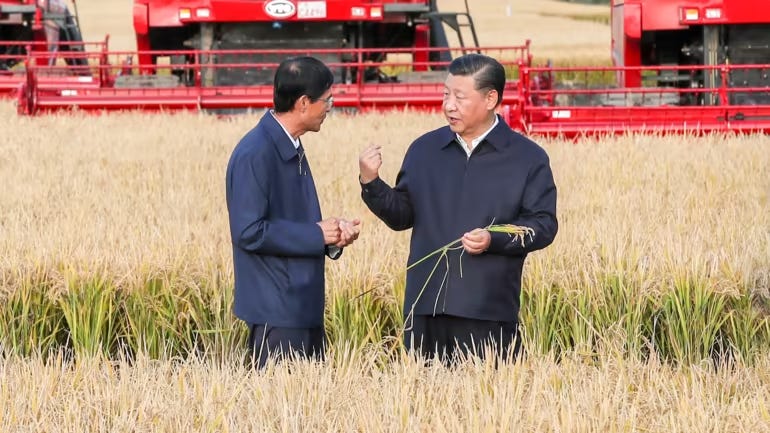
The roadmap for food security is organized around the “Action Plan for Increasing Grain Production Capacity” and the modernization of the seed industry. Specifically, the government is investing heavily in agricultural biotechnology and high-standard farmland construction to increase yields on limited arable land. Moreover, the report highlights the “Seed Industry Revitalization” initiative, which aims to achieve technological sovereignty in high-quality seeds for staples like corn and soybeans. This structured approach is designed to reduce China’s reliance on a handful of global exporters and ensure a stable food supply for its 1.4 billion citizens.
Innovation in Domestic Semiconductor Ecosystems
In contrast to the agricultural sector, technological security focuses on the “indigenization” of the semiconductor value chain. For instance, the authorities have accelerated the development of domestic lithography equipment and advanced packaging techniques to bypass international restrictions. Therefore, while China remains a major importer of chips, it is rapidly building a parallel domestic ecosystem that can support its critical infrastructure and military needs. This innovation in self-reliance is intended to decouple the nation’s high-tech progress from the political decisions of external powers, fostering a more resilient digital economy.
Synthesis of National Defense and Economic Synergy
The successful achievement of strategic sovereignty relies on the synergy between state-led industrial policy and the mobilization of private sector innovation. This objective is essential to ensure that the massive capital diverted to these sectors results in tangible breakthroughs rather than inefficient overinvestment. Simultaneously, there is a clear intent to maintain “open-door” cooperation where possible, particularly with Belt and Road partners for diversified food sourcing. Ultimately, the 2026 focus on food and technological security provides a stable roadmap for China’s survival in a more fragmented world, signaling that the nation is prepared to prioritize resilience over short-term economic optimization.
Source
International Monetary Fund. (2026, February). People’s Republic of China: 2025 Article IV Consultation-Press Release; Staff Report; and Statement by the Executive Director (IMF Country Report No. 26/44).