
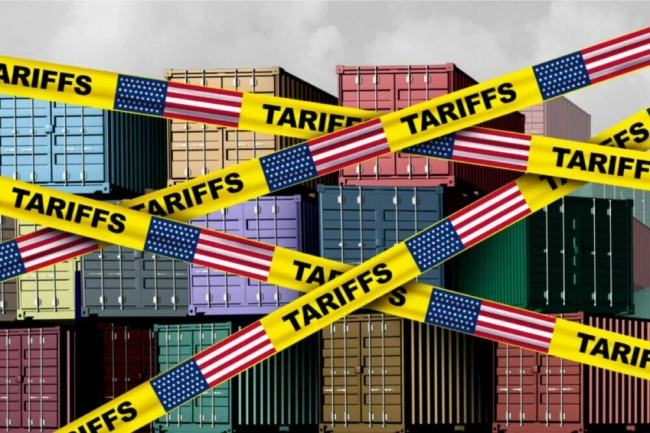
A Sharp Increase in Trade Barriers
The IMF’s 2026 Article IV report for China highlights a significant escalation in trade barriers, with effective tariffs on Chinese exports to the United States increasing by approximately 23 percentage points compared to the 2024 average. This surge is primarily attributed to a series of aggressive trade actions throughout 2025, including broad-based tariff hikes on strategic goods. Consequently, the resulting trade policy uncertainty has become a major headwind for China’s growth, contributing to a projected slowdown in GDP from 5.0 percent in 2025 to 4.5 percent in 2026.
Origins and the Cycle of Retaliation
Originally, the escalation was triggered by a combination of national security concerns and disputes over industrial subsidies in sectors such as electric vehicles and green technology. Throughout 2025, the U.S. implemented several rounds of tariffs, reaching levels as high as 100 percent for specific categories like fentanyl-precursor-related goods and semiconductors. Furthermore, China responded with its own retaliatory measures, targeting U.S. agricultural exports and strategic minerals. Although the October 2025 “truce” temporarily paused new measures, the cumulative effect of the existing tariffs has already altered trade flows and increased costs for global consumers.
Structure of the Economic Impact Analysis
The IMF organizes the impact of these tariffs into three primary transmission channels: direct trade volume reduction, price distortions, and investment hesitancy. Specifically, staff estimates suggest that a sustained 15 percentage point increase in tariffs between the U.S. and China could reduce China’s GDP by nearly 1 percent over the medium term. Moreover, the report identifies a “spillover effect,” where third-party economies—particularly those in Southeast Asia and Latin America—experience volatility as supply chains are rerouted to bypass tariff-heavy corridors.
Innovation and Strategic Adaptation
In contrast to previous trade disputes, Chinese firms have shown a high degree of innovation in circumventing tariff pressures through “market diversification” and increased investment in high-tech manufacturing. For instance, exports to Belt and Road Initiative (BRI) partners have surged, partially offsetting the decline in U.S. market share. Therefore, while the tariffs have successfully reduced bilateral trade, they have also accelerated China’s strategic pivot toward domestic consumption and technological self-reliance. This adaptation, however, comes at the cost of lower global efficiency and higher inflationary pressures in the West.
Synthesis of Long-term Risks and Global Synergy
The successful management of these trade shocks relies on the effectiveness of China’s internal stimulus measures to boost domestic demand. This objective is closely linked to the implementation of social safety net reforms that could encourage households to spend rather than save in the face of external uncertainty. Simultaneously, there is a clear intent among international observers to push for a return to rules-based multilateralism to prevent a “race to the bottom” in global trade. Ultimately, the 2026 tariff impact serves as a stark reminder that geopolitical fragmentation poses a systemic risk to global prosperity, providing a compelling case for renewed diplomatic engagement between the world’s two largest economies.
Source
International Monetary Fund. (2026, February). People’s Republic of China: 2025 Article IV Consultation-Staff Report (IMF Country Report No. 26/44).