
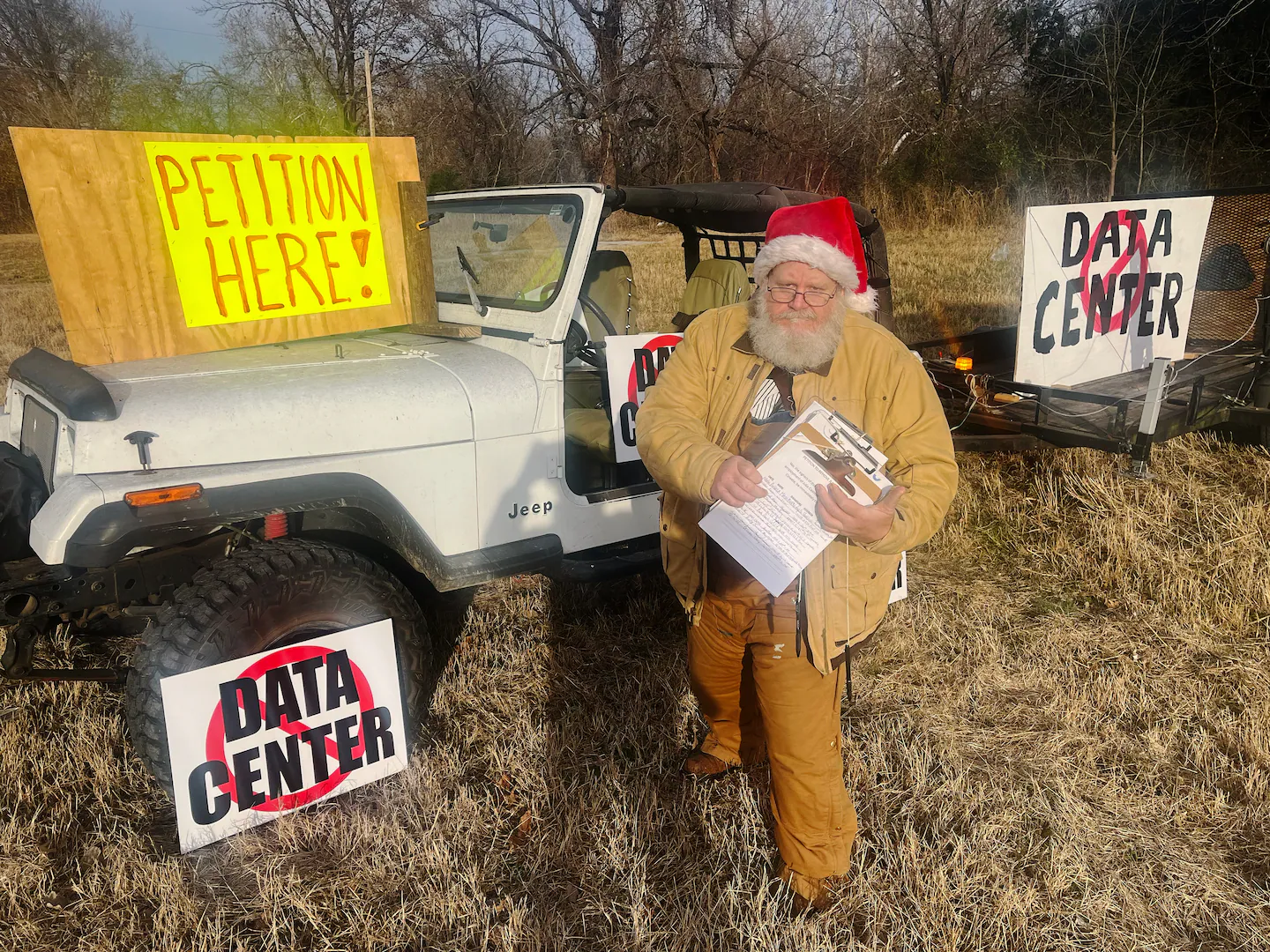

Kyle Schmidt, president of the advocacy group Protect Sand Springs, at the 800 acre property city officials have annexed near his home. Schmidt is standing next to the notice of a proposed zoning change that would allow a large data center to be built there.
Across the US, the race to build massive data centers to support AI is colliding with local resistance, turning small towns into unexpected political battlegrounds. In places like Sand Springs, Oklahoma, residents have mobilized against proposals they say threaten farmland, water supplies, energy costs and the character of their communities. What began as quiet negotiations between local officials and tech companies has sparked public outrage. Protests and a sense of betrayal among voters has arisen, who feel shut out of decisions with long-term consequences.


Amazon data centers loom over houses at the edge of the Loudoun Meadows neighborhood in Aldie, Virginia, in this 2023 photo
The backlash cuts across ideological lines. Conservative, pro-Trump voters in deep red states now find themselves aligned with progressive activists and national advocacy groups. They are uniting by fears that Silicon Valley is imposing industrial-scale projects without meaningful community consent. Critics argue that data centers consume enormous amounts of electricity and water, drive up utility prices and deliver few local benefits beyond temporary construction jobs. These concerns have entered national politics, fueling investigations, calls for moratoriums and rare bipartisan friction over the rapid expansion of AI infrastructure.
Local Autonomy Over Tech Promises


While industry groups and the White House frame data centers as engines of economic growth, job creation and technological leadership, the opposition has gained momentum. Local governments have begun rejecting or delaying projects, derailing tens of billions of dollars in planned development. Advocacy groups, civil rights organizations and even some Republican leaders now question whether the costs are being unfairly shifted onto rural, minority and low-income communities.


Reference
Halper, E. (2026, January 6). The data center rebellion is here, and it’s reshaping the political landscape. The Washington Post. https://www.washingtonpost.com/business/2026/01/06/data-centers-backlash-impact-local-communities-opposition/