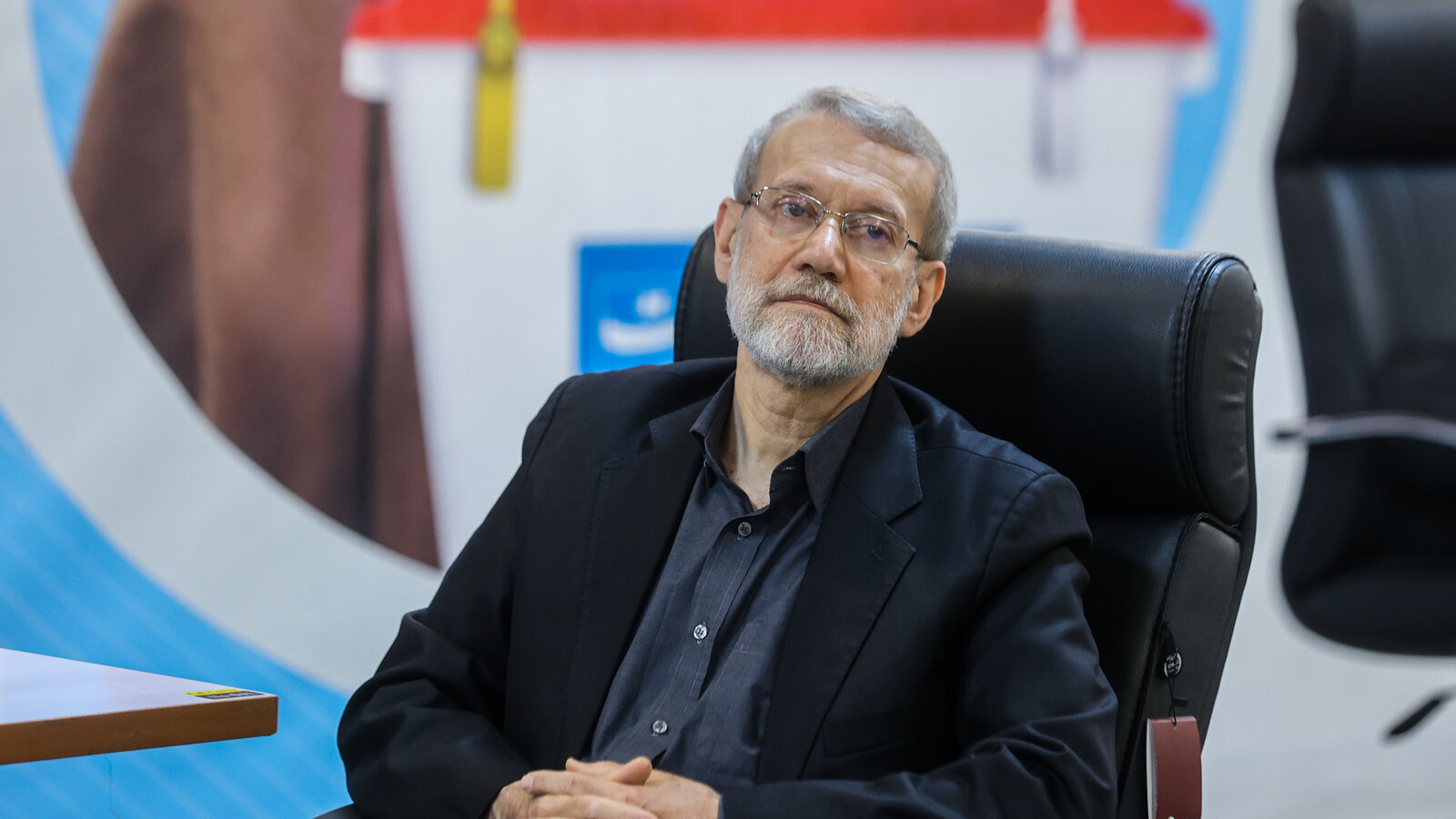
Ali Larijani

The Decapitation of Tehran and the Transatlantic Rift

High-Value Targeting and the Collapse of Command 
On March 17, 2026, the Israeli Defense Ministry confirmed the “elimination” of two of the most powerful remaining figures in the Iranian hierarchy: Ali Larijani, the Secretary of the Supreme National Security Council, and Gholamreza Soleimani, head of the Basij paramilitary force. Larijani, often described as the “de facto leader” following the death of Ayatollah Khamenei on the war’s first day, was a pragmatic bridge between the military and diplomatic wings. His death, alongside the commander of the regime’s primary internal repression apparatus (Basij), suggests that Israel and the U.S. have moved beyond destroying infrastructure to a systematic liquidation of the Iranian political class. Consequently, the Iranian state is facing a total vacuum of experienced leadership at a moment of existential military threat.
Origins and the “America First” vs. NATO Conflict 
Originally, the U.S.-Israeli operation was presented as a targeted campaign against nuclear and military assets. However, the origin of the current diplomatic crisis lies in President Trump’s demand that NATO and European allies join an “armada” to reopen the Strait of Hormuz. The 2026 “Trump Doctrine” views the Strait not just as a global energy artery but as a litmus test for the “America First” alliance system. Furthermore, Trump’s warning that a refusal to assist would be “very bad for the future of NATO” has triggered an immediate backlash. Major European powers, including Germany and the UK, have explicitly stated that this is “not their war,” marking the most significant rupture in Western security cooperation since the 2003 invasion of Iraq.
Structure of the Conflict and Domestic Blowback 
The structure of the war is organized around a dual-front offensive: high-tech precision strikes in Tehran and Beirut, and a crushing economic blockade. Specifically, Israeli strikes have now expanded to residential neighborhoods in Beirut, targeting Hezbollah’s remaining command nodes, while Tehran remains under a near-total internet blackout. Moreover, the report highlights a significant fracture within the U.S. government: the resignation of Joe Kent, Director of the National Counterterrorism Center. Kent’s public statement that Iran posed “no imminent threat” and that the war was driven by “external pressure” provides a structured critique from within the intelligence community, suggesting that the “America First” base is itself divided over the cost and morality of the conflict.
Synthesis of Regional Anarchy and Global Energy Risk 
The successful pursuit of this “regime change” objective relies on a synergy between total air superiority and the hope that internal Iranian dissent will lead to a domestic collapse. This objective is essential because, despite the loss of its top leaders, Iran continues to strike back at regional energy infrastructure in Qatar, Saudi Arabia, and the UAE. Simultaneously, there is a clear intent among EU nations to distance themselves from the kinetic war, preferring diplomatic channels that Washington has already abandoned. Ultimately, the events of March 17, 2026, provide a chaotic roadmap where the “rules-based order” has been replaced by a “might makes right” philosophy, leaving the global energy market and traditional alliances in a state of terminal volatility.
Reference
Al Jazeera. (2026, March 17). Iran war live: Trump scolds allies for not joining Strait of Hormuz mission. Al Jazeera News. https://www.aljazeera.com/news/liveblog/2026/3/17/iran-war-live-trump-scolds-allies-for-not-joining-strait-of-hormuz-mission