
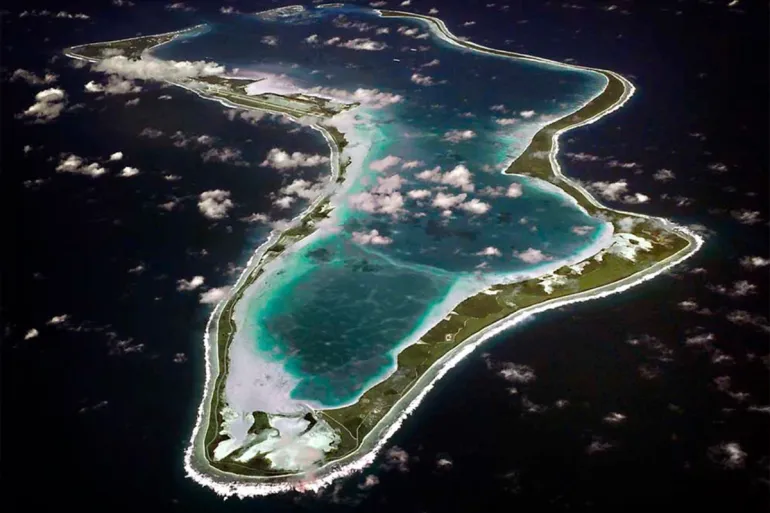
The sovereignty agreement between the UK and Mauritius over the Chagos Islands has revived global attention, particularly after President Donald Trump criticized the deal. Yet the central injustice surrounding the Indigenous Chagossian people remains unresolved. While debate has largely centered on the strategic US military base on Diego Garcia, the deeper issue involves decades of displacement, denial of return, and the absence of reparations for the islands’ original inhabitants.
More than 60 years ago, US officials identified Diego Garcia as an ideal location for a remote military base during the Cold War. Viewing the local population as an obstacle, American and British authorities coordinated a secretive campaign to remove them. Through deliberate policies rooted in racism and deception, they forcibly expelled as many as 2,000 Chagossians between 1967 and 1973. British officials, who governed the territory at the time, carried out the removals, while the US built and operated the base for over five decades.
Since their expulsion, Chagossians have lived primarily in the UK, Mauritius, and the Seychelles, often facing poverty and marginalization. Despite generations of activism and legal challenges, they remain barred from returning to their homeland. Investigations, including academic research and a 2023 Human Rights Watch report, have concluded that forced displacement constitutes crimes against humanity. Therefore, both the United States and the United Kingdom bear responsibility for reparations
Unfinished Justice
Although the US has expressed “regret,” and the UK and Mauritius have agreed in principle to a sovereignty transfer, the settlement leaves key questions unanswered. The treaty maintains British control over Diego Garcia and allows the US military base to remain. It does not guarantee the Chagossians’ right of return or address compensation. Many Chagossians do not seek the base’s closure but instead hope for the opportunity to live and work on their land.
The agreement, therefore, reshapes sovereignty without resolving accountability. Until the US and the UK take concrete steps to provide retaliations, the historical injustice continues as a present-day reality rather than a closed chapter.
Reference
Baldwin, C. (2026, February 17). The injustice in Chagos continues. Al Jazeera. https://www.aljazeera.com/opinions/2026/2/17/the-injustice-in-chagos-continues