
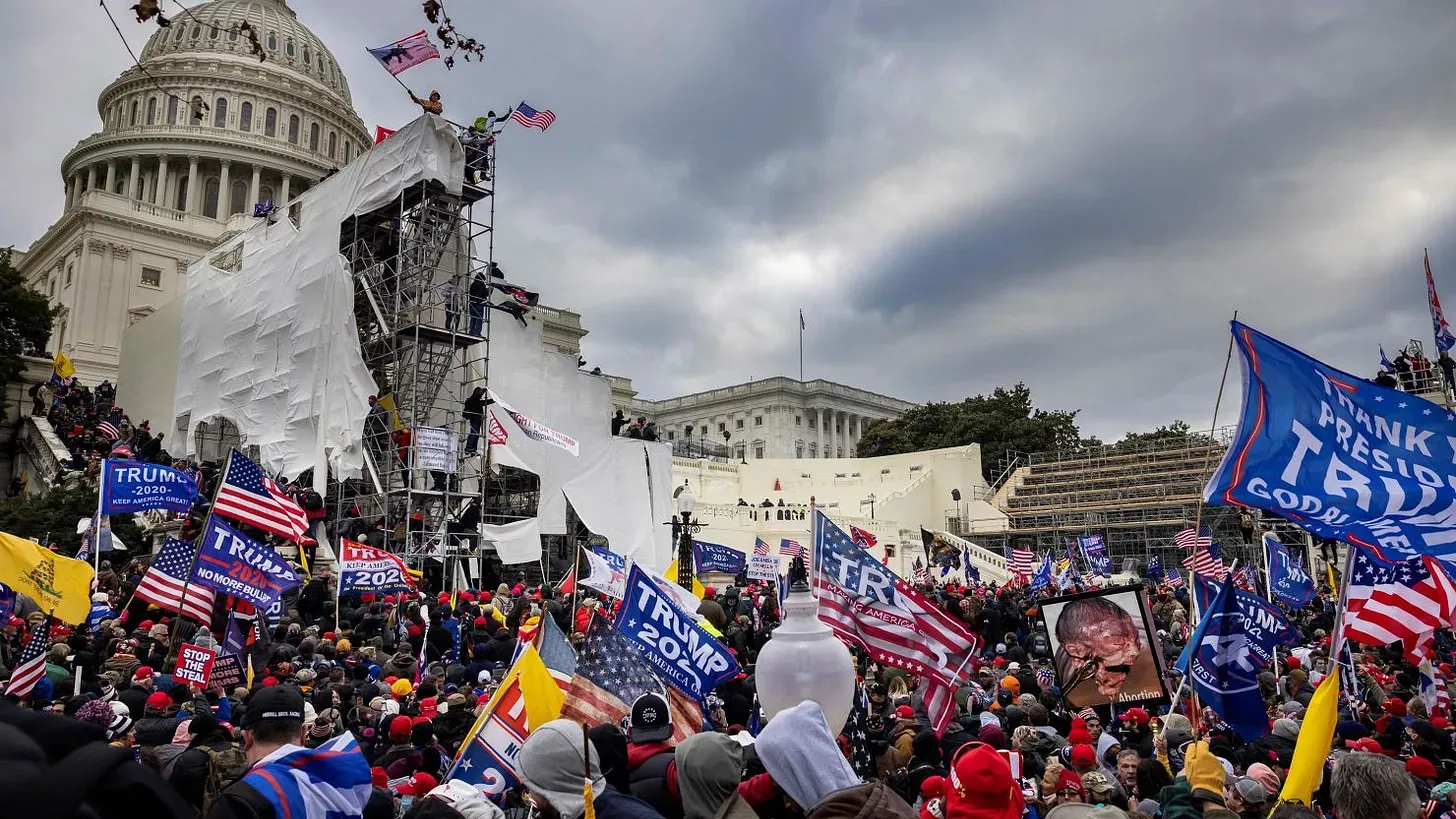
January 6, 2021 stands as a profound rupture in American democracy. It’s marked not by chaos alone but by a sustained effort to overturn a lawful election and obstruct the peaceful transfer of power. As the fifth anniversary approaches, the danger no longer lies only in what happened that day, but in attempts to deny or rewrite its meaning.
Donald Trump spent weeks after losing the 2020 election pressuring state officials, targeting governors and election administrators, and encouraging loyalists in key swing states to submit false slates of electors. He and his allies then focused their efforts on Vice President Mike Pence. They demanded that he discard legitimate electoral votes during the certification process. Pence refused.
On January 6, Trump addressed supporters at a rally near the White House, repeating the false claim that the election had been stolen. He urged the crowd to “fight like hell.” Many of those supporters marched directly to the Capitol. As Congress began counting electoral votes, thousands of people—some armed—forced their way into the building, threatened lawmakers and chanted about hanging the vice president. The attack halted a core constitutional process.
The violence left deep scars. Rioters assaulted police officers, ransacked congressional offices and occupied the Senate chamber. Within 36 hours, five people died, including a police officer who succumbed to injuries the following day. Dozens more suffered injuries, and four officers who responded later died by suicide. Pence later stated that Trump was wrong, had no authority to overturn the election, and endangered lives through reckless words.
Memory at Risk Due To Lack of Accountability
Congress responded by impeaching Trump for incitement of insurrection. Although a majority of senators voted to convict him after he left office, the vote fell short of the required threshold. Republicans then blocked the creation of an independent bipartisan commission, prompting the House to form a select committee instead. After an 18-month investigation, more than 1,000 witness interviews and multiple public hearings, the committee identified Trump as the central cause of the attack and referred him to the Justice Department for prosecution.
Federal prosecutors later indicted Trump on four criminal charges related to efforts to overturn the election. The case ended only after Trump won a second term, following a Supreme Court ruling that barred prosecution of a sitting president. Meanwhile, courts charged more than 1,400 participants in the riot. Most pleaded guilty or served prison sentences. After returning to office, Trump pardoned all of them.
Since then, Trump and key figures in the Republican Party have pushed a revisionist narrative, downplaying the violence, promoting conspiracy theories and portraying those involved as victims or heroes. Trump has labeled the attack a “day of love” and has threatened members of the congressional committee that investigated it.
January 6 demands remembrance, not revision. The events revealed how fragile democratic institutions can become when leaders reject election results and mobilize anger against the rule of law. Future generations must understand what happened, why it happened and how close the country came to losing a foundational democratic principle. History, as Pence warned, will judge those actions, and the refusal to accept defeat, accordingly.
Reference
Reich, R. (2026, January 5). The most shameful day in American history. Robert Reich. https://robertreich.substack.com/p/the-most-shameful-day-in-the-history?utm_source=share&utm_medium=android&r=59ocs7&triedRedirect=true