
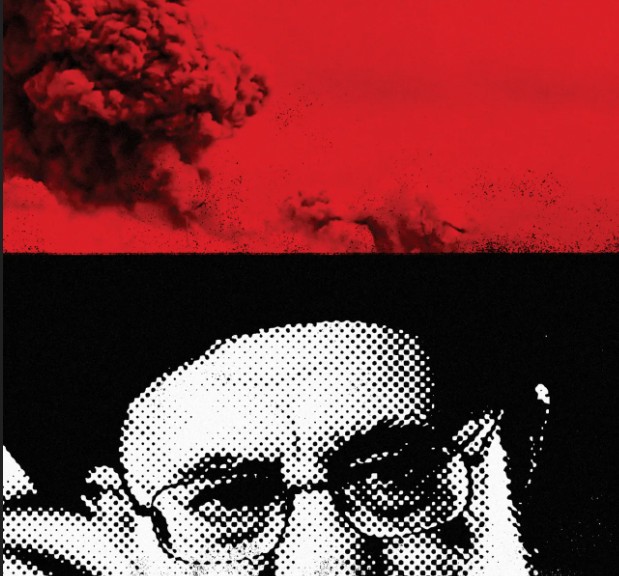
Foreign Affairs The Real War for Iran’s Future: Who Will Determine the Fate of the Islamic Republic?
Published on March 31, 2026, in Foreign Affairs, this essay by Afshon Ostovar (Associate Professor at the Naval Postgraduate School and author of Wars of Ambition) examines the power struggle unfolding inside Iran following the death of Supreme Leader Ali Khamenei. On March 1, 2026, Iranian state media announced that Khamenei had died following U.S. and Israeli strikes. Ostovar argues that the central question is no longer whether the Islamic Republic will survive, but rather who will control it — and in what direction they will take it.
Khamenei’s Legacy and the Rise of the IRGC
Although it was Ayatollah Ruhollah Khomeini who established the theocracy in 1979, it was his successor who transformed it into the country it is today. It was Khamenei who pushed Iran to pursue regional hegemony, committing it to perpetual conflict with Israel and the United States. It was also Khamenei who transformed the Islamic Revolutionary Guard Corps (IRGC) into the central pillar of the government. In addition, the IRGC’s growing dominance came at a steep cost. Massive military outlays prevented Tehran from investing in its people. Severe U.S. sanctions followed the nuclear and missile programs. As a result, Iran’s economy declined while inflation soared. Successive waves of popular protest (in 2009, 2017–2022, and again in late 2025) reflected the mounting domestic toll of this approach.
Succession, Power Vacuum, and the IRGC’s Consolidation
Just over a week after Khamenei’s death, the Assembly of Experts announced that his son Mojtaba would assume the position of supreme leader. However, Ostovar argues that speed and lineage alone cannot prevent a power vacuum. Only the elder Khamenei had the experience and standing required to keep the regime’s various camps in check. Consequently, Iran’s top officials are now lining up to chart the country’s future, and the actors best positioned to succeed are those affiliated with the IRGC. As the regime’s strongest armed actor, the IRGC has the resources to impose its will. Therefore, Ostovar warns, if hard-liners consolidate power, Tehran is likely to remain antagonistic toward Israel, the United States, and pro-democracy forces inside the country.
An Uncertain but Not Predetermined Future
Ostovar nevertheless cautions against fatalism. The IRGC’s unbending policies have clearly failed to protect the country, much less benefit its people, and have long been seen by the regime’s reformists as a dead end. Moreover, the military’s poor performance against U.S. and Israeli strikes has exposed serious vulnerabilities. The outcome, Ostovar suggests, will depend on whether reformists and moderates can organize and assert themselves, or whether the IRGC’s wartime momentum proves impossible to check. The real war for Iran’s future, in other words, is not being fought only on battlefields but within the regime itself.
Reference
Ostovar, A. (2026, March 31). The real war for Iran’s future: Who will determine the fate of the Islamic Republic? Foreign Affairs. https://www.foreignaffairs.com/iran/real-war-irans-future