
Donald Trump’s 2025 pardons for people convicted over the January 6 attack on the U.S. Capitol has triggered a new wave of legal and political fallout. The situacion is extending far beyond early prison releases. Former defendants now seek refunds, file lawsuits, and push a narrative that recasts the insurrection as an injustice carried out against them.

People walk from the Ellipse to the Capitol Building in Washington, D.C., on Jan. 6, the fifth anniversary of the Capitol attack
The story opens with Yvonne St Cyr. A Marine Corps veteran who forced her way past police barricades, entered the Capitol through a broken window, and urged other rioters forward as officers suffered serious injuries. She denied wrongdoing throughout her case. A federal judge sentenced her to 30 months in prison and imposed fines and restitution. Trump’s pardon freed her after she served half her sentence. She soon returned to court demanding her money back, insisting the government had no right to keep it. The same judge reluctantly approved the refund, citing existing law and setting a powerful precedent.
Other January 6 defendants quickly followed her lead. At least eight individuals have asked courts to reimburse fines and restitution, and judges have already granted refunds in some cases while rejecting others. Beyond refunds, former defendants have launched civil lawsuits seeking millions of dollars. They’re accusing federal prosecutors, the FBI, and law enforcement agencies of political persecution and constitutional violations. Hundreds more have filed claims for alleged property damage, lost jobs, and physical harm tied to their arrests and imprisonment.
Legal System Under Strain

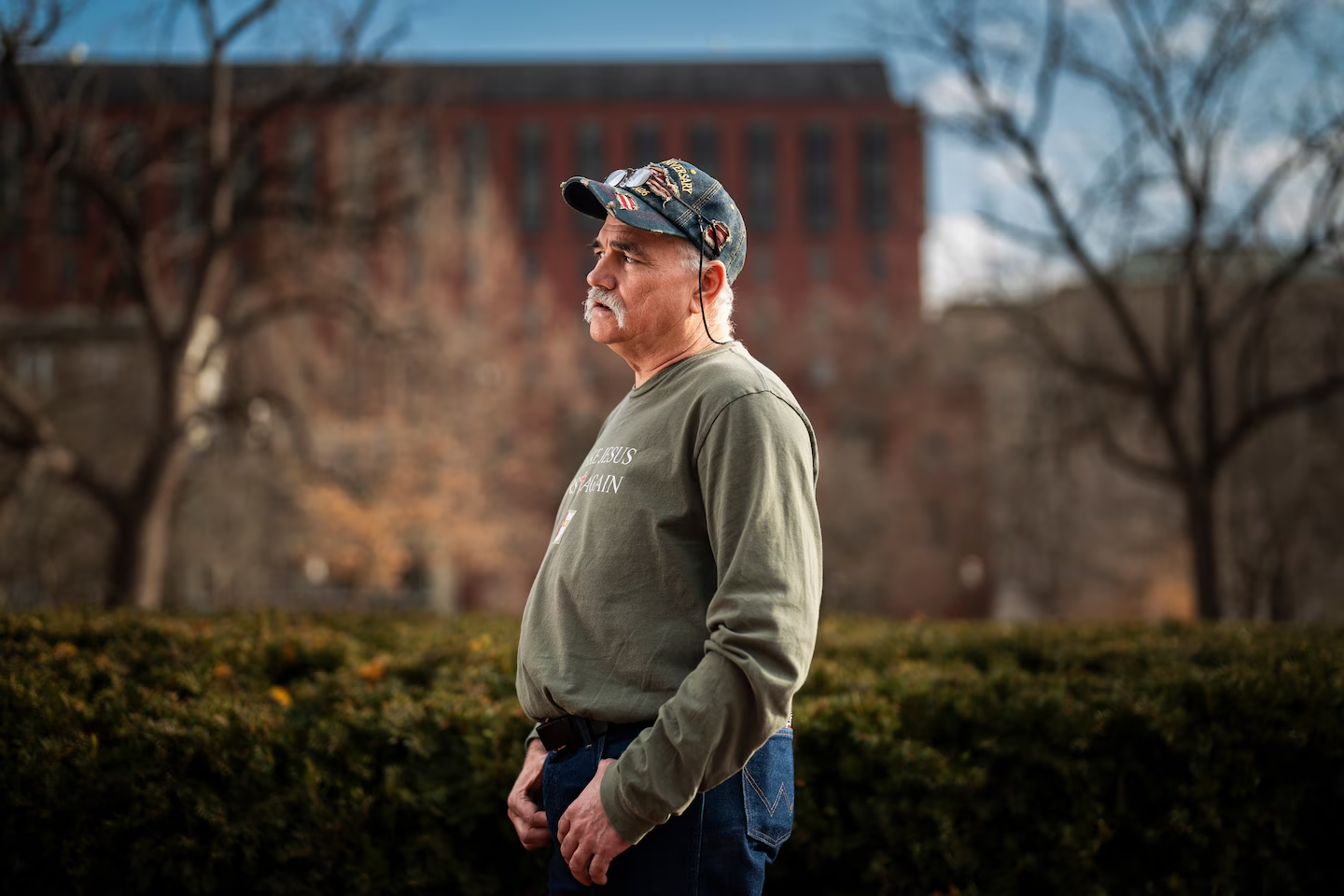
Hager spent seven months in prison for his role in the Jan. 6, 2021, attack. Now that he has been pardoned, he is seeking a refund of the $570 in court-ordered penalties he paid
These efforts clash sharply with the documented impact of the Capitol attack. The riot caused nearly $3 million in damage, injured police officers, and led courts to order more than $1.2 million in restitution and fines. The government recovered less than half of that amount. Democratic lawmakers and former Capitol Police officers have condemned the idea of reimbursing rioters, arguing that taxpayers should not compensate people who violently disrupted the peaceful transfer of power. Legislative attempts to block such payouts have stalled due to a lack of Republican support.
Personal accounts reveal how many defendants continue to deny responsibility and cling to false claims about the 2020 election. Stacy Hager, who served seven months in jail for trespassing and disorderly conduct, insists he acted patriotically and deserves a refund. Others seeking reimbursement include individuals who assaulted police officers or earned money by selling footage of the violence inside the Capitol.

The legal debate centers on conflicting Supreme Court precedents. Some judges rely on a 19th-century ruling that bars refunds of money deposited in the U.S. Treasury without congressional approval. Others cite a 2017 decision holding that once courts vacate a conviction, the government must return penalties. This split has produced uneven outcomes and left courts grappling with the consequences of Trump’s pardons.
Eroding Accountability

People walk from the Ellipse to the Capitol Building in Washington, D.C., on Jan. 6, the fifth anniversary of the Capitol attack.
The most extreme cases involve lawsuits that reverse the roles of perpetrator and victim. Andrew Taake, who admitted attacking police officers with bear spray and weapons. He is now suing the federal government for $2.5 million, claiming wrongful prosecution and abuse in prison. Leaders of the Proud Boys convicted of seditious conspiracy have filed a $100 million lawsuit, echoing Trump’s claims that the January 6 investigation lacked legitimacy.
Trump and his allies have openly encouraged this reinterpretation. Supporters inside and outside the Justice Department have floated the idea of “reparations” for January 6 defendants, and Trump himself has called them patriots. At the same time, the administration has sidelined or driven out prosecutors who handled the cases. Together, these developments show how the pardons have not only erased sentences but also fueled an aggressive effort to rewrite the meaning of January 6 and undermine accountability for the attack.
Reference
Reinhard, B., Silverman, E., & Schaffer, A. (2026, January 21). They ransacked the U.S. Capitol and want the government to pay them back. The Washington Post. https://www.washingtonpost.com/politics/2026/01/21/trump-january-6-pardon-refunds/