Trump claims strikes on Iran prevented nuclear war

Trump’s Nuclear Preemption: Rationalizing “Operation Epic Fury”

The “Preventative War” Doctrine 
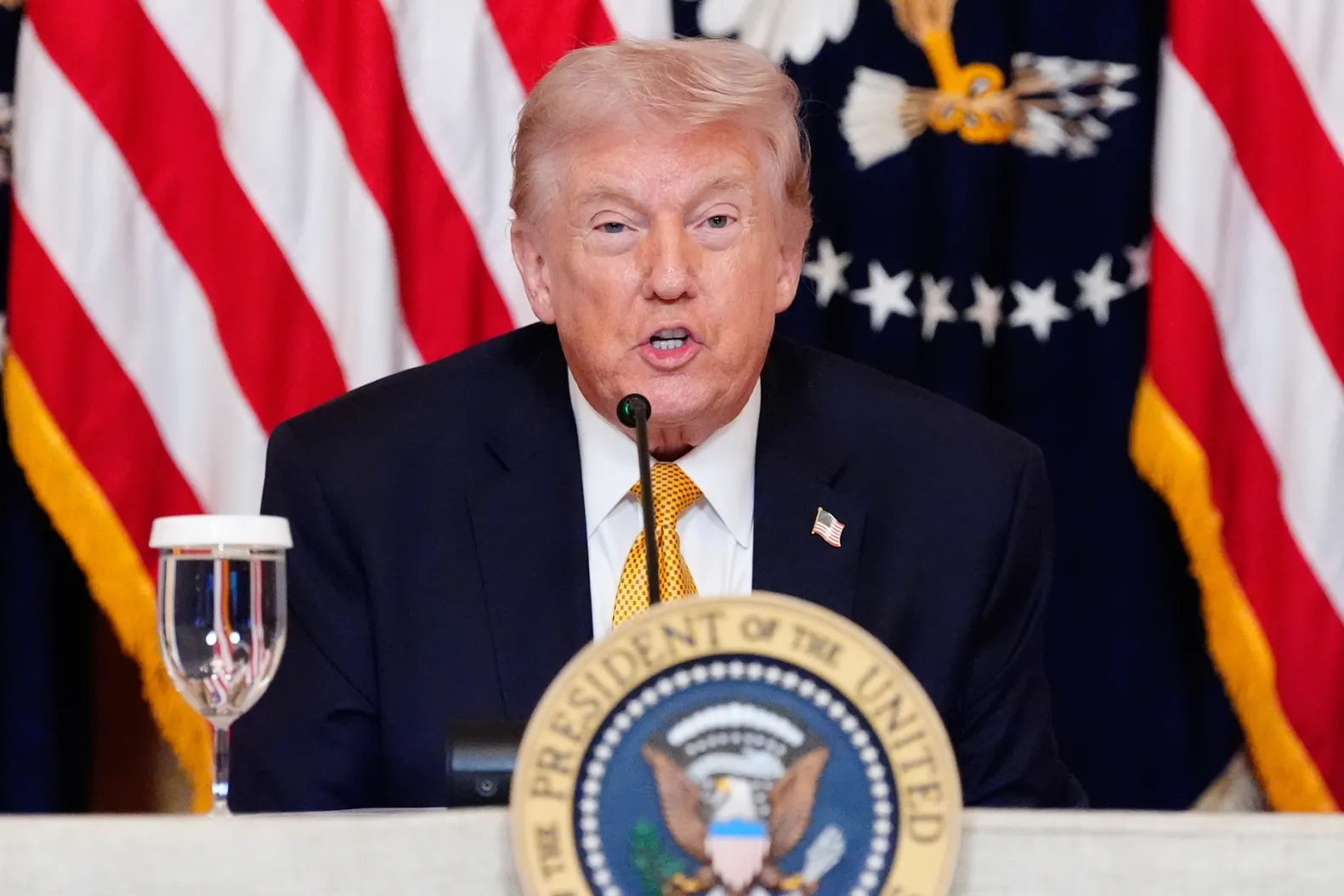
On March 16, 2026, President Donald Trump offered a new, more alarmist rationale for the U.S.-Israeli strikes on Iran, claiming the operation was a preemptive move to stop a “Nuclear World War III.” In a video address, Trump argued that had he not authorized the February 28 strikes, Tehran was weeks away from deploying a nuclear-armed intercontinental ballistic missile (ICBM) capable of reaching the American heartland. Consequently, the administration is shifting its rhetoric from “regime change” and “freedom for the Iranian people” toward a much narrower, survivalist security narrative. This move appears designed to shore up domestic support as the war enters its third week and the human and economic costs—particularly the surge in global oil prices—begin to weigh on the American electorate.
Origins and the “Imminent Threat” Debate 
Originally, the stated goal of “Operation Epic Fury” was the destruction of Iran’s conventional missile capacity and its naval assets in the Persian Gulf. However, the origin of this new “Nuclear Prevention” claim is highly contested. The Al Jazeera report highlights a significant intelligence gap: while Trump asserts he stopped a nuclear catastrophe, his own Director of the National Counterterrorism Center, Joe Kent, resigned stating there was “no imminent threat.” Furthermore, international observers, including the UN and the EU, have noted that the U.S. has yet to present verifiable evidence that Iran had restarted its nuclear enrichment to weapons-grade levels prior to the strikes. This suggests that the “nuclear war” narrative may be more of a political shield against mounting international legal challenges.
Structure of Strategic Miscalculation 
The structure of Trump’s argument is organized around the “short-term excursion” theory, where he framed the war as a “little pause” for the global economy. Specifically, Trump admitted to being “shocked” by the scale of Iranian retaliation against Saudi Arabia, the UAE, and Qatar, claiming that even the “greatest experts” did not expect Tehran to strike non-combatant Gulf states. Moreover, the report highlights the structural isolation of the U.S.; while Trump demands that allies join a mission to reopen the Strait of Hormuz, he simultaneously claims the U.S. doesn’t actually need the oil. This contradictory stance—demanding help for a global problem while claiming American energy independence—has left traditional allies like Germany and the UK unwilling to participate in what they perceive as a “preventative war” of choice.
Synthesis of Diplomatic Coercion and Unconditional Surrender 
The successful conclusion of the war, according to the Trump administration, now relies on the “unconditional surrender” of the Iranian state. This objective is essential to the “America First” narrative, which seeks to avoid a prolonged occupation like Iraq while demanding a total capitulation that allows Trump to claim a historic victory. Simultaneously, there is a clear intent to force the Iranian people to “take over their government,” though critics point out that the strikes have instead forced the population into a survivalist mode, potentially strengthening the IRGC’s domestic grip. Ultimately, the March 16 claims provide a volatile roadmap for a conflict where the justification is constantly shifting to match the increasingly chaotic reality on the ground.
Reference
Al Jazeera. (2026, March 16). Trump claims strikes on Iran prevented nuclear war. Al Jazeera NewsFeed. https://www.aljazeera.com/video/newsfeed/2026/3/16/trump-claims-strikes-on-iran-prevented-nuclear-war