
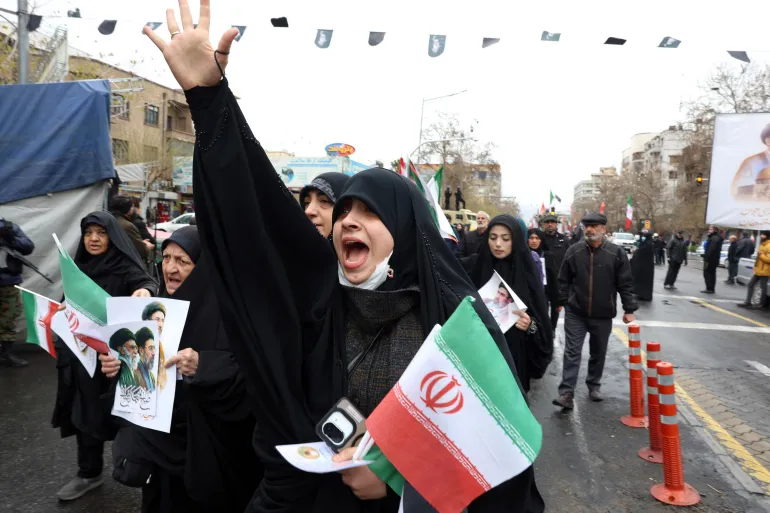
The Paradox of Wartime Protest
On March 17, 2026, The Take explored the unprecedented phenomenon of mass protests erupting in Tehran despite the ongoing military conflict with the United States and Israel. While traditional political theory suggests that external threats typically trigger a “rally ‘round the flag” effect, the current situation in Iran has defied this expectation. Consequently, thousands of citizens have taken to the streets not in support of the war effort, but to protest the government’s handling of the crisis, spiraling inflation, and the perceived prioritization of regional proxies over domestic survival. This internal unrest, occurring while the nation faces active aerial bombardments, suggests a profound decoupling between the Iranian state’s geopolitical ambitions and the immediate needs of its urban population.
Origins and the Erosion of the Social Contract
Originally, the Iranian leadership relied on a narrative of “sacred defense” to justify economic hardships and military expenditures. However, the podcast highlights that the origin of the current unrest lies in the cumulative exhaustion of a decade of sanctions followed by the sudden, violent escalation of 2026. The report suggests that the “social contract” has been severed as the middle class sees its savings vanish due to the $100+ oil prices and the closure of the Strait of Hormuz—measures that were supposed to hurt the West but are suffocating Tehran first. Furthermore, the mobilization is fueled by a younger generation that views the war as a catastrophic miscalculation by an aging clerical elite, leading to a “double front” war for the regime: one at its borders and one in its capital.
Structure of the Resistance and State Response
The structure of the protests is organized through decentralized neighborhood committees, utilizing encrypted communication to bypass the state’s frequent internet shutdowns. Specifically, the protests have shifted from traditional economic grievances to radical calls for a “peaceful transition,” arguing that the current leadership’s survival strategy is an existential threat to the Iranian nation itself. Moreover, the podcast notes the complexity of the state’s response; while the Revolutionary Guard (IRGC) is occupied with defense and regional command, the domestic Basij forces are being deployed to suppress dissent. This structured tension creates a dangerous “security vacuum,” where the government must decide whether to divert elite military units from the front lines to maintain order in the streets.
Synthesis of Regime Survival and Existential Risk
The successful survival of the Islamic Republic now relies on a fragile synergy between its ability to maintain military deterrence and its capacity to quell domestic insurrection without triggering a full-scale civil war. This objective is essential because if the protests paralyze Tehran’s logistical centers, the nation’s ability to sustain its “Stranglehold on Hormuz” will collapse. Simultaneously, there is a clear intent among protesters to use the war as a catalyst for systemic change, betting that the regime cannot fight a high-tech foreign enemy and its own people simultaneously. Ultimately, the March 2026 protests provide a volatile roadmap for the future of the conflict, signaling that the greatest threat to Tehran may not be foreign missiles, but the total loss of domestic legitimacy.
Reference
Al Jazeera. (2026, March 17). The Take: Why Iranians are taking to Tehran’s streets during war [Audio podcast]. https://www.aljazeera.com/podcasts/2026/3/17/the-take-why-iranians-are-taking-to-tehrans-streets-during-war