
The Myth of the “Decapitation Strike”
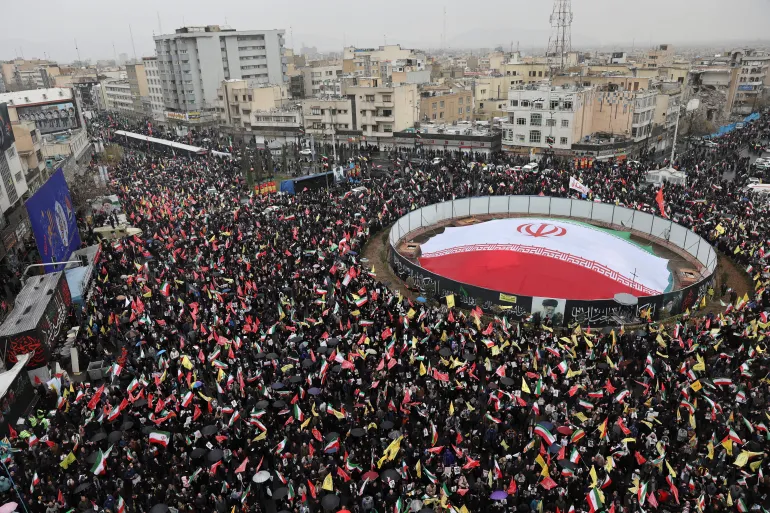
On March 17, 2026, Al Jazeera published a critical analysis explaining why the assassination of Supreme Leader Ali Khamenei on February 28 did not lead to the immediate disintegration of the Islamic Republic. While the U.S. and Israel reportedly expected a “short, decisive rupture” followed by systemic failure, the opposite has occurred. Al-Nafisi argues that ideological regimes, unlike personalist autocracies (such as those of Saddam Hussein or Muammar Gaddafi), are designed to survive power vacuums by shifting the crisis from the “survival of the head” to “internal institutional cohesion.” Consequently, the state did not atomize; instead, it hardened, moving from a clerical-led system to a de facto military-security state under the emergency guidance of the Islamic Revolutionary Guard Corps (IRGC).
Origins and the Architecture of Survival
Originally, the Islamic Republic’s constitution was designed with redundancies (Article 111) to prevent a total lapse in authority. The origin of the regime’s stability during this war lies in its “Deep State”—the resilient civil bureaucracy, technocratic class, and the IRGC—which continued to manage fiscal and essential services even as the leadership in Tehran was being hunted. The report suggests that for the Iranian establishment, death at the hands of a foreign enemy is not a “bitter defeat” but a “sacralization of political life” through martyrdom. This ideological framing transformed Khamenei’s death into a nationalist unifier, making it easier for the security apparatus to maintain control and suppress potential dissent in the immediate aftermath of the strikes.
Structure of the Succession
The structure of the transition was characterized by a “defiant consolidation,” culminating in the swift election of Mojtaba Khamenei (the late leader’s son) on March 8, 2026. Specifically, the IRGC reportedly bypassed traditional clerical delays, pressuring the Assembly of Experts into an online vote to project an image of continuity and strength. This structured succession serves three purposes:
- To the IRGC: It guarantees the continued protection of their vast economic and political interests.
- To the Public: It signals that the government remains functional despite existential threats.
- To the Enemy: It communicates Tehran’s absolute commitment to continue the fight, as Mojtaba, who lost his mother, wife, and child in the same strike that killed his father, is unlikely to seek compromise.
Synthesis of Security Contraction and Long-term Fragility
The successful survival of the regime now relies on a synergy between Mojtaba’s symbolic stature and the IRGC’s physical control over the streets and the economy. This objective is essential because, while the regime has avoided collapse, it has lost its flexibility. The war has forced a “security-first” stabilization that leaves no room for political reform or social grievances. Simultaneously, reports of friction between the regular army (Artesh) and the IRGC regarding resource allocation suggest that the internal “monolith” may be under immense strain. Ultimately, the March 2026 analysis provides a somber roadmap: the regime may endure the war, but it will emerge as a more closed, rigid, and militarized version of itself, beginning a “slow internal drain” of its remaining legitimacy.
Reference
Al-Nafisi, A. F. (2026, March 17). Why the Iranian regime did not collapse after Khamenei’s assassination. Al Jazeera Opinions. https://www.aljazeera.com/opinions/2026/3/17/why-the-iranian-regime-did-not-collapse-after-khameneis-assassination