
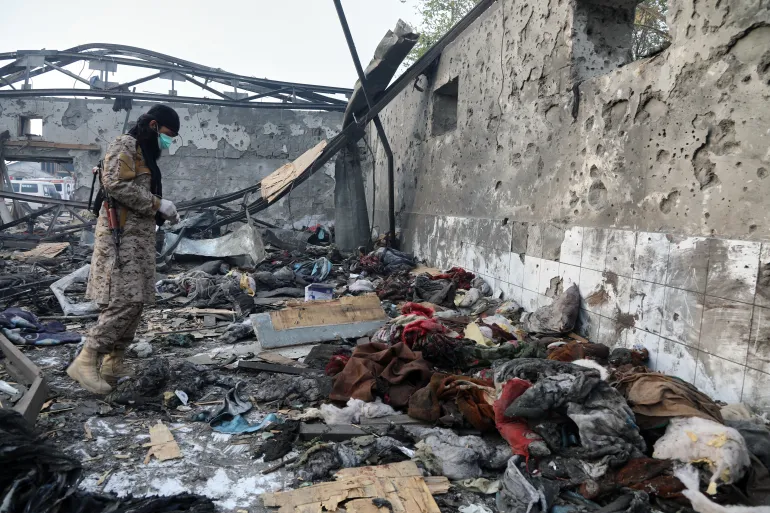
Pakistan’s recent military escalations and airstrikes within Afghan territory, officially framed as targeted counterterrorism operations against the Tehreek-e-Taliban Pakistan (TTP). It has mask a broader, decades-long pursuit of regional strategic dominance. While cross-border strikes have inflicted significant civilian casualties and heightened bilateral friction, they have largely failed to eliminate senior militant leaders.
This ongoing instability stems from a history of selective sponsorship of extremist proxies alongside attempts to manage, rather than eradicate, domestic militancy. Consequently, using the TTP as a sole justification ignores the structural roots of an insurgency deeply entrenched inside domestic borders.
Beyond counterterrorism concerns, military actions reflect an evolving security doctrine aimed at establishing strategic control over neighboring foreign policy. In short, curbing legitimate diplomatic ties with rival regional powers, and containing internal Pashtun and Baloch nationalist movements. By leveraging border closures, mass refugee deportations, and military pressure, foreign policy mechanisms attempt to project power outward while attempting to suppress internal political alienation. However, weaponizing cross-border operations fails to resolve systemic governance failures, economic marginalization, and domestic insecurity within border provinces.
In conclusion, externalizing domestic security challenges through cross-border military strikes cannot deliver long-term stability or eliminate militant networks. Sustainable peace requires shifting away from military intervention and proxy-based strategy toward domestic political engagement, addressing internal grievances, and respecting regional sovereignty.
Reference
Shams, Z. (2026, July 31). Pakistan’s attacks on Afghanistan are about more than the TTP. Al Jazeera. https://www.aljazeera.com/opinions/2026/7/31/pakistans-attacks-on-afghanistan-are-about-more-than-the-ttp